The Hobart Beach Shade Secret: Why Cool Air Hides High UV Risk
Hobart’s beautiful beaches offer refreshing breezes, but don't be fooled – the UV index can be dangerously high. Discover why locals often make critical shade mistakes and how to protect your family effectively.
Published 2026-10-05T20:00:21.02+00:00
Hobart, with its stunning coastal landscapes and often crisp, invigorating air, presents a unique challenge for beachgoers: the deceptive nature of its sunshine. Many locals and visitors alike are lulled into a false sense of security by the cool breezes, underestimating the potent UV radiation that can still lead to severe sunburn and long-term skin damage. This guide will uncover the common mistakes made when seeking shade on Hobart's beautiful beaches and provide genuinely useful, specific advice to keep you and your family safe under the Tasmanian sun.
The Deceptive Chill: Why Hobart's UV is a Hidden Hazard
Hobart’s climate is renowned for its variability, often delivering brilliant sunshine coupled with a refreshing, sometimes even chilly, breeze. This combination, while delightful, is a significant contributor to the ‘shade mistake’ many Tasmanians make. The cool air masks the heat-generating properties of UV radiation, meaning you might not feel yourself burning until it’s too late. Unlike warmer climates where the sun’s intensity is immediately obvious through heat, Hobart requires a more vigilant approach to sun protection.
The sun's ultraviolet (UV) radiation is invisible and doesn't directly contribute to temperature. This means a cool, breezy day can still have an extremely high UV index, particularly during summer months. Always check the daily UV forecast, even on overcast or cooler days. Ignoring this can lead to painful sunburn, accelerating skin aging and increasing the risk of skin cancer – a particularly pertinent issue in Australia.
Common Shade Mistakes Hobart Beachgoers Make
Understanding the pitfalls of inadequate shade is the first step towards better protection. Many traditional shade solutions fall short, especially in conditions typical of Hobart’s coastline.
**Mistake 1: Relying on Trees or Natural Features:** While a beautiful gum tree offers aesthetic appeal, its shade is often dappled and shifts constantly. The density of foliage rarely provides complete UV blockage, and you might find yourself moving every half hour to stay fully covered.
**Mistake 2: The Small, Flimsy Umbrella:** A common sight, the small beach umbrella often provides inadequate coverage for more than one person, and its stability is frequently compromised by even moderate coastal breezes. A gust of wind can quickly turn it into a dangerous projectile or leave you scrambling to re-anchor it, disrupting your relaxation.
**Mistake 3: Thinking Clouds Offer Full Protection:** Overcast days can be particularly deceptive. While clouds can reduce UV radiation, they don't block it entirely. Up to 80% of UV can still penetrate light cloud cover, meaning you can still get severely sunburnt on a cloudy day.
**Mistake 4: Positioning Too Far From the Water:** For families with children, having shade close to the water's edge is crucial. Children playing in and out of the water need constant, easy access to shade to prevent overexposure, which often means traditional shade setups are too far away or too cumbersome to reposition.
The Importance of UPF 50+ Fabric
When selecting any form of beach shade, the material's Ultraviolet Protection Factor (UPF) rating is paramount. A UPF 50+ rating means the fabric blocks 98% of harmful UV rays, offering excellent protection. Many standard umbrellas or tarps offer significantly less protection, allowing a considerable amount of UV to still reach your skin.
Choosing the Right Shade for Hobart's Conditions
Given Hobart's unique blend of high UV and often breezy conditions, your choice of shade needs to be robust, reliable, and offer comprehensive protection. This means looking beyond basic umbrellas or pop-up tents that struggle with wind.
Consider options that are designed to withstand coastal breezes without collapsing or flying away. Look for designs that are easy to set up and pack down, as well as those that offer adjustable shade coverage throughout the day. The goal is consistent, reliable protection, not just a temporary reprieve.
Introducing AirCabana: Engineered for Australian Beaches
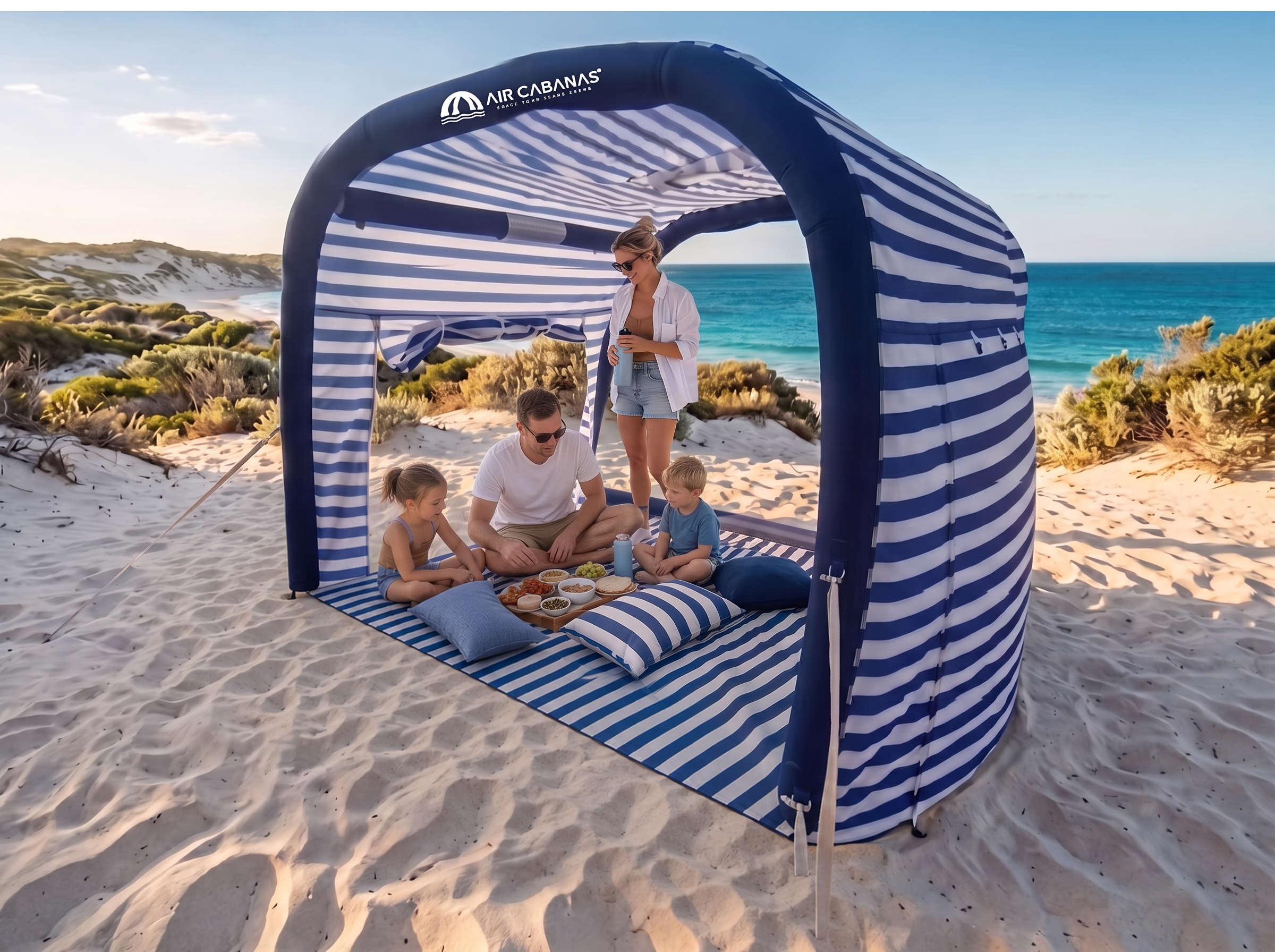
For those seeking a superior beach shade solution, the AirCabana stands out as an excellent choice, particularly for the often-breezy conditions found around Hobart. Unlike traditional pole-frame cabanas, the AirCabana features an innovative inflatable frame, making it incredibly quick to set up and remarkably stable in the wind.
The AirCabana is constructed from UPF 50+ fabric, ensuring you receive maximum protection from the sun's harmful UV rays. Its spacious design provides ample shade for families, allowing everyone to relax comfortably without constant repositioning. The integrated sand pockets and guy ropes ensure it stays firmly anchored, even when the sea breeze picks up, giving you peace of mind.
Whether you choose the AirCabana Classic for smaller groups or the AirCabana Family for more expansive coverage, you're investing in a product designed with Australian beach conditions in mind. Its thoughtful design means less time struggling with poles and more time enjoying the stunning Tasmanian coastline safely.
Beyond the Shade: A Holistic Approach to Sun Safety
While a high-quality shade solution like AirCabana is fundamental, it's just one component of comprehensive sun protection. For complete safety on Hobart's beaches, integrate these practices:
**Sunscreen:** Always apply a broad-spectrum, water-resistant sunscreen with an SPF of 30+ (preferably 50+) liberally to all exposed skin. Reapply every two hours, or more frequently if swimming or sweating.
**Protective Clothing:** Wear long-sleeved shirts, long pants, and board shorts made from UPF-rated fabrics. These offer excellent protection, especially for children who spend extended periods in the water.
**Wide-Brimmed Hats:** A hat that protects your face, neck, and ears is essential. Baseball caps offer insufficient protection.
**Sunglasses:** Choose sunglasses that meet Australian Standard AS/NZS 1067 and block 100% of UV rays to protect your eyes from damage.
**Timing:** Seek shade during the peak UV hours, typically between 10 am and 4 pm, even on cooler days. This is when the sun's rays are strongest.
Anchoring Your Shade: Safety First on Windy Days
Regardless of the shade solution you choose, proper anchoring is non-negotiable, especially on Hobart's often windy beaches. Never underestimate the power of a sudden gust.
For products like the AirCabana, ensure all sand pockets are filled completely and buried securely, and all guy ropes are pegged firmly into the sand. If the wind becomes excessively strong or unpredictable, it is always safest to pack down your shade structure. No beach day is worth the risk of injury from flying equipment. Always follow the manufacturer's instructions for setup and pack down.
Remember, if conditions become unsafe, it's better to pack up your shade and seek shelter than to risk damage to your equipment or, more importantly, injury to yourself or others.
Enjoying Hobart's Beaches Safely and Comfortably
Hobart's beaches are truly spectacular, offering a unique blend of rugged beauty and refreshing air. By understanding the specific challenges of its climate – particularly the high UV despite cooler temperatures – and by equipping yourself with the right knowledge and tools, you can enjoy these natural wonders safely.
Investing in a reliable, high-UPF shade solution like the AirCabana, combined with other sun-safe practices, ensures your family can make the most of every sunny day without the worry of sunburn. Don't let the cool breeze deceive you; be sun-smart and cherish your time on Tasmania's stunning coastline.