
Shelter on Beach Wind Guide: Stop Your Shade Taking Off
Discover how to secure your shelter on beach sand in breezy weather. Learn how venting, ballast pockets, and smart design prevent coastal runaways.
Published 2026-11-02T20:00:53.038+00:00
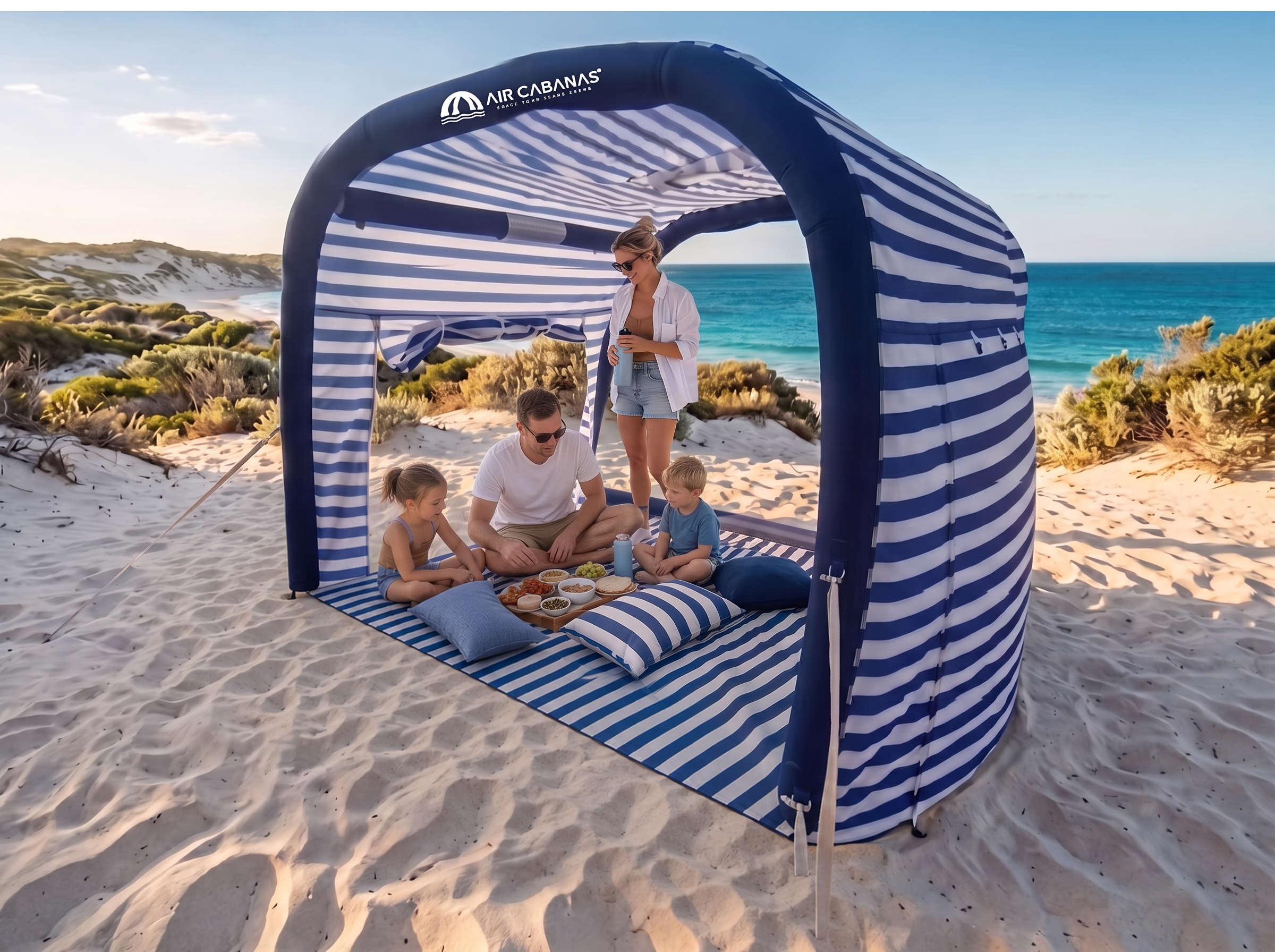
Every Australian beach lover knows the familiar sight of a rogue sun canopy cartwheeling down an open stretch of sand on a hot summer afternoon. When coastal sea breezes pick up, keeping a reliable shelter on beach terrain requires far more than pounding a few cheap plastic pegs into dry sand. Between aerodynamic lift, shifting tides, and gusty onshore winds, choosing the right shade architecture—and mastering proper anchoring techniques—is the key to enjoying relaxed, stress-free days beside the water without your canopy taking flight.
Why keeping your shelter on beach setups stable is so challenging
Anyone who has spent a summer afternoon along the Australian coast knows the sudden change that occurs when the sea breeze hits. Setting up a shelter on beach sand looks straightforward under calm morning skies, but coastal conditions are notoriously dynamic. Loose, dry silica offers very little mechanical resistance against standard metal or plastic pegs, meaning traditional securing methods often fail the moment barometric pressure shifts and surface breezes accelerate across the water.
When air moves rapidly over a coastal dune or open shoreline, it behaves much like fluid flowing over an airfoil. An everyday shelter on beach territory must contend with both positive pressure pushing against its vertical fabric panels and negative lift force pulling upwards from the crest of the canopy. Traditional dome tents, pop-up structures, and standard beach umbrellas regularly catch this under-canopy draft, turning into uncontrolled projectiles that endanger other beachgoers and tear delicate seam stitching.
Understanding how wind interacts with your shade setup is the first step toward avoiding the infamous coastal sprint down the sand. Stability is never an accident along open coastlines from Cottesloe to Cronulla; it is the direct outcome of physics, thoughtful design choices, and meticulous anchoring habits. Choosing equipment engineered specifically for coastal topography ensures your family can relax comfortably without constantly gripping a shuddering aluminium pole.
The physics of coastal updrafts and canopy lift
The primary culprit behind a runaway beach canopy is aerodynamic lift. As offshore wind or onshore afternoon sea breezes hit the front face of a solid fabric structure, the air is forced to accelerate either around the sides or over the top ridge. Because moving air produces lower pressure above the canopy while stagnant air collects beneath it, the structure experiences an aggressive upward suction force. Without adequate pressure relief, even heavily weighed-down poles can dislodge from soft sand within seconds.
Standard beach umbrellas suffer the most from this aerodynamic imbalance because their rigid radial arms offer nowhere for trapped air to escape. Once the internal air pressure exceeds the holding strength of the central spike buried in loose sand, the umbrella inverts or pulls out entirely. Modern coastal shade solutions counteract this lift by reducing horizontal drag, equalising internal air volume, and using the surrounding beach sand as an integral foundation rather than relying on shallow pegs.
Anti-parachute venting and airflow management
When evaluating the wind performance of any coastal shade, top-level air release is an absolute non-negotiable feature. Anti-parachute venting works by providing an immediate, unrestricted release valve at the absolute apex of the canopy, where positive pressure builds to its highest level. Rather than allowing trapped wind to push the entire structure toward the sky like an open parachute, engineered roof vents let rising air bleed out smoothly into the atmosphere.
This pressure-equalising flow prevents turbulent vortexes from forming under the canopy ceiling. In standard, unvented sun shelters, wind enters the open front and sides, hits the rear fabric wall, and churns violently beneath the rafters. Anti-parachute venting disrupts this cycle by maintaining continuous throughput, substantially diminishing the net upward lift on your anchor points and dramatically lowering the physical stress placed on structural seams and corner loops.
Modern shade designs frequently pair these apex vents with flexible structural members that oscillate slightly in gusts rather than fighting the wind rigidly. A flexible shelter, such as an inflatable AirCabana, moves organically with the prevailing breeze, spilling sudden draft spikes through its canopy vents instead of transmitting shock loads down into rigid joints that can shear, bend, or pull anchors loose.
Sand pocket ballast and securing your shelter on beach sand
While pegs and stakes are legendary for failing in dry coastal dunes, sand pocket ballast represents the single most effective way to anchor your shelter on beach foreshores. Beach sand is remarkably heavy when gathered in volume—a single five-litre bucket of damp sand weighs roughly seven to eight kilograms. By incorporating large fabric corner pockets that you fill on-site with dry or damp sand, you anchor each corner of your cabana with a dense, custom-fitted mass that cannot pull free like a thin peg.
To achieve maximum stability with sand pocket ballast, technique matters just as much as pocket capacity. Always dig down five to ten centimetres before filling your ballast pockets to access cooler, semi-compacted sand closer to the tidal water table. Scooping this slightly damp sand directly into deep, reinforced corner pockets provides a substantial foundation that keeps the base of your shelter glued to the ground, even as surface gusts skip across the shoreline.
It is also critical to angle your ballast corners correctly. Rather than leaving the weighted pockets hanging vertically directly beneath the canopy corners, stretch them outward at a thirty-to-forty-five-degree diagonal away from the centre. This outward tension opposes internal wind lift laterally, transforming the ballast pockets into active structural counterweights that prevent the legs from kicking inward or sliding sideways across the sand.
Low-profile design versus traditional pole-frame cabanas
The overall silhouette of your sun shelter plays a decisive role in how it handles gusty coastal afternoons. A low-profile design minimises the exposed surface area presented to oncoming breezes, allowing passing air to slip over the curved canopy roof with minimal resistance. Tall, boxy gazebos with high vertical walls create enormous frontal drag, transforming your shade into a giant sail that places unbearable strain on every weld, peg, and guyline.
In contrast, traditional pole-frame cabanas offer a familiar upright footprint, often referred to in everyday Australian beach culture as a cool cabana setup. While their central pole and corner ballast legs provide reasonable shade, their rigid aluminium or steel frameworks cannot flex when an unexpected squall rolls across the bay. When overloaded by a sharp gust, rigid metal poles can warp, snap at telescopic adjustment collars, or act as rigid levers that lever corner ballast pockets right out of their sand trenches.
This is where modern engineering innovations have redefined coastal shelter design. By replacing hard metal uprights with robust, high-pressure TPU inflatable beams, the AirCabana delivers a resilient alternative to rigid pole-frame cabanas. An inflatable air-beam frame absorbs the kinetic energy of strong gusts by momentarily yielding, dampening the shock load, and immediately springing back into shape without bending metal hinges or endangering nearby beachgoers.
Choosing a low-profile design combined with impact-absorbing air architecture means fewer loose parts to juggle on a windy morning. Without rigid poles that threaten to buckle, the entire structure acts as a cohesive, shock-absorbing unit that sits comfortably on open sandy stretches, keeping your family protected from intense Australian ultraviolet rays without the constant worry of structural metal failure.
Step-by-step setup guide for windy beach days
Securing a reliable shelter on beach terrain begins long before you unpack your carry bag. Before unrolling any fabric, observe the beach environment for several minutes to determine prevailing wind direction, tidal movements, and natural windbreaks like foredunes or headlands. If safe and practical, pitching slightly downwind of low coastal vegetation or natural sand rises will reduce direct buffeting, provided you remain well clear of fragile dune ecosystems and high-tide marks.
Begin by laying your canopy flat on the sand with the narrowest or most aerodynamic profile facing directly into the oncoming breeze. Immediately fill your upwind sand pockets halfway before inflating or erecting the canopy structure. This crucial first step prevents the dreaded 'kite effect', where an unweighted piece of canvas catches a rogue breeze and tumbles down the beach while you are searching for your pump or guide ropes.
Once the upwind ballast is anchored, inflate your air beams using a dedicated high-capacity pump, or extend your support frame while maintaining firm downward pressure. Immediately fill all remaining corner sand pockets to their maximum capacity, packing the sand firmly into the corners. Finish by clearing any loose surface sand around the base and checking that all canopy anti-parachute vents remain completely unobstructed by towels or hanging accessories.
Active safety protocols and pack-down timing
No matter how advanced your shade technology, safety must always come first on Australian shorelines. Continuous supervision of your shelter on beach days is essential; never leave an erected cabana unattended while swimming or walking along the coast. Surface winds can double in speed within minutes during a classic summer southerly buster, turning an otherwise manageable breeze into an unsafe environment for fabric structures.
If you notice the canopy straining continuously, anchor seams groaning, or corner ballast pockets dragging across the sand, do not wait for the structure to fail. Immediately pack down your shade. In an AirCabana, deflation takes only seconds by opening the rapid-release air valve, instantly collapsing the structure safely against the sand without dangerous swinging metal parts, allowing for a calm, controlled pack-up before conditions deteriorate further.
Frequently asked questions
Find answers below to the most common questions Australian beachgoers ask about choosing, pitching, and securing sun shelters in challenging coastal breezes.
What is the best type of beach shelter for high wind?
The most effective shelter for breezy coastal conditions combines anti-parachute venting, deep sand pocket ballast, and a low-profile design. Inflatable air-beam cabanas like the AirCabana perform exceptionally well because their flexible TPU structural tubes absorb sudden gusts without bending, snapping, or creating rigid metal pinch hazards when wind speeds fluctuate across open sand.
How do you anchor a sun shelter in soft sand?
To anchor securely in loose sand, avoid standard thin pegs. Instead, use wide, reinforced corner ballast pockets filled completely with damp sand excavated from five to ten centimetres below the dry surface. Position these pockets outward at a diagonal angle from each corner to create opposing structural tension that firmly resists aerodynamic canopy lift.
Can you leave a beach cabana unattended in the wind?
No, you should never leave any sun shelter unattended on an open beach. Coastal weather conditions in Australia change rapidly, and sudden gusts can overwhelm anchors without warning. Always supervise your setup, keep a watchful eye on structural tension, and pack the shelter down immediately if conditions become unsafe.
Why do beach umbrellas always blow away?
Traditional beach umbrellas blow away because their wide, concave canopies trap moving air underneath, generating enormous upward lift like an aeroplane wing. Combined with smooth central spikes pushed into loose surface sand that lacks shear strength, standard umbrellas easily dislodge, becoming hazardous flying projectiles along busy Australian shorelines.
How much sand is needed to hold down a cabana?
A reliable beach shelter setup requires approximately twenty to thirty kilograms of total ballast distributed evenly across its four corners. This translates to roughly five to eight kilograms of damp, compacted sand in each dedicated corner ballast pocket, providing sufficient downward mass to counterbalance moderate coastal sea breezes.