Kids UV Protection Beach Guide: Aussie Parent Checklist
Discover the essential checklist for kids uv protection beach days. Learn shade-first tips, UPF gear essentials, and safe no-metal setups for Australian…
Published 2026-10-31T20:00:33.461+00:00
Planning a relaxed family day by the ocean starts with mastering kids uv protection beach routines under the fierce Australian sun. From selecting high-UPF rash shirts to establishing shade-first sun safety with soft-surface, no-metal equipment, safeguarding delicate skin requires preparation and the right coastal gear. In this comprehensive guide, we unpack the practical checklist every parent needs to keep little ones cool, happy, and thoroughly shielded from harmful ultraviolet rays from sunrise to sunset.
Why Kids UV Protection at the Beach Requires More Than Sunscreen
Packing for a coastal morning with young children is an art form every Australian parent knows well. Between wrangling swimsuits, packing snacks, and applying that first squirming layer of lotion, getting down to the water is an achievement in itself. However, relying purely on topical sunscreen falls short under the intense Australian summer sky. Our southern hemisphere sun delivers exceptional levels of ultraviolet radiation, meaning comprehensive kids uv protection beach routines demand a multi-layered, shade-first strategy. Children possess thinner, more delicate skin than adults, making them far more vulnerable to rapid epidermal damage and long-term cellular changes that accumulate over a lifetime.
Sunscreen forms an important layer of defence, yet real-world beach environments constantly work against its chemical or mineral barrier. Saltwater, coarse sand abrasion, towel drying, and active splashing rapidly strip away protective coatings long before the typical two-hour reapplication marker. When toddlers build sandcastles at the water line, their skin faces not only direct solar radiation from above but also intense scattered UV rays bouncing off the white sand and ocean surface. Sand can reflect up to fifteen percent of ambient UV radiation, creating a dual-exposure scenario that easily bypasses a patchy layer of water-resistant lotion.
A reliable approach starts before your feet touch the sand. Creating an impenetrable barrier between midday sun and fragile young skin means looking at the physical environment you establish on the shoreline. When you prioritize shade-first sun safety with soft-surface, no-metal equipment, you give your family a dedicated, cool refuge where reapplication, hydration, and restful pauses happen naturally. Understanding how ultraviolet wavelengths interact with your family on the foreshore allows you to prepare intelligently, turning an exhausting day of sunburn paranoia into a relaxed, memory-filled coastal escape.
The Five Pillars of Complete Kids UV Protection Beach Sun Safety
True sun safety at the foreshore relies on five overlapping measures that work together to shield developing skin throughout the day. Australian health guidelines have long preached the Slip, Slop, Slap, Seek, and Slide message, but translating those principles onto an open, windy shoreline requires practical adjustments. When you are managing several children across shifting tides, having a systematic routine eliminates guesswork and ensures vital areas like the back of the neck, ears, and tops of the feet are never neglected during hours of coastal play.
First comes physical clothing: long-sleeved rash vests and swim tights carrying a verified UPF50+ rating. Tightly woven synthetic fabrics block more than ninety-eight percent of UVA and UVB rays without wearing off or washing away in the surf. Second is broad-spectrum, water-resistant sunscreen formulated specifically for young, sensitive skin. Apply this thoroughly twenty minutes prior to outdoor exposure, giving the active ingredients time to bond with the skin cells before sand and sweat interfere with coverage.
The third and fourth pillars are broad-brimmed hats and wrap-around sunglasses that meet Australian safety standards. A bucket hat or legionnaire-style cap protects the scalp, ears, and nape of the neck far better than a standard baseball cap. Meanwhile, polarized lenses protect developing retinas from glare and cumulative photokeratitis. The final and most structural pillar is seeking reliable, full-coverage overhead shelter, ensuring children have an expansive sanctuary where they can rest, eat, and recharge without soaking up ambient midday radiation.
Shade-First Sun Safety with Soft-Surface, No-Metal Equipment
While establishing reliable overhead shelter is critical, traditional beach setups introduce unexpected hazards for energetic youngsters. For decades, Australian families relied on heavy beach umbrellas or rigid cabanas supported by aluminum poles, steel crossbars, and sharp central stakes. On a crowded foreshore, an active toddler chasing a football or diving for a bucket can easily collide with rigid metal supports. Furthermore, sudden coastal wind gusts can wrench rigid frames from the sand, transforming metal uprights into tumbling projectiles that pose genuine danger to small children and nearby beachgoers.
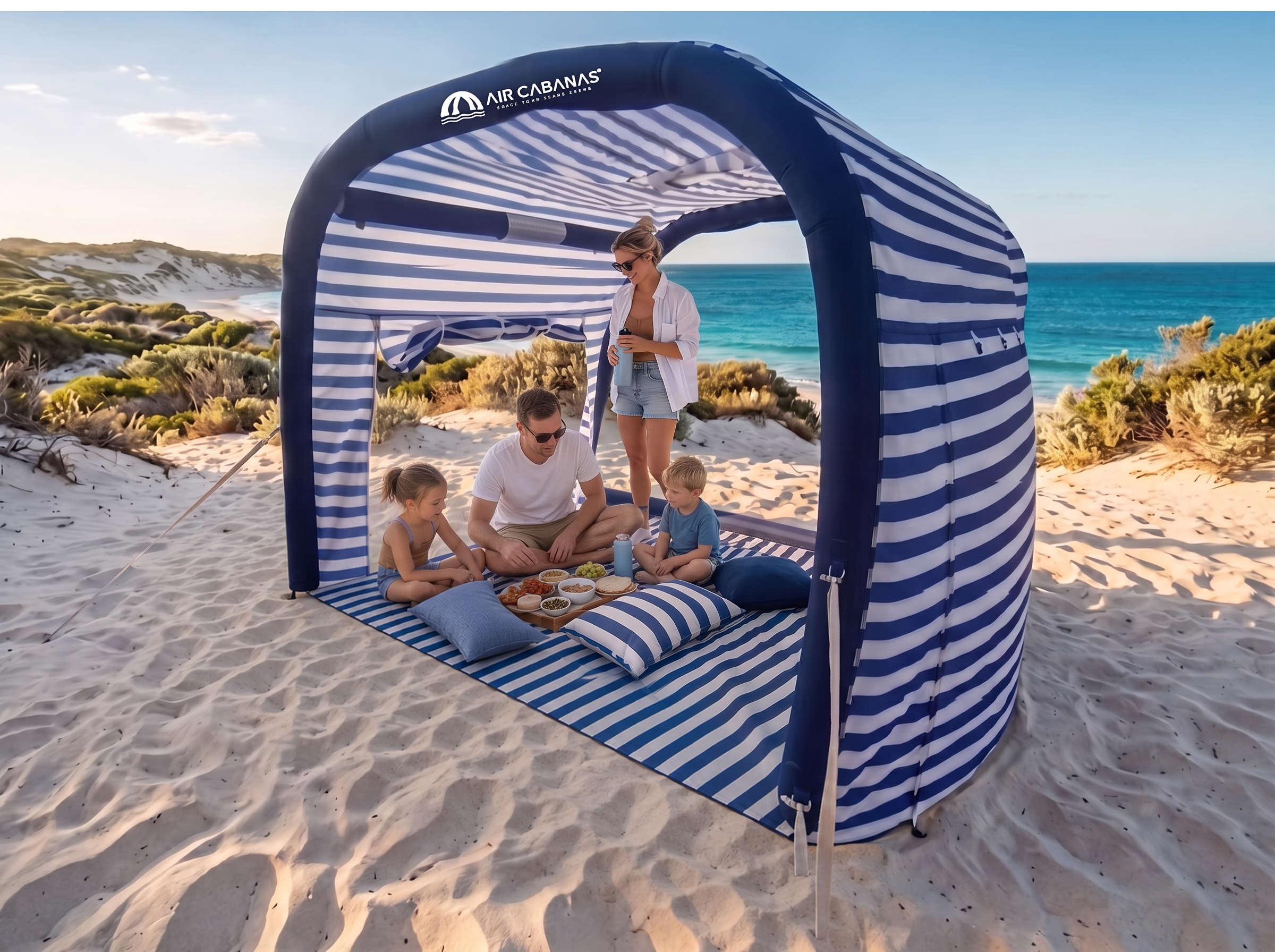
This reality has fueled a major shift toward shade-first sun safety with soft-surface, no-metal equipment on coastlines nationwide. Modern inflatable shelters like AirCabana eliminate rigid metal components entirely, replacing hard framing with high-pressure air beams engineered from resilient TPU tubes wrapped in marine-grade canvas. This innovative air-tube cabana architecture means that when energetic kids tumble, trip, or play rough-and-tumble games inside the shaded footprint, they encounter forgiving, cushioned surfaces rather than bruised foreheads or pinched fingers from collapsing metal joints.
Selecting an air-tube shelter also streamlines logistics for parents who already have their hands full carrying coolers, boards, and beach bags. Without heavy steel poles rattling around in a shoulder bag, setup is reduced to unrolling the canopy, securing sand pockets, and inflating the beams in minutes using a rapid hand pump. An AirCabana provides extensive UPF50+ certified overhead protection, creating a stable, soft-walled pavilion where infants can nap comfortably and toddlers can build sand sculptures protected from the harsh midday sun.
Essential Packing Checklist: Kids UV Protection Beach Gear
Organizing your beach kit before leaving home prevents last-minute compromises that leave little shoulders exposed to high UV indexes. A thoughtful gear checklist should account for changing conditions, wet sand, and the physical fatigue that naturally affects younger children after swimming. Keep your shade and safety equipment in a designated bag so nothing critical is left behind in the garage when the family rushes out the door to catch low tide.
Begin with sun protection garments and skincare basics: pack two UPF50+ rash vests per child so they have a dry option after lunch, reducing wind chill and friction rashes. Include zinc-based broad-spectrum sunscreen for faces and lips, alongside broad-brim hats with safety breakaway chin straps. Add polarized, UV400-rated sunglasses with elastic headbands to prevent them from dropping into the wash. A pack of gentle, fragrance-free wet wipes is also invaluable for clearing salty crust and sand from cheeks before reapplying face sticks.
Next, assemble your shelter and comfort accessories. Pack your inflatable AirCabana alongside a lightweight sand shovel for filling ballast pockets quickly and deeply. Bring oversized, sand-free microfiber towels or an insulated beach mat to lay across the sand floor, keeping babies cool and reducing heat transfer from sun-baked ground. Finally, pack an insulated cooler filled with electrolyte ice blocks, sliced chilled fruit, and plenty of fresh water to counter heat exhaustion, along with a compact first-aid kit containing soothing aloe gel, saline eye wash, and insect repellent.
Managing the UV Index and Beach Timing with Young Children
Sun protection is not static; it changes dramatically depending on the hour of the day and geographic location within Australia. The solar ultraviolet index regularly climbs above 11 or 12 across Australian coastlines during the warmer months, reaching levels categorized as extreme. During these periods, fair skin can begin to burn in as little as ten to eleven minutes of unshaded exposure. Savvy parents plan their beach trips around the UV cycle rather than relying solely on ambient temperature, as overcast days often carry deceptively high UV levels that cause severe sunburns.
Checking the Bureau of Meteorology or SunSmart app before heading out provides an accurate daily forecast of peak UV windows. As a rule of thumb, scheduling beach arrivals for early morning—between 7:30 AM and 10:30 AM—or late afternoon after 3:30 PM allows families to enjoy pristine surf conditions and mild temperatures while avoiding the zenith of solar intensity. During early morning hours, the sun's lower angle reduces direct overhead exposure, making it much easier to keep kids comfortable and shielded within natural or portable shade structures.
If your beach day inevitably spans the midday window, establishing a firm shelter routine is vital for maintaining kids uv protection beach standards. Designate the hours between 11:00 AM and 2:00 PM as mandatory shelter time for eating lunch, reading books, and resting. Having an inviting, spacious cool cabana or air-tube pavilion makes this transition seamless, providing ample room for the entire family to stretch out away from glaring UV reflection while waves crash just meters away.
Safe Setup, Ballast Anchoring, and Beach Awareness
No beach shelter can provide effective UV protection if it is not safely and securely anchored into the ground. Coastal breezes can shift rapidly from gentle offshore zephyrs to strong onshore sea breezes as land temperatures rise throughout the day. While soft-surface, no-metal equipment dramatically reduces the risk of impact injuries compared to heavy pole-frame cabanas, responsible beach parenting still requires diligent anchoring and continuous environmental awareness to keep everyone secure.
When pitching your shelter on loose sand, always face the main opening away from or diagonal to the incoming wind to prevent the structure from scooping air like a parachute. Fill all external ballast bags and sand pockets completely with wet, compacted sand from near the tide line rather than dry, powdery surface sand. Wet sand provides substantially more mass and ballast weight per pocket, ensuring your shade footprint remains firmly planted even when steady coastal gusts blow across the open beach.
Supervision remains the cornerstone of beach safety. Always position your cabana well above the active high-tide watermark to avoid sudden rogue waves undermining your ballast pockets. Keep a watchful eye on wind velocity throughout your visit; if conditions deteriorate, flags begin snapping aggressively, or sand starts whipping painfully across the foreshore, prioritize safety by taking the shelter down. Because modern inflatable cabanas deflate in seconds with the turn of a valve, packing down quickly in changing weather is stress-free and swift.
Frequently asked questions
Here are answers to the most common questions Australian parents ask about keeping children safe, comfortable, and sunburn-free during coastal outings.
What is the best sun protection for kids at the beach?
The best sun protection combines UPF50+ clothing, broad-spectrum water-resistant sunscreen, and certified overhead shade. Relying on shade-first sun safety with soft-surface, no-metal equipment such as an inflatable AirCabana ensures reliable UV shielding without the hazards of rigid metal poles in dynamic shore winds.
How often should you reapply sunscreen on kids at the beach?
Apply sunscreen generously 20 minutes before stepping outdoors, then reapply every two hours without fail. If children are swimming, bodyboarding, sweating heavily, or towel drying, reapply immediately after they leave the water to restore the protective moisture barrier.
Is a pop-up tent or cabana better for baby UV protection?
An open-sided cabana is generally superior to enclosed pop-up tents because it promotes cross-ventilation while blocking overhead radiation. Tents can trap stifling heat on warm sands, whereas high-UPF cabanas provide continuous airflow alongside full ultraviolet shade.
Can kids get sunburnt under beach shade?
Yes, children can still burn under shade due to UV radiation reflecting off ocean water and pale coastal sand. Combining overhead shelter with UPF50+ rash vests, broad-brimmed hats, and water-resistant sunscreen provides total defense against direct and reflected rays.
What should I do if my child gets sunburnt at the beach?
Move your child out of the sun immediately. Cool the affected skin using clean, damp towels, offer plenty of water to prevent dehydration, and apply pure aloe vera gel or gentle moisturiser. Seek prompt medical advice if blistering or fever develops.