
How Air-Tube Beach Cabanas Work: The Engineering Explained
Understand the frame, inflation, vents and integrated sand pockets behind a metal-free beach cabana.
Published September 2, 2026
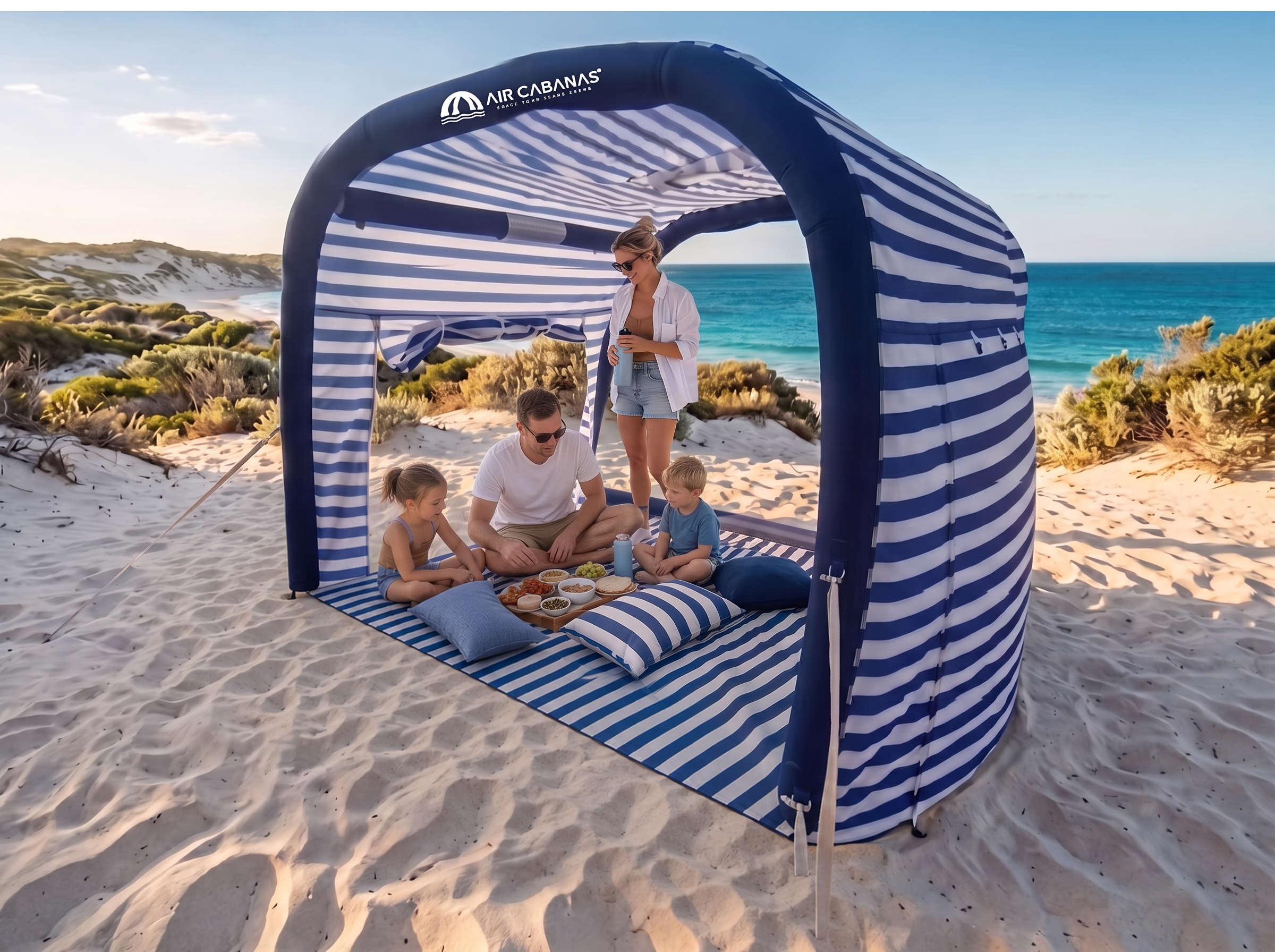
An inflatable beach cabana is not an air mattress with a canopy attached. Its tubes are structural columns: shaped, joined and pressurised to create an arched frame that supports the canopy while remaining light enough to carry to the beach.
The frame: pressure instead of metal
A conventional shade structure uses rigid poles to hold its shape. AirCabana replaces those rigid members with connected TPU air columns. When inflated, the columns create the arch and perimeter support. When deflated, the structure folds into a compact carry bag without a metal frame to assemble or pinch points around joints.
The benefit is not that an air frame ignores the weather. It is that the frame is designed to flex with ordinary movement and gusts rather than behaving like a rigid lever. Correct positioning, full inflation and proper sand ballast are still essential for a stable setup.
Why the arched silhouette matters
The arch gives head-height clearance through the main shade zone while keeping the front completely open. Rolled-up side panels and mesh vents let you tune the amount of breeze and visual openness without changing the basic frame.
Inflation in about 60 seconds
The included palm-sized USB rechargeable pump connects to the inflation valve and fills the air columns in about 60 seconds. The practical advantage is consistency: a pump gives you a repeatable setup rather than relying on how long someone can manually push air into a large frame.
Before your first beach trip, inflate the cabana at home and identify the valves, canopy orientation, pockets and vent openings. Charge the pump after use and keep the carry bag, pump and any optional accessories together so the setup remains a single grab-and-go kit.
Integrated sand pockets replace loose external bags
AirCabana’s colour-matched sand pockets are stitched along the tubes rather than hanging from external straps. This keeps the anchoring system close to the frame and removes loose bags from the beach setup. The Classic uses three-sided ballast along the sides and rear; Family uses side pockets.
Fill every pocket required by the model with firm, dampened sand where conditions allow, close it securely and check it after a wind change. The pockets are part of the design, not a substitute for reading the beach and packing down when conditions are unsafe.
Designed around the details people touch
Air-tube engineering is also about the user interface of the product. Valves need to be easy to find, the pump needs a clear connection, and the canopy needs to make sense when it comes out of the bag. A design can be technically strong and still fail if the setup is confusing on a busy beach.
That is why AirCabana keeps the experience deliberately simple: one air frame, a palm-sized USB rechargeable pump, integrated pockets and an open front. The carry bag keeps the kit together, while the optional matching mat adds a soft layer only when you want one. The base does not depend on a built-in floor that must be kept clean.
Before a first trip, inflate the cabana in a clear space and walk around it. Find the pocket closures, identify the vent openings and practise deflation. Familiarity makes the real setup calmer, especially when the beach is crowded or the weather is changing.
What to expect when the air leaves the tubes
Deflation is the reverse of setup. Release the valve, guide air out rather than fighting the fabric, and fold the frame into a size that sits naturally in the carry bag. Do not force a wet, sandy cabana into long-term storage; a few minutes of drying at home protects the fabric and keeps the next setup pleasant.
If the pump is low, charge it in the car on the way. Keeping a charged pump and a simple backup plan together means a small forgotten detail does not have to cancel the day.
The product is a system, not a single feature
The frame, canopy, anchoring and ventilation work together. A strong air column without a sensible ballast system would be incomplete. A good canopy without a practical pump would be frustrating. A vent without an open front would not create the same easy flow through the space.
AirCabana’s design decisions are linked: remove metal from the structure, keep the entrance fully open, stitch colour-matched sand pockets to the tubes, and use vents to help release air through the upper canopy. The result is a beach shade system that is quick to understand when it comes out of the carry bag.
As with any inflatable product, inspect it before use, keep sharp objects away from the tubes and follow the care instructions. The design reduces setup friction, but good product care is what keeps that experience reliable over many beach days.
Apex vents and roll-up side mesh
Warm air naturally collects high in a canopy. The roof apex vent provides an escape path, while roll-up side mesh vents increase cross-flow when you want more breeze. These openings are designed to reduce heat and help the canopy behave more calmly in ordinary coastal conditions.
Ventilation is a comfort and stability feature, not a promise of wind-proofing. Keep the front open, use the vents as designed and never leave the cabana unattended in rising wind.