Cool Cabanas vs Air Cabanas: The Ultimate Aussie Beach Shelter
Choosing between cool cabanas and inflatable air cabanas for your next beach trip? Discover the pros and cons of pole-frame vs air-tube designs in…
Published 2026-10-07T04:42:03.827+00:00
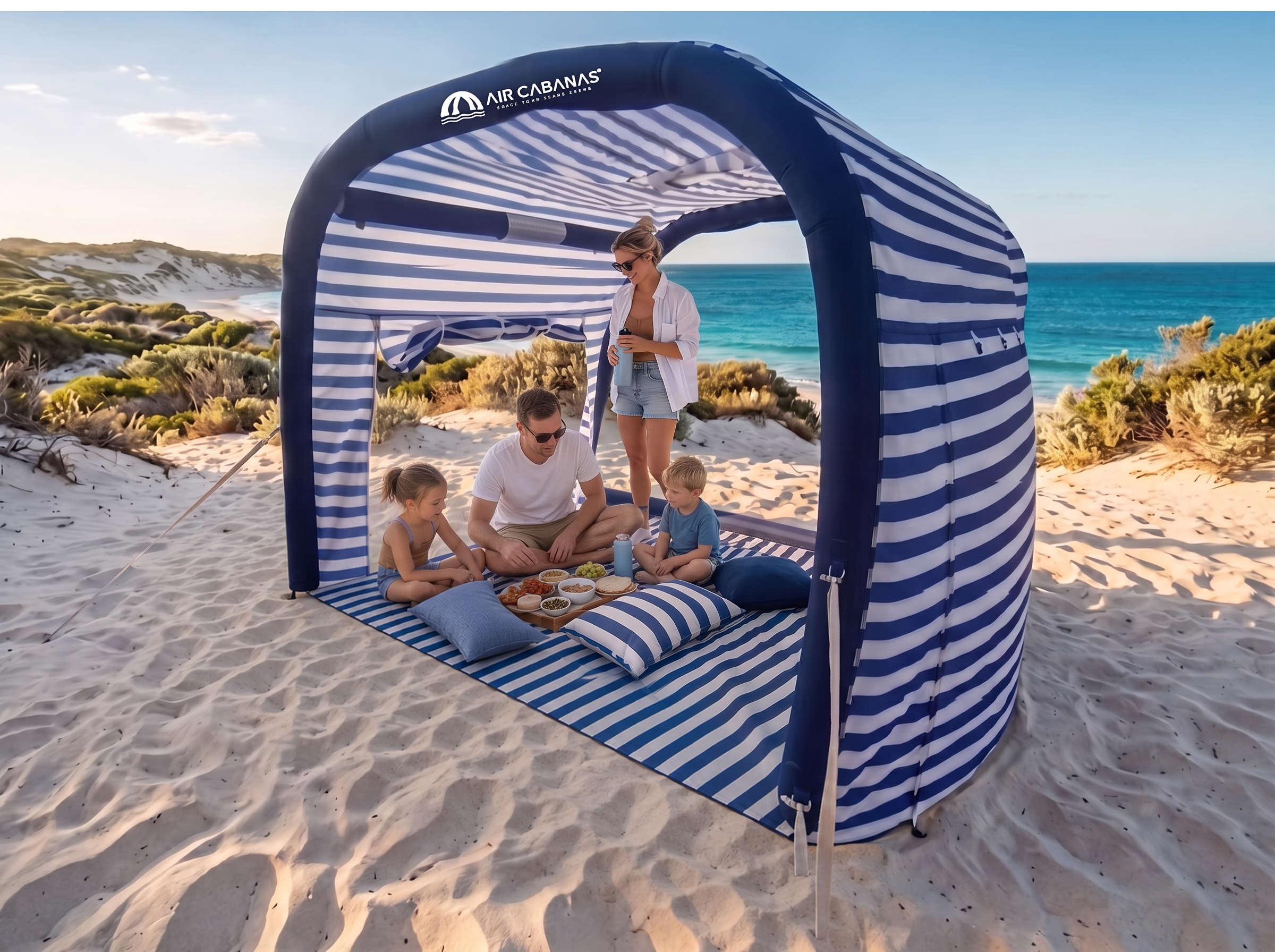
Australians love their beaches, and finding the perfect shade is essential for a comfortable day out. When it comes to beach shelters, a common dilemma arises: pole-frame cool cabanas or the innovative inflatable air cabana? This guide dives deep into the world of beach shade, comparing the traditional pole-frame designs with the modern air-tube alternatives, helping you decide which is best for your family’s sun protection needs down under. Whether you're after quick setup, superior stability, or compact portability, understanding the nuances of each type is key to making an informed choice for your next coastal adventure.
Understanding Pole-Frame Cool Cabanas: The Traditional Choice
For years, pole-frame cabanas have been a staple on Australian beaches, offering a familiar and straightforward solution for sun protection. These shelters typically consist of a fabric canopy supported by a series of poles, which are then anchored into the sand. Their design prioritises a classic aesthetic and a relatively simple structure, making them a popular choice for many beachgoers seeking reliable shade. The robust nature of the poles often provides a sense of stability, particularly in moderate conditions, appealing to those who prefer a more rigid setup.
The assembly process for a traditional pole-frame cool cabana usually involves connecting several pole sections, threading them through fabric sleeves or attaching them to grommets, and then securing the entire structure with ropes and sand pegs. While this can be a familiar ritual for seasoned beachgoers, it can also be a point of consideration for those looking for a quicker or less physically demanding setup. The number of poles and the complexity of the fabric attachment can vary significantly between models, influencing both the setup time and the overall stability of the shelter.
One of the perceived advantages of pole-frame designs is their often lower initial cost compared to some of the newer inflatable options. This accessibility makes them an attractive entry point for families or individuals who are new to beach shelters and want a functional sun protection solution without a significant upfront investment. However, it's worth noting that the longevity and performance can vary greatly with material quality, and cheaper models might not offer the same durability or wind resistance as higher-end alternatives.
Maintenance for pole-frame cabanas is generally straightforward, focusing on cleaning the fabric and ensuring poles are free from sand and corrosion. Storage typically requires neatly folding the canopy and disassembling the poles, which can result in a longer, more rigid package that might take up more space in a car boot or storage cupboard. Understanding these practical aspects is crucial when weighing up the benefits of a traditional pole-frame cool cabana against other options available on the market.
While they offer a classic beach experience, the evolution of beach shelters means that new designs are constantly emerging, offering different advantages. The familiar sight of a pole-frame cabana dotting the coastline is a testament to its enduring appeal, but it's important to consider how these traditional features stack up against the innovations found in more modern designs, especially concerning ease of use and portability for the average Australian family heading to the beach.
Exploring Inflatable Air Cabanas: The Modern Solution
Inflatable air cabanas represent a significant leap forward in beach shelter technology, offering a contemporary alternative to their pole-frame counterparts. Instead of rigid poles, these innovative shelters utilise inflatable air tubes that form the structural framework. This design radically simplifies the setup process, as the entire structure can be inflated using a pump, eliminating the need for fiddly pole assembly and disassembly. An AirCabana, for instance, exemplifies this modern approach, promising a hassle-free experience.
The core advantage of an inflatable cabana lies in its rapid deployment. With a quality pump, many models can be fully erected in mere minutes, transforming a flat pack into a sturdy shelter with minimal effort. This speed is a game-changer for families with young children or anyone keen to maximise their beach time rather than spending it battling with poles and fabric. The convenience factor is often the primary draw for those considering an upgrade from traditional beach shelters.
Beyond speed, the air-tube structure of an inflatable air cabana offers a surprising degree of flexibility and stability. While pole-frame cabanas rely on rigid connections, air tubes can flex slightly under stress, potentially making them more resilient to sudden gusts of wind. When properly anchored, the entire structure works as a cohesive unit, distributing forces more evenly. This adaptability contributes to a more secure feeling, provided the shelter is correctly set up and secured to the ground.
Portability is another area where inflatable designs often excel. Once deflated, the entire shelter, including the air tubes, folds down into a compact, soft package. This makes it significantly easier to transport and store compared to the long, rigid bags typically associated with pole-frame options. An AirCabana, for example, is designed with this portability in mind, fitting neatly into its carry bag, which can then be easily stowed in a car or beach trolley.
The materials used in inflatable cabanas are typically robust and designed to withstand the harsh Australian sun and sand. High-quality fabrics and durable air tubes ensure longevity, offering a premium feel and performance. While the initial investment might be higher for an inflatable cabana, the enhanced convenience, rapid setup, and compact storage often justify the cost for those seeking a superior beach experience and a shelter that truly enhances their time by the ocean.
Setup Speed and Ease: Pole-Frame vs. Air-Tube Cabanas
One of the most significant differences between pole-frame and inflatable air cabanas is the setup process. Traditional pole-frame cool cabanas require a series of manual steps: assembling poles, threading them through fabric, and then anchoring the structure. This can be a multi-person job, particularly for larger models, and can take anywhere from 10 to 20 minutes depending on familiarity and conditions. For many, this is a familiar beach ritual, but it can be cumbersome when you're eager to get settled.
In contrast, the setup of an inflatable cabana is remarkably swift and straightforward. It typically involves laying out the fabric, attaching a pump, and inflating the air tubes. The entire process often takes just a few minutes, with some models being fully erect in under five minutes. This 'pump and play' approach is a huge advantage for families, solo beachgoers, or anyone who values efficiency. An AirCabana, for instance, focuses on this rapid deployment, allowing you more time to enjoy the waves.
The ease of setup also extends to the pack-down process. Disassembling a pole-frame cabana involves reversing the setup steps, which can sometimes be more challenging than assembly, especially if sand has jammed connectors. Folding the fabric neatly to fit back into its bag can also be a wrestling match. This often leads to a slightly frustrating end to a relaxing beach day.
For an inflatable cabana, pack-down is equally simple. Deflating the air tubes is a quick process, and the flexible nature of the fabric and tubes means it can be folded or rolled more easily into its carry bag. This compact packing is a major plus for transport and storage, eliminating the struggle to fit rigid poles and bulky fabric back into a tight space. The overall user experience, from arrival to departure, is significantly streamlined with an inflatable design.
Ultimately, if speed and ease of use are your top priorities, an inflatable air cabana clearly holds the advantage. While pole-frame cool cabanas are manageable, the 'pump and go' convenience offered by air-tube designs transforms the beach setup from a chore into a seamless transition to relaxation. This difference alone is often enough to sway buyers towards the modern inflatable options for their superior user experience on the sand.
Stability and Durability: A Critical Comparison for Australian Conditions
When selecting a beach shelter for Australian conditions, stability and durability are paramount. Pole-frame cool cabanas, with their rigid pole structure, can offer good stability in moderate winds, provided they are correctly assembled and anchored. The strength of the poles and the quality of the fabric are key factors here, with thicker poles and robust materials generally offering better resistance. However, strong or gusty winds can put significant strain on the rigid connections, potentially leading to bending poles or dislodged anchors.
Inflatable air cabanas, such as the AirCabana, approach stability differently. The air tubes, while firm when inflated, possess a degree of flexibility that allows them to absorb and dissipate wind forces more effectively than rigid poles. Instead of resisting the wind head-on, the air tubes can slightly flex, reducing the stress points on the structure. This inherent flexibility, combined with proper anchoring, can result in a remarkably stable shelter, even in more challenging coastal breezes.
Durability also varies significantly. Pole-frame cabanas are susceptible to issues like corroding poles, snapped elastic cords within poles, or torn fabric where poles attach. Regular exposure to saltwater and UV radiation can degrade materials over time, necessitating careful maintenance and storage. The individual components, while replaceable, can sometimes be difficult to source, impacting the overall lifespan of the shelter.
Inflatable cabanas are built with tough, puncture-resistant fabrics and robust air tubes designed for repeated inflation and deflation. While punctures are a concern, high-quality models come with repair kits, and the materials are generally very resilient to sand, salt, and sun. The absence of rigid poles eliminates many common failure points seen in traditional designs, contributing to a potentially longer service life with proper care. An inflatable cabana is engineered for resilience.
For Australian beachgoers facing diverse and sometimes unpredictable weather, the stability offered by both types hinges on correct setup and anchoring. However, the inherent flexibility of an inflatable air cabana's air-tube structure often provides a more forgiving and resilient response to wind, while the materials used are typically selected for their robustness in outdoor conditions. Ensuring your chosen beach shelter is well-secured is always the best defence against the elements, regardless of its design.
Portability and Storage: What Fits Your Lifestyle?
The practicality of a beach shelter extends beyond its performance on the sand; how easily it can be transported and stored is a major consideration for many Australian families. Pole-frame cool cabanas, once disassembled, typically result in a bundle of long poles and a separate fabric canopy. This often means a long, somewhat rigid package that can be awkward to carry and takes up considerable space in a car boot or storage cupboard. For those with smaller vehicles or limited storage at home, this can be a significant drawback.
In contrast, an inflatable air cabana shines in the area of portability. When deflated, the entire structure, including the air tubes, folds down into a surprisingly compact and soft package. This flexibility allows it to be easily stowed in a carry bag, which can then be comfortably placed in a car, on a beach trolley, or even carried by hand. An AirCabana, for instance, is specifically designed to be highly portable, making it an ideal choice for spontaneous beach trips or those with space constraints.
The weight difference can also be a factor. While some lightweight pole-frame options exist, the combined weight of poles and fabric can still be substantial. Inflatable cabanas, due to their air-filled structure, often offer a more favourable weight-to-size ratio when packed down, making them easier to carry from the car to your chosen spot on the beach. This reduced bulk and weight contributes significantly to a more enjoyable and less strenuous beach outing for the whole family.
Storage at home is another aspect where inflatable designs hold an advantage. The ability to compress the entire shelter into a small, flexible bag means it can be tucked away in a cupboard, under a bed, or in a garage corner without demanding much space. The long, rigid nature of disassembled pole-frame cabanas can make finding a suitable storage spot more challenging, often requiring dedicated space in a shed or garage.
Ultimately, if seamless transport and compact storage are high on your list of priorities, an inflatable air cabana offers a clear advantage. Its ability to pack down small and light makes it a highly convenient option for the modern Australian beachgoer, simplifying logistics and enhancing the overall ease of use from home to the sand and back again. The 'coolcabana' aesthetic is classic, but the convenience of an inflatable is hard to beat for practicality.
Cost and Value: Making an Investment in Your Beach Comfort
When considering a beach shelter, the initial purchase price is often a primary factor. Pole-frame cool cabanas generally come with a lower entry-level price point, making them an accessible option for many families. This can be appealing for those on a tighter budget or who are simply looking for a basic sun protection solution without a significant financial outlay. However, it's important to look beyond the initial cost and consider the overall value proposition.
The value of a beach shelter extends to its durability, ease of use, and the quality of the materials. While an inflatable cabana might have a higher upfront cost, this is often reflective of the advanced technology, robust materials, and enhanced user experience it provides. The convenience of rapid setup, compact portability, and potentially greater stability in varied conditions can offer significant long-term value, justifying the investment for many Australian beach lovers.
Maintenance and potential replacement costs are also part of the value equation. Pole-frame designs can incur costs for replacing snapped poles or worn-out elastic cords, and fabric tears can sometimes be more challenging to repair due to the stress points around pole attachments. Inflatable designs, while susceptible to punctures, often come with easy-to-use repair kits, and the overall structure is designed for resilience, potentially leading to fewer unexpected repair expenses over its lifetime.
Consider how often you plan to use your beach shelter. For infrequent users, a more budget-friendly pole-frame option might suffice. However, for families who spend many weekends at the beach, or those who value convenience and a premium experience, the added investment in an inflatable air cabana can quickly pay dividends in terms of reduced setup stress and increased enjoyment. An AirCabana is designed as a long-term investment in your family's beach comfort.
Ultimately, the 'best' value depends on individual priorities. If budget is the absolute top concern, a pole-frame cool cabana can be a good starting point. However, for those seeking a blend of convenience, durability, and a superior overall beach experience, the long-term value and enhanced features of an inflatable cabana often make it a more rewarding investment. Weighing these factors carefully will help you make the best decision for your beach adventures.
Frequently Asked Questions About Beach Shelters
Here are some common questions Australians ask when choosing their ideal beach shade solution, offering insights into both pole-frame and inflatable options.
What is the easiest beach shelter to put up?
Inflatable air cabanas are generally considered the easiest and fastest to set up. They use air tubes instead of rigid poles, requiring only a pump to inflate the structure in minutes. This eliminates the need for complex assembly, making them ideal for quick deployment on the beach. Pole-frame models, while familiar, take longer to assemble.
Are inflatable cabanas good in wind?
Yes, high-quality inflatable cabanas can perform very well in windy conditions when properly anchored. Their flexible air-tube structure can often absorb wind gusts more effectively than rigid poles, reducing stress points. Always ensure your inflatable cabana is securely pegged down and follow manufacturer guidelines for wind safety.
How do I choose a good beach shelter for my family?
Consider size, ease of setup, portability, and stability. For families, a larger shelter that's quick to erect (like an inflatable cabana) and offers good UV protection is key. Check material quality, UV rating, and ensure it comes with effective anchoring options suitable for sand. Read reviews focusing on Australian beach experiences.
Are AirCabanas worth the money?
Many users find AirCabanas to be a worthwhile investment due to their quick setup, compact portability, and robust design. While they may have a higher upfront cost than some pole-frame cool cabanas, the convenience and durability they offer often justify the price for frequent beachgoers seeking a premium, hassle-free shade solution for the Australian coast.
What's the difference between a cool cabana and an air cabana?
A 'cool cabana' is often used as a generic term for a pole-frame beach shelter, relying on rigid poles for structure. An 'air cabana' (like an AirCabana) uses inflatable air tubes instead of poles. The main differences are in setup speed (air is faster), portability (air packs smaller), and how they handle wind (air can flex more).
Do beach shelters actually keep you cool?
Yes, beach shelters like cool cabanas and inflatable air cabanas provide essential shade, which significantly lowers the ambient temperature underneath compared to direct sun. The fabric's UV protection rating (e.g., UPF50+) is crucial for blocking harmful rays and helping to keep the shaded area cooler and safer for extended periods on the beach.
Which Beach Shelter Is Right For Your Aussie Adventures?
Deciding between a pole-frame cool cabana and an innovative inflatable air cabana ultimately comes down to your personal priorities and how you envision your ideal beach day. Both offer valuable sun protection, but they deliver it through distinct experiences. The traditional pole-frame design appeals to those who appreciate a classic aesthetic and a more budget-friendly entry point, accustomed to a familiar setup ritual.
However, for the modern Australian beachgoer who values convenience, speed, and compact portability, the inflatable air cabana presents a compelling case. The ability to set up and pack down in minutes, coupled with its flexible stability in varying conditions and easy storage, significantly enhances the overall beach experience. An AirCabana, for example, is engineered to transform beach days into effortless adventures.
Consider how often you hit the sand, the size of your family, your vehicle's storage capacity, and your willingness to invest in a premium experience. If battling with poles and ropes detracts from your relaxation, or if you frequently find yourself wishing for a quicker setup, an inflatable option is likely to be a game-changer. It’s not just about shade; it’s about simplifying your entire beach outing.
Regardless of your choice, always prioritise safety by ensuring your beach shelter is correctly anchored, especially in windy conditions. Supervise children, and if the weather turns, pack down your shelter to avoid damage. Both types of shelters offer excellent protection from the sun's harsh rays, but the 'coolcabana' experience has evolved, offering more options than ever.
Ultimately, whether you opt for the enduring appeal of a pole-frame cool cabana or the cutting-edge convenience of an inflatable air cabana, the goal remains the same: to enjoy Australia's stunning beaches safely and comfortably. Evaluate your needs, weigh the pros and cons presented, and choose the beach shelter that promises to make your coastal adventures truly unforgettable.