
The Best Beach Shade for Australian Summers: What to Look For
A practical guide to choosing beach shade that is quick to set up, comfortable in coastal wind and easy for the whole family to use.
Published September 2, 2026
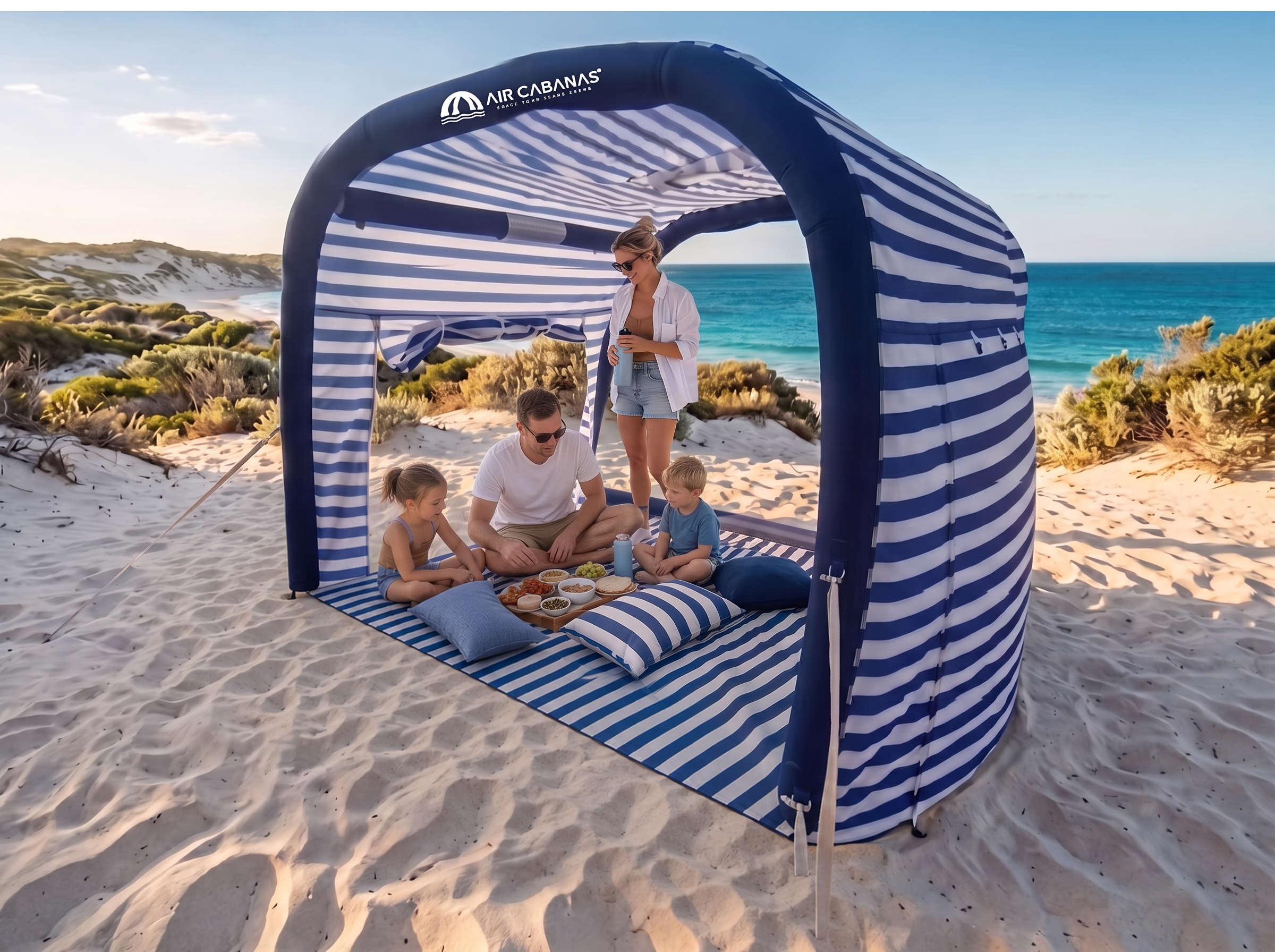
A beach shelter has one job: make more of the day comfortable. The best beach shade is not necessarily the biggest or the most complicated. It is the structure you can carry, open, anchor and pack away without turning a relaxed beach morning into a project.
Start with the way you actually spend beach days
A couple who swims constantly needs a different setup from a family that brings lunch, towels, toys and a cooler. Before comparing labels, think about your real routine: how far you walk from the car, whether one person usually sets up, and how many people need usable shade at the same time.
An open-front cabana is often more useful than a closed beach tent. It creates a defined shaded area without making the entrance feel like a crawl space. You can see children playing, carry a tray of food in and out, and keep the beach breeze moving through the canopy.
Look for a genuinely usable footprint
A quoted footprint only helps if the shade area is usable from edge to edge. Compare the open size, not just the packed-bag dimensions. AirCabana Medium opens to 2.0m x 2.0m, while Large opens to 2.4m x 2.4m. That gives you a meaningful choice between a lighter two-person setup and generous family shade.
Check the weight before you fall in love with the shape
A beautiful shelter that stays in the garage is not a successful beach shelter. A metal-free air frame can reduce the rigid hardware you have to carry. AirCabana packs into a carry bag and uses a palm-sized USB rechargeable pump, so the setup has fewer separate pieces to remember.
The five features that matter most
First, choose shade fabric with a clear UPF rating and follow ordinary sun-safety habits alongside it. A canopy is one layer of protection, not a reason to skip hats, clothing, sunscreen or breaks from the sun.
Second, prioritise ventilation. An open front, roll-up side mesh vents and a roof apex vent help release hot air and reduce the enclosed, stuffy feeling common in small beach shelters. Third, look for anchoring that suits sand rather than a generic peg-only system. AirCabana uses integrated, colour-matched sand pockets stitched into the side tubes and, on the Classic, the rear tube.
Fourth, favour soft, flexible surfaces around children. Air tubes remove rigid metal poles and common pinch points from the perimeter. Fifth, choose a setup that one adult can manage. Sixty-second inflation is useful because it leaves more time for swimming and less time standing over a pump.
Make the shade work harder for your day
Think of the cabana as a base for the whole outing, not just a place to hide for five minutes. Put the cooler and bags toward the rear, leave a clear walk-in lane at the front, and keep hats and water within reach. If you are visiting with children, establish the cabana as the meeting point before anyone heads to the water.
The most useful shade is shade that stays comfortable as the day changes. Open the front for easy access, roll up the side mesh when you want extra airflow, and use the apex vent to release warm air. When the sun moves, shift towels and seating inside the footprint rather than improvising with a second shelter.
This simple layout also makes pack-down less frantic. Keep small items together, empty the sand pockets before folding, and check that the pump and carry bag are back in the kit. A repeatable routine is one of the best features a beach product can have.
Which AirCabana is right for you?
AirCabana Classic is the all-rounder: navy-and-white stripe, three-sided integrated sand pockets, and a head-height open-front silhouette. Choose it when you want the most versatile shade for two adults, guests or a growing family.
AirCabana Family keeps the same air-tube construction in a bright summer cyan colourway. Its side sand pockets and open front make it an easy-to-spot option for couples, friends and lighter beach setups.
Think about storage and repeat use
A cabana earns its keep through repeat use. Before ordering, consider where it will be stored, who will carry it and how often it will be taken to the beach. A compact packed shape and a dedicated carry bag can make the difference between a product that goes everywhere and one that gets left behind.
It is also worth choosing a model that will suit your beach habits next summer, not just your next visit. A growing family may appreciate the extra Large footprint, while a couple who travels light may prefer Medium. Good shade should adapt to real life rather than create another complicated decision.
Plan for the trip home as well as the trip out
The walk back to the car is where a good beach setup proves its value. Keep the carry bag open and accessible, separate wet towels from the cabana, and give one person responsibility for the pump. A lightweight frame is helpful, but an organised pack-down is what stops accessories being left behind in the sand.
If the canopy is damp, shake off loose sand and avoid sealing it wet for a long drive. At home, open it in a shaded, ventilated place and let the fabric dry completely before storage. Check the valves and seams while it is inflated so small maintenance jobs stay small.
For regular beachgoers, keep a short checklist in the car: charged pump, carry bag, water, hats, sunscreen, towels and a way to clean sand from the pockets. The best beach shade is the one that is ready when a clear morning appears on the forecast.
Small choices that improve a long beach day
Shade is most effective when it supports the rest of your routine. Place the cabana so the entrance is easy to reach from your towels, keep the water cooler in the deepest shade, and avoid piling bags against the air tubes. A clear perimeter makes the structure easier to inspect and keeps everyone moving through the front without awkward detours.
If your beach visits run from morning into afternoon, notice how the sun tracks across the sand. The open footprint is generous, but it is still worth turning chairs and towels as the light changes. The goal is not to chase every ray; it is to make the shaded zone useful for the parts of the day when skin needs a break.
These details are why buying a beach cabana should be about the whole experience: carry distance, setup time, usable shade, ventilation, anchoring and pack-down. AirCabana is built to make those repeated steps feel straightforward, so the product earns its place in the car.
A simple beach-shade checklist
Before ordering, confirm the open footprint fits your group, the packed size fits your car, and the anchoring system matches the beach surface. On arrival, practise inflation at home, charge the pump, and learn where the sand pockets and vent openings are located.
At the beach, choose a clear area away from shore break, inflate fully, fill every required sand pocket and check the canopy after a wind change. Pack it dry when possible. Small habits like these protect the product and make your next beach day faster.