Best Beach Cabana Fabric: Ripstop, Coatings & Salt Resistance in Australia
Discover the best beach cabana fabric for Australian conditions. Learn about ripstop, UV coatings, and salt resistance to choose a durable, long-lasting…
Published 2026-10-17T20:00:23.478+00:00
Choosing the right beach cabana fabric is crucial for enjoying Australia's stunning coastline. The sun, sand, and salt demand a material that can withstand harsh conditions, offering reliable shade and lasting durability. From ripstop weaves to advanced coatings and robust seams, understanding the characteristics of beach cabana fabric will help you make an informed decision for your next beach adventure. This guide delves into what makes a fabric truly beach-ready, ensuring your investment provides comfort and protection for years to come.
Why Your Beach Cabana Fabric Matters in Australian Conditions
Australia's beaches are iconic, but the environment can be incredibly demanding on outdoor gear. Intense UV radiation, abrasive sand, and corrosive salt spray all contribute to wear and tear. The fabric of your beach cabana is its primary defence against these elements, directly impacting its lifespan and your comfort. A high-quality material ensures your shade solution remains effective, preventing premature fading, tearing, and structural compromise.
Beyond just providing shade, the right beach cabana fabric offers essential protection from harmful UV rays. Many fabrics are specifically treated to block a significant percentage of UV radiation, safeguarding your skin during long days by the ocean. This UV resistance is a critical factor, especially given Australia's high UV index, making fabric choice a health consideration as much as a durability one for families.
Durability is paramount when considering beach cabana fabric. A material that can withstand repeated packing, unpacking, and exposure to the elements will save you money and hassle in the long run. Look for fabrics engineered for resilience, capable of resisting tears from stray branches or sharp objects, and maintaining their integrity against constant friction from sand and wind. This robust construction is key to a lasting beach companion.
Ripstop: The Weave That Prevents Tears in Your Beach Cabana Fabric
Ripstop is a popular and highly effective weave technique used in many outdoor fabrics, including those for beach cabanas. It involves incorporating stronger, thicker reinforcement threads at regular intervals, creating a grid-like pattern. If a small tear does occur, these thicker threads prevent it from spreading, effectively 'stopping the rip' and preserving the fabric's integrity. This makes it an excellent choice for dynamic beach environments.
The benefits of ripstop go beyond just tear prevention. This weave often contributes to a fabric's overall strength-to-weight ratio, meaning you get robust durability without excessive bulk. This is particularly advantageous for portable items like beach cabanas, where ease of transport is important. A lighter yet stronger fabric makes setting up and packing down your shade a breeze, enhancing your beach experience.
When evaluating beach cabana fabric, identifying a ripstop weave is a good indicator of quality and resilience. While not all ripstop fabrics are created equal in terms of material composition, the presence of this weave signifies a design choice aimed at longevity. It's a feature that provides peace of mind, knowing your cabana is built to withstand minor mishaps and continue providing reliable shade for many seasons.
Understanding Coatings: UV Protection, Water Resistance, and Longevity
Fabric coatings play a pivotal role in enhancing the performance of beach cabana fabric. The most common types include polyurethane (PU) and silicone, applied to the fabric's surface to add crucial properties. These coatings are not just about aesthetics; they are fundamental to how well a cabana performs against the elements, particularly the harsh Australian sun and occasional sea spray, and contribute significantly to UV degradation resistance.
UV protective coatings are essential for blocking harmful ultraviolet rays. These treatments often result in a UPF (Ultraviolet Protection Factor) rating, indicating how much UV radiation the fabric allows through. A high UPF rating means greater protection for you and your family. These coatings also help to prevent the fabric itself from degrading due to sun exposure, extending its lifespan and maintaining its colour.
Water-resistant coatings, while not making a cabana fully waterproof like a rain tent, provide a crucial barrier against light showers and sea spray. This helps keep the interior drier and prevents the fabric from becoming waterlogged, which can add weight and slow drying times. These coatings also contribute to the fabric's overall durability by protecting the underlying fibres from environmental stressors and prolonging the life of your cabana's materials.
Salt resistance is another key benefit offered by certain coatings and fabric treatments. Constant exposure to salt spray can be corrosive, weakening fibres and accelerating wear. Fabrics with enhanced salt resistance maintain their structural integrity and appearance better over time, making them ideal for coastal living and frequent beachgoers. This specialised treatment helps to preserve the fabric's performance and aesthetic appeal in marine environments.
The Importance of Strong Seams and Durable Materials
The strength of a beach cabana is not solely determined by its fabric; the quality of its seams is equally critical. Well-constructed seams, often reinforced or double-stitched, prevent stress points from tearing under tension from wind or movement. Weak seams are a common point of failure, undermining even the most durable fabric. Look for manufacturing quality that pays attention to these crucial connection points for lasting performance.
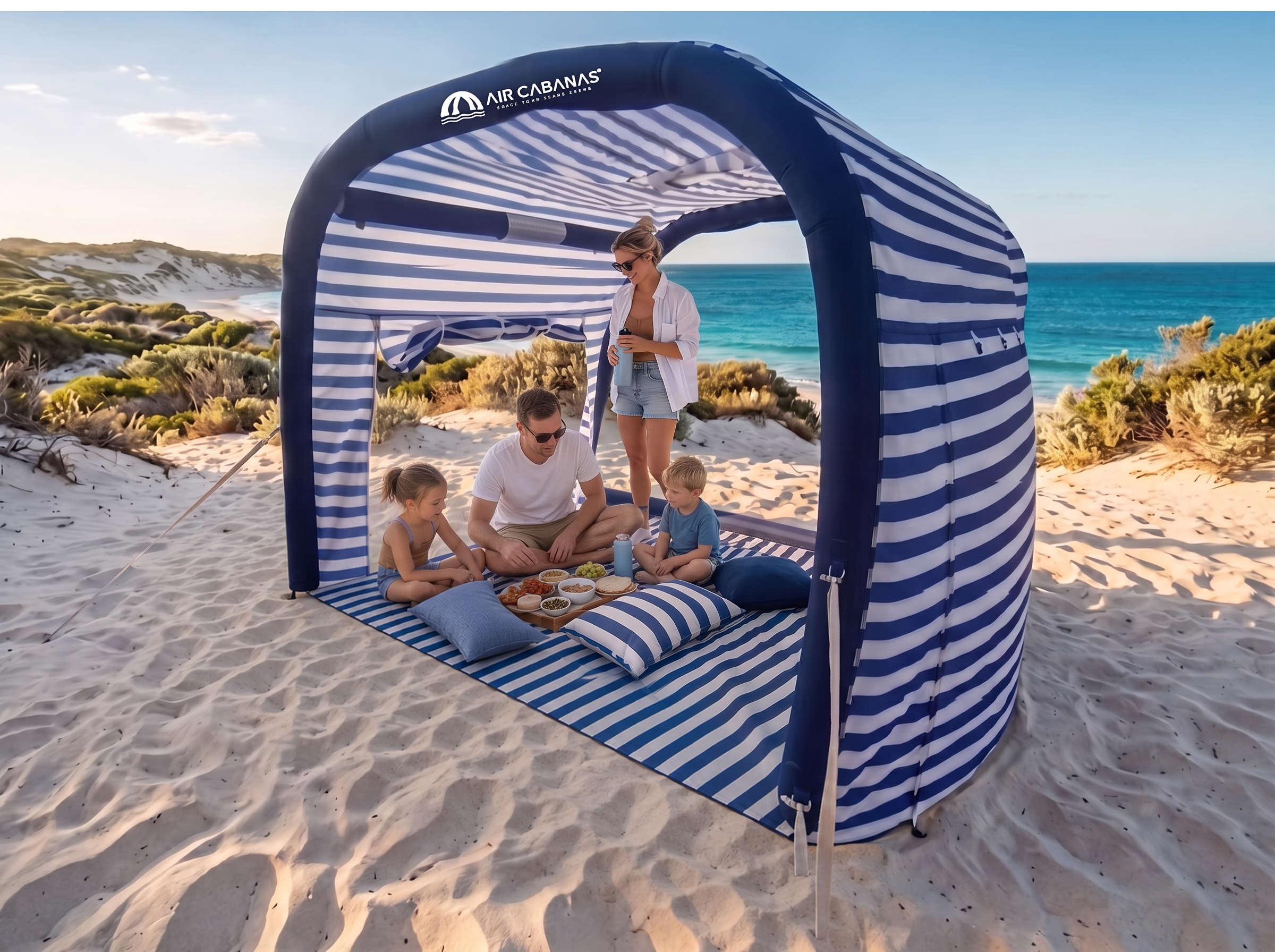
Beyond the primary fabric, the materials used for the frame and other components also contribute to overall durability. For instance, the air-tube design of an AirCabana offers inherent flexibility and strength, contrasting with rigid pole-frame cabanas which can be prone to bending or snapping in breezy conditions. The choice of materials across all components dictates the cabana's resilience and longevity in the challenging beach environment.
Attention to detail in manufacturing, including the type of thread used for stitching and any additional reinforcements, signifies a product built to last. High-quality threads resist UV degradation and salt corrosion, ensuring seams remain strong. Robust materials and meticulous construction across all elements, from fabric to frame to stitching, are hallmarks of a reliable beach cabana that will serve you well for many Australian summers.
AirCabana Design: Innovation in Beach Shade Materials
AirCabana represents a significant advancement in beach shade technology, moving away from traditional pole-frame cabanas. Our innovative air-tube design not only makes setup incredibly fast and easy but also inherently enhances the durability of the structure. When combined with our carefully selected beach cabana fabric, it creates a robust and reliable shade solution built for the Australian outdoors.
The fabric chosen for AirCabana products is specifically engineered to complement our unique design. It features a high-quality ripstop weave for tear resistance and advanced coatings for superior UV protection and water resistance. This combination ensures that your AirCabana provides excellent shelter, protecting you from the sun and light sea spray, while also standing up to the rigours of frequent beach use.
We understand that longevity is key for Australian families investing in beach gear. That's why every aspect of AirCabana's design, from the robust materials to the reinforced seams, is focused on durability. Our commitment to quality means you get a beach cabana that not only looks great but also performs consistently, season after season, offering a comfortable and safe haven on the sand without the fuss of poles.
The thoughtful integration of strong materials and innovative design ensures that your AirCabana is a reliable companion for all your coastal adventures. Unlike many traditional pole-frame cabanas, the AirCabana offers stability and ease of use, allowing you to spend more time relaxing and less time struggling with setup. It’s a modern solution designed for the modern Australian beachgoer, focusing on convenience and resilience.
Maintaining Your Beach Cabana Fabric: Tips for Longevity
Proper care and maintenance are crucial for extending the life of your beach cabana fabric, especially given the harsh Australian environment. After each use, it's vital to shake off as much sand as possible and allow the fabric to dry completely before packing it away. Packing a damp cabana can lead to mildew growth, which not only smells unpleasant but can also degrade the fabric over time, compromising its strength and appearance.
Regular cleaning, even if just a gentle rinse with fresh water, can significantly reduce the build-up of salt and other residues. Salt crystals can be abrasive and corrosive, slowly damaging fibres and coatings. For more stubborn marks, use a mild soap and a soft brush, then rinse thoroughly. Always avoid harsh chemicals or abrasive cleaners, as these can strip protective coatings and weaken the fabric's integrity, impacting its UV degradation resistance.
When storing your cabana, choose a cool, dry place away from direct sunlight. Prolonged exposure to UV rays, even when not in use, can accelerate fabric degradation. Storing it loosely, rather than tightly compressed, also allows for better air circulation and reduces stress on the fabric and seams. Following these simple steps will ensure your beach cabana fabric remains in top condition, ready for your next sunny outing.
Always ensure your cabana is properly anchored during use, and never leave it unattended in strong winds. While AirCabanas are designed for stability, no shade solution is impervious to extreme weather. If conditions become too windy or unstable, it's always safest to pack down your cabana to prevent damage to the unit and ensure the safety of those around it. This proactive approach helps preserve your investment.
Frequently asked questions
What type of beach cabana fabric is best for blocking UV rays in Australia?
For Australian conditions, look for beach cabana fabric with a high UPF (Ultraviolet Protection Factor) rating, ideally UPF 50+. Fabrics made from polyester or nylon with specialised UV-resistant coatings are generally excellent. Ripstop weaves also add durability. These materials effectively block harmful UV radiation, offering superior sun protection for your family on the beach.
How do I clean sand and salt off my beach cabana fabric?
To clean your beach cabana fabric, first shake out any loose sand. Then, rinse the fabric thoroughly with fresh water to remove salt residue. For stubborn dirt, use a mild soap and a soft brush, gently scrubbing the affected areas. Always ensure the fabric is completely dry before packing away to prevent mildew and maintain its condition and longevity.
Are air-tube cabanas more durable than pole-frame cabanas?
Air-tube cabanas, like the AirCabana, often offer superior durability and stability compared to traditional pole-frame cabanas. Their inflatable structure is designed to flex and absorb wind gusts, reducing the risk of bending or breaking that rigid poles can experience. This inherent flexibility, combined with high-quality materials, often results in a more resilient and longer-lasting beach shade solution for Australian conditions.
What makes a beach cabana fabric 'salt resistant'?
Salt-resistant beach cabana fabric typically features specific coatings or material treatments that protect the fibres from the corrosive effects of sea salt. These treatments prevent salt crystals from degrading the fabric, maintaining its strength, colour, and overall integrity over time. This is crucial for beach gear that is frequently exposed to salt spray, ensuring a longer product lifespan.
How important are reinforced seams in beach cabanas?
Reinforced seams are extremely important in beach cabanas, as they are often high-stress points, especially in windy conditions. Strong, double-stitched, or taped seams prevent tearing and ensure the structural integrity of the cabana. Weak seams are a common failure point, so robust seam construction is vital for the overall durability and longevity of your beach shade, ensuring it withstands repeated use.
Does UV degradation affect all beach cabana fabrics?
Yes, UV degradation affects all beach cabana fabrics over time, though some are far more resistant than others. Prolonged exposure to the sun's ultraviolet rays can break down fabric fibres, leading to fading, brittleness, and reduced strength. High-quality fabrics with specific UV-resistant coatings and higher UPF ratings are designed to significantly slow down this degradation process, extending the cabana's lifespan.