Beach Umbrella Guide Australia: Your Ultimate Shade & Safety Handbook
Discover the best beach umbrella for Australian conditions! This guide covers sizes, UPF ratings, and essential anchoring techniques to keep your family…
Published 2026-10-07T20:00:49.167+00:00
Choosing the right **beach umbrella** for your Australian adventures is more than just picking a pretty colour; it's about smart sun protection and ensuring your shade stays put, even on breezy days. Australia's harsh sun demands reliable UPF 50+ protection, and our diverse coastlines require robust anchoring solutions. This comprehensive guide will help you navigate the world of beach umbrellas, ensuring you make an informed choice for safety, comfort, and durability. From understanding different sizes and materials to mastering essential anchoring techniques, we'll equip you with everything you need to enjoy our beautiful beaches responsibly. Get ready to find your perfect beach shade companion, offering peace of mind under the glorious Australian sun.
Understanding Beach Umbrella Sizes and Coverage
When selecting a **beach umbrella** in Australia, size matters significantly, directly impacting the amount of shade you’ll get. A smaller umbrella, typically around 1.8 to 2 metres in diameter, might be sufficient for a solo beach-goer or a couple looking for compact shade. These are generally easier to carry and set up, making them a good choice for quick trips or less crowded beaches. However, their limited coverage means you might need to adjust them frequently as the sun moves.
For families or larger groups, a larger **beach umbrella australia** with a diameter of 2.2 to 2.8 metres is often a better investment. These provide a much more generous shaded area, allowing several people to comfortably sit or lie down without being exposed to direct sunlight. While larger umbrellas offer superior coverage, they can be heavier and more cumbersome to transport. Consider how much gear you typically bring to the beach and the number of people you need to shade before making a decision on size.
Beyond diameter, also consider the canopy shape. Traditional round umbrellas are common, but square or rectangular designs can sometimes offer more efficient coverage, especially when trying to shade a specific area like a picnic blanket or a small group of chairs. The height of the umbrella pole is also a factor; ensure it's tall enough to provide comfortable headroom without being so high that it significantly reduces the effective shaded footprint. A well-chosen size ensures maximum comfort and protection for your beach day.
The Importance of UPF 50+ Ratings for Australian Sun
Australia’s sun is notoriously strong, making a high UPF (Ultraviolet Protection Factor) rating crucial for any **beach shade** product. A UPF 50+ rating means that the fabric blocks at least 98% of harmful UVA and UVB rays, offering excellent protection for your skin. This is significantly more effective than simply relying on a regular fabric umbrella, which might only offer minimal UV protection. Always look for this specific rating when purchasing a beach umbrella to ensure you're adequately shielded from the sun's intensity.
The UPF rating is a standardized measure, similar to SPF for sunscreen, but applied to fabrics. It indicates how much UV radiation a fabric allows to pass through. A UPF 50+ rating is considered excellent and is the gold standard for sun-protective clothing and accessories. Without this level of protection, you risk sunburn and long-term skin damage, even when sitting under what appears to be a shaded area. Investing in a UPF 50+ **upf 50 beach shade** is a non-negotiable for anyone spending extended time outdoors in Australia.
While a high UPF rating offers superior protection, it’s important to remember that it’s part of a comprehensive sun safety strategy. Always combine your UPF 50+ beach umbrella with other protective measures, such as broad-spectrum sunscreen, wide-brimmed hats, and UV-protective clothing. Also, seek shade during the peak sun hours, typically between 10 am and 4 pm. Even under the best UPF-rated shade, reflected UV rays from sand and water can still reach you, so vigilance is key to staying sun-safe.
Mastering the Beach Umbrella Anchor: Safety First
Proper anchoring is paramount for any **beach umbrella anchor** to prevent it from becoming a dangerous projectile in windy conditions. Never simply push the pole into the sand; this offers minimal stability. The most effective method involves twisting the pole deep into the sand, ideally up to 30-45 cm, and then tilting the umbrella slightly into the prevailing wind. This creates a larger surface area for the sand to grip, significantly increasing stability. Many modern beach umbrellas come with integrated sand screws or augers at the base of the pole, which are designed to make this process easier and more effective.
For added security, especially on breezy days, consider using additional anchoring devices. Sandbags, spiral sand anchors, or even specialized base weights can provide extra reinforcement. These accessories work by distributing the load and creating a broader, heavier base that resists uplift from gusts. Remember, even the most robust umbrella can fail if not properly anchored. Always assess the wind conditions before setting up and be prepared to pack down if the wind becomes too strong or unpredictable.
Another critical aspect of safe anchoring is the angle. Once the pole is firmly embedded, angle the canopy slightly into the wind. This allows the wind to flow over and around the umbrella, reducing the chance of it catching underneath and lifting. Regularly check your umbrella’s stability throughout the day, especially if wind conditions change. Never leave your umbrella unattended, and always supervise children playing near it. Safety is paramount when enjoying the beach, and a well-anchored umbrella is a key part of that.
Choosing a Wind Resistant Beach Umbrella: Features to Look For
A **wind resistant beach umbrella** is a wise investment for Australian beaches, known for their sudden gusts. Look for features specifically designed to withstand wind. Vented canopies are a crucial element; these strategically placed vents allow wind to pass through the umbrella, reducing pressure buildup that can cause it to lift or invert. Double-tiered canopies often incorporate these vents, offering superior wind resistance compared to single-layer designs. This design innovation significantly enhances stability without compromising shade.
The frame and pole construction also play a vital role in wind resistance. Opt for umbrellas with sturdy, rust-resistant materials like aluminium or fiberglass ribs. Aluminium poles are generally stronger and lighter than steel, while fiberglass ribs are flexible and less prone to snapping. Avoid flimsy plastic components, as these are often the first to break under stress. A thicker pole diameter also contributes to overall stability. Look for umbrellas with strong, durable joints and fasteners that can withstand repeated use and exposure to salty air.
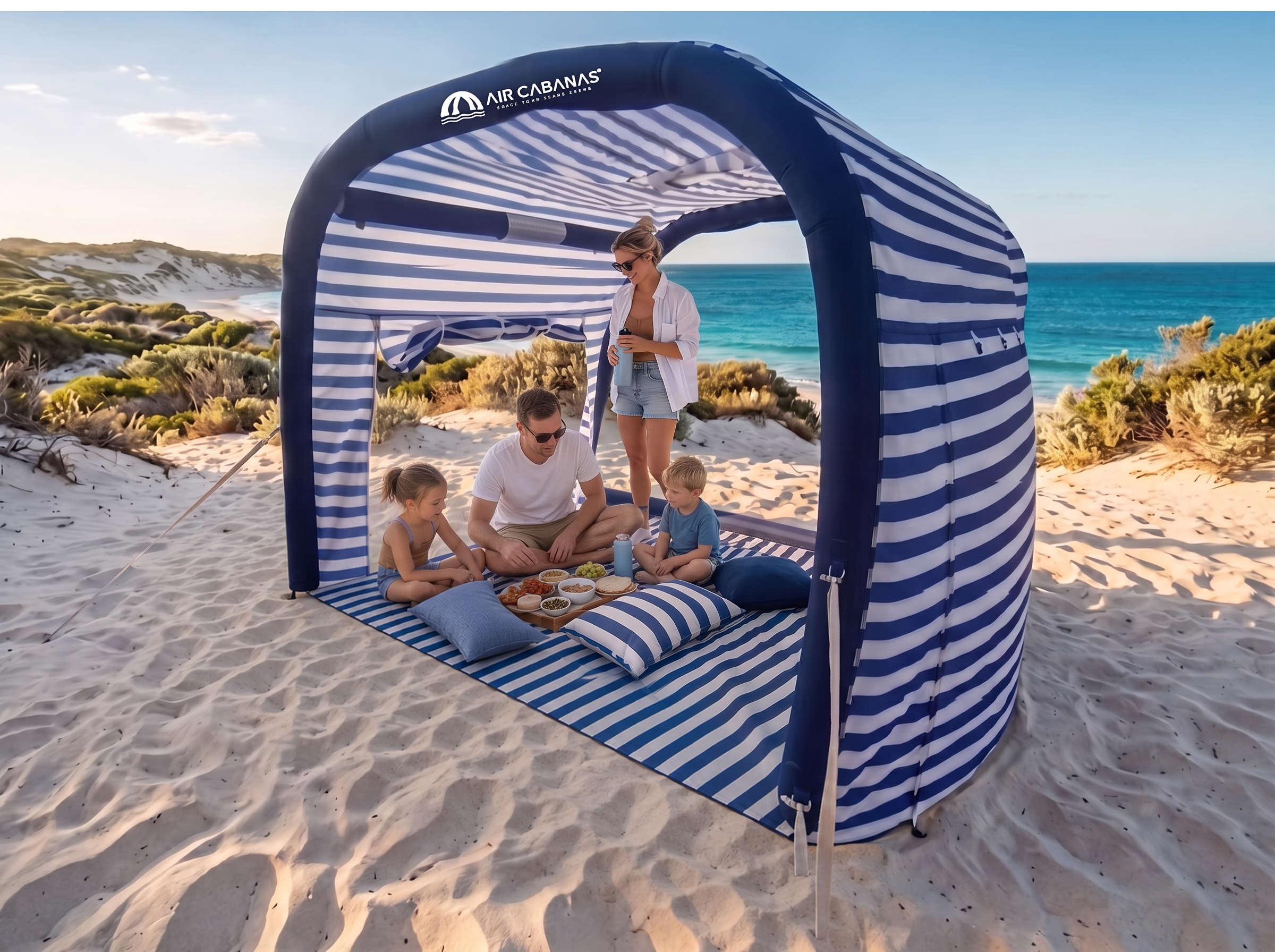
Consider the overall design and engineering. Some pole-frame cabanas and specialized beach shades are designed with wider bases or multiple anchor points to distribute wind load more effectively. AirCabana, for instance, utilises an innovative air-tube frame that offers exceptional stability and flexibility, making it an excellent air-tube cabana option for windy conditions. While no umbrella can be guaranteed 'wind-proof,' choosing one with these robust features significantly increases its chances of staying put and providing reliable shade on breezy days.
Beyond the Traditional: Exploring Other Beach Shade Options
While the classic **beach umbrella** remains a popular choice, there's a growing array of other beach shade options available that might better suit your needs, especially if you're seeking enhanced stability or different coverage styles. Traditional cool cabana designs, for example, offer a larger, more enclosed shaded area, often with multiple sides for increased privacy and protection from side winds. These typically involve a central pole and fabric walls that can be extended or retracted.
Another innovative alternative is the air-tube cabana, such as the AirCabana. These inflatable structures replace rigid poles with durable air-filled tubes, offering remarkable stability in windy conditions and a surprisingly quick setup. Their flexible nature means they can flex with gusts rather than resisting them rigidly, reducing the risk of damage or collapse. They also pack down compactly, making them an excellent choice for families seeking a spacious yet portable shade solution without the hassle of traditional poles.
Beach tents and shelters are also gaining popularity. These range from simple pop-up designs to more elaborate structures with integrated floors and zippered doors. They offer comprehensive protection from sun, wind, and even light rain, making them ideal for long days at the beach with infants or young children. When exploring these alternatives, always check for UPF 50+ ratings and consider their ease of setup, portability, and anchoring requirements to ensure they meet your specific Australian beach needs.
Maintenance and Care for Your Beach Umbrella
To ensure your **beach umbrella** lasts for many Australian summers, proper maintenance and care are essential. After each use, especially if it's been exposed to saltwater and sand, rinse the canopy and pole with fresh water. This removes salt crystals that can corrode metal components and sand that can abrade fabric. Allow the umbrella to dry completely in an open position before packing it away. Storing a damp umbrella can lead to mould, mildew, and unpleasant odours, which can degrade the fabric and its UPF rating over time.
Regularly inspect the frame, ribs, and canopy for any signs of wear and tear. Check for loose screws, frayed stitching, or small tears in the fabric. Addressing minor issues promptly can prevent them from becoming major problems. Lubricate moving parts like hinges and locking mechanisms with a silicone-based spray to keep them operating smoothly. If your umbrella has a wooden pole, consider applying a UV-protective sealant annually to prevent weathering and cracking.
When storing your **beach umbrella australia** for extended periods, choose a cool, dry place away from direct sunlight. Excessive heat and UV exposure, even when not in use, can weaken fabrics and plastics. Using the original carry bag or a protective cover will help keep dust and dirt off. Following these simple care steps will not only prolong the life of your beach umbrella but also ensure it remains a reliable source of UPF 50+ beach shade for countless future beach adventures.
Frequently asked questions
What size beach umbrella do I need for a family?
For a family of four or more, a beach umbrella with a diameter of 2.2 to 2.8 metres is generally recommended. This size provides ample shade for several people to comfortably sit or lie down, offering comprehensive protection from the sun. Consider a square or rectangular canopy for more efficient coverage.
How do I stop my beach umbrella from flying away?
To prevent your beach umbrella from flying away, twist the pole deep into the sand (30-45 cm), angling it slightly into the wind. Use a sand auger or screw base for better grip. For extra security, add sandbags, spiral anchors, or specialized base weights. Never leave it unattended.
Are all beach umbrellas UPF 50+?
No, not all beach umbrellas are UPF 50+. It's crucial to check the product specifications. Only umbrellas explicitly rated UPF 50+ block at least 98% of harmful UV rays. Always look for this rating to ensure effective sun protection, especially under the strong Australian sun.
What is the best beach shade for windy conditions?
For windy conditions, look for a **wind resistant beach umbrella** with a vented or double-tiered canopy, robust aluminium or fiberglass frame, and a strong sand auger. Air-tube cabanas like AirCabana are also excellent, offering flexible, stable shade that can withstand gusts more effectively than rigid pole-frame cabanas.
Can you use a beach umbrella on a very hot day?
Yes, a **beach umbrella** is essential on a very hot day for sun protection, especially if it has a UPF 50+ rating. However, remember that shade alone doesn't prevent heatstroke. Stay hydrated, seek additional shade during peak hours, and consider leaving the beach if temperatures become extreme. Always supervise your umbrella.
Where can I buy a good quality beach umbrella in Australia?
Good quality **beach umbrella australia** options can be found at reputable outdoor and camping stores, department stores with beach sections, and specialized online retailers. Look for brands known for durability, UPF 50+ ratings, and robust anchoring features. Consider options like the AirCabana for innovative and stable beach shade.