Beach Shelter Guide: Staying Cool & Safe on Australian Shores
Find the best beach shelter for your next Aussie adventure! Our guide helps you choose the perfect beach shade to keep cool, protected, and comfortable on…
Published 2026-10-10T20:01:02.289+00:00
Australians love their beaches, but the harsh sun can quickly turn a relaxing day into an uncomfortable experience. Choosing the right **beach shelter** is crucial for enjoying our stunning coastlines safely and comfortably. This comprehensive guide will help you navigate the options available, ensuring you pick the perfect shade solution for your next sandy escapade. From lightweight pop-ups to robust cabanas, understanding the features that matter most will enhance your beach day significantly. We'll explore how different designs provide protection, stability, and ease of use, all vital considerations when facing the diverse conditions of Australian beaches. Get ready to discover your ideal beach companion and make every beach visit a cool and enjoyable one.
Why a Quality Beach Shelter is Essential Down Under
Australia’s sun is famously strong, and prolonged exposure without adequate protection can lead to discomfort, sunburn, and other health concerns. A reliable **beach shade** provides a vital barrier against harmful UV rays, allowing you to relax for longer periods without worry. Beyond sun protection, a good shelter offers a private space for changing, napping, or simply escaping the crowds, enhancing your overall beach experience. It creates a comfortable microclimate, reducing the ambient temperature and making those scorching summer days much more bearable for the whole family.
Investing in a high-quality **beach shelter** also means greater stability and durability, especially important given the unpredictable coastal winds often found on Australian beaches. Flimsy options can quickly become a nuisance, requiring constant adjustments or even collapsing. A well-designed shelter will stand firm, providing consistent protection and peace of mind. This allows you to focus on enjoying the ocean, building sandcastles, or simply unwinding with a good book, rather than battling with your shade solution.
Furthermore, a dedicated **beach sun shade** helps keep your belongings out of direct sunlight, preventing items like snacks, drinks, and electronics from overheating. This thoughtful consideration extends the usability of your beach day, ensuring that everything stays cool and accessible. It’s not just about protecting yourself; it’s about creating a fully functional and enjoyable base camp on the sand, where every member of your party can find comfort and respite from the elements.
Understanding Different Types of Beach Shelters
When it comes to choosing a **beach shelter**, the market offers a variety of designs, each with its own advantages. Traditional pole-frame cabanas, for instance, often provide ample space and a classic aesthetic. They typically feature a sturdy frame that requires assembly, which can be a process, but once set up, they offer excellent overhead coverage. These structures are designed for stability, making them a popular choice for families seeking a substantial and reliable shade solution for extended beach stays.
Another common option is the pop-up **beach shade tent**, known for its rapid deployment and portability. These tents often feature pre-attached poles that spring into shape, making setup incredibly quick and easy. While generally smaller and lighter, they are perfect for individuals or small groups looking for quick sun protection without the hassle of complex assembly. Their compact packed size also makes them convenient for carrying to more remote beach locations or for those spontaneous trips.
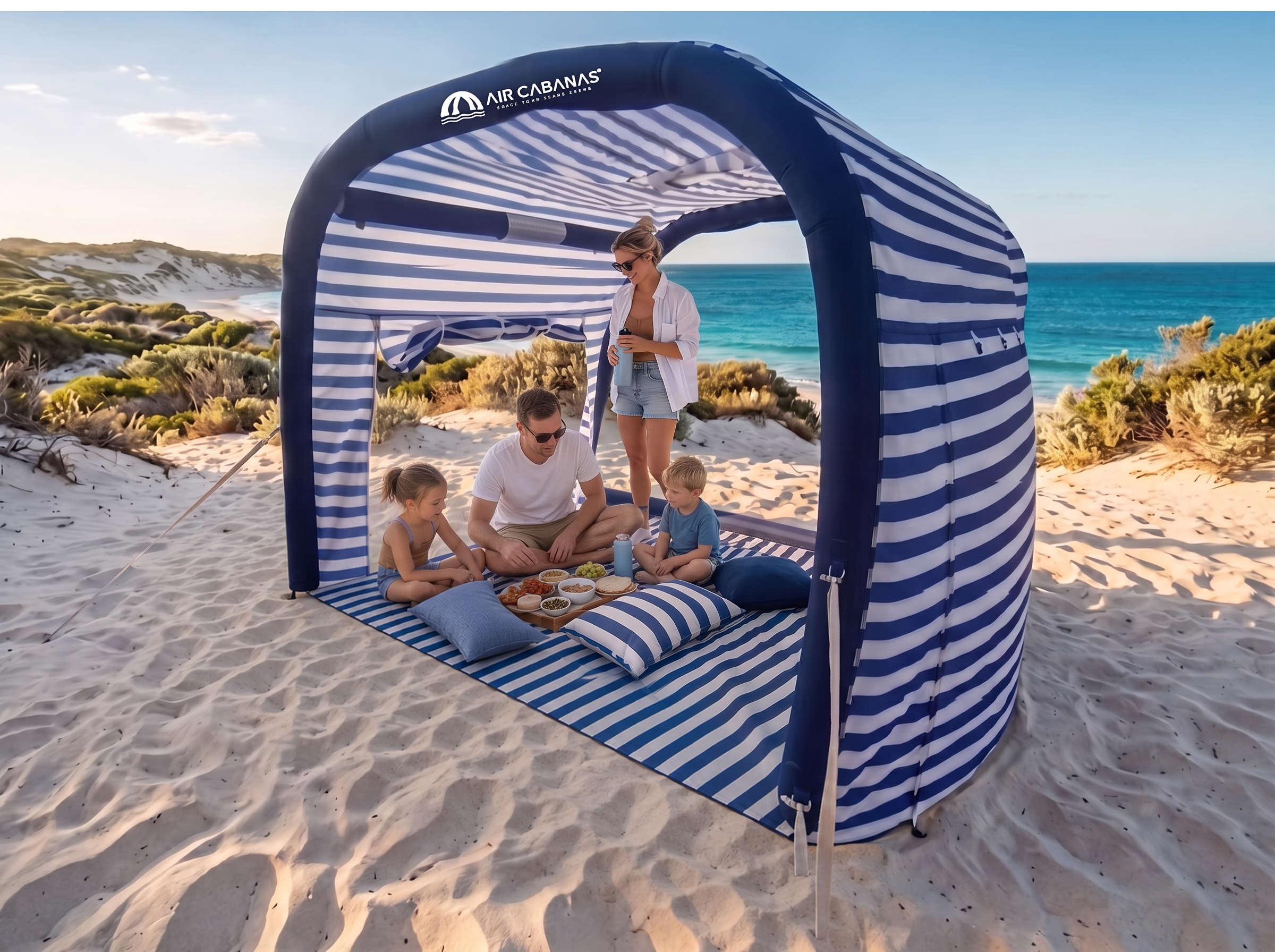
Then there are innovative designs like the **AirCabana**, which utilises inflatable air tubes instead of traditional poles. This modern approach offers a unique blend of stability, ease of setup, and portability. By simply pumping air into the frame, the AirCabana quickly takes shape, providing a robust and spacious shelter without the need to connect multiple poles. This technology significantly reduces setup time and effort, making it an attractive option for those who value convenience and a hassle-free beach experience.
Each type of **beach cabana** or shelter offers a different balance of features, from the amount of shade provided to the complexity of setup. Considering how often you plan to use it, the number of people it needs to accommodate, and your personal preference for setup time will help guide your decision towards the most suitable option for your Australian beach adventures.
Key Features to Look for in Your Next Beach Shelter
UV Protection is paramount when selecting a **beach shelter**. Look for fabrics with a high UPF (Ultraviolet Protection Factor) rating, ideally 50+, which blocks over 98% of harmful UV radiation. This level of protection is crucial for safeguarding your skin against the intense Australian sun. A good UPF rating ensures that your time spent under the shade is truly protective, allowing you to enjoy the beach without constant worry about sunburn or long-term skin damage. Always prioritise this feature for maximum safety.
Stability and wind resistance are also critical factors. Australian beaches can be windy, so a shelter that can withstand gusts is essential. Features like sturdy frames, sand pockets, guy ropes, and robust pegs contribute significantly to a shelter's ability to stay put. For air-tube designs like the **AirCabana**, their inherent flexibility can offer surprising resilience against wind. Always ensure your chosen **beach shelter** has adequate anchoring points and that you use them correctly to prevent it from becoming airborne.
Ease of setup and pack-down will greatly influence your overall beach experience. Nobody wants to spend precious beach time wrestling with complicated instructions or fiddly poles. Pop-up designs and the inflatable technology of the **AirCabana** are excellent for quick deployment. Consider the weight and packed size if you need to carry your shelter long distances or have limited storage space in your car. A quick and intuitive setup means more time enjoying the sand and surf, and less time frustrated.
Finally, ventilation and space are important for comfort. A well-ventilated **beach shade** will prevent it from becoming stiflingly hot inside, especially on warm days. Look for designs with mesh windows or adjustable panels that allow for airflow. As for space, consider how many people will be using the shelter and what items you plan to store inside. Enough headroom and floor space will make your time under the shelter much more comfortable and enjoyable, preventing a cramped feeling.
Setting Up Your Beach Shelter Safely and Effectively
Proper anchoring is the single most important step in setting up any **beach shelter**. Whether you have a pole-frame cabana, a pop-up tent, or an AirCabana, always use all available sand pockets, pegs, and guy ropes. Fill sand pockets completely with sand to create a heavy base, and dig pegs deep into the sand at an angle away from the shelter. This creates tension that helps prevent the shelter from lifting in a gust of wind. Never skip these steps, as an improperly anchored shelter can be dangerous.
Choosing the right location for your **beach sun shade** also plays a role in its stability and effectiveness. Try to position your shelter with its back to the prevailing wind to minimise wind resistance. Avoid setting up in areas with extremely soft, loose sand if possible, as pegs may not hold as securely. Consider the sun’s movement throughout the day and orient your shelter to maximise shade coverage during peak sun hours. A thoughtful placement will enhance both comfort and safety.
Always supervise children and pets around your **beach shelter**, especially on windy days. While shelters are designed to be stable, unexpected gusts can occur. Teach children not to hang on the frame or pull at the fabric, as this can compromise its stability. Inflatable structures like the AirCabana are generally very robust, but all shelters benefit from watchful eyes. A little vigilance goes a long way in ensuring everyone's safety and the longevity of your shelter.
Finally, know when to pack down. If the wind picks up significantly, or if a storm is approaching, it's always safer to pack down your **cool cabana** or shelter rather than risk damage or injury. No shelter is designed to withstand extreme weather conditions. Being prepared to quickly dismantle your shelter ensures its safety and prevents potential hazards on the beach. It's better to be safe than sorry, and waiting for conditions to worsen can make packing down more difficult and dangerous.
Maintaining Your Beach Shelter for Lasting Performance
Proper cleaning after each use is vital for extending the life of your **beach shelter**. Sand, salt, and sunscreen residues can degrade fabric and components over time. Always shake out as much sand as possible before packing away. Once home, use fresh water to rinse off any remaining sand and salt, paying particular attention to zippers and moving parts. Allow the shelter to air dry completely in a shaded area before storing it, as packing a damp shelter can lead to mildew and unpleasant odours.
Regular inspection of your **beach shade tent** or cabana will help identify any wear and tear before it becomes a major issue. Check seams for fraying, poles (or air tubes in the case of an **AirCabana**) for damage, and fabric for small tears or holes. Addressing minor issues promptly with repair kits can prevent them from escalating into larger, more costly problems. Keeping an eye on the condition of your anchors and guy ropes is also important, as these are critical for stability.
Correct storage is another key aspect of maintenance. Store your **beach shelter** in a cool, dry place away from direct sunlight and extreme temperatures. Using the original carry bag, or a suitable alternative, will protect it from dust and accidental damage. Avoid storing heavy items on top of the packed shelter, which could deform poles or air tubes. Proper storage ensures that your shelter is ready for action whenever your next beach trip beckons, preserving its functionality and appearance.
Even the most durable **beach cabana** benefits from careful handling. Avoid dragging it across rough surfaces, and be gentle when assembling or disassembling. If your shelter has moving parts or zippers, a little lubrication can keep them operating smoothly. By following these simple maintenance tips, you can significantly prolong the life of your investment, ensuring many years of comfortable and protected beach days on Australia’s beautiful coastlines.
Frequently asked questions
What's the best beach shelter for windy conditions in Australia?
For windy Australian conditions, look for shelters with robust anchoring systems, like sand pockets and multiple guy ropes. Inflatable air-tube designs, such as the AirCabana, often offer excellent wind resistance due to their flexible yet strong structure. Always ensure proper anchoring by filling sand pockets completely and pegging down securely.
How do I choose the right size beach shade for my family?
Consider how many people will use the shade and if you need space for gear like coolers or bags. A good rule of thumb is to allow roughly 1.5-2 square metres per person. Larger families or those needing extra storage might opt for a family-sized AirCabana or a generously sized pole-frame cabana for ample coverage.
Are beach shade tents easy to set up on my own?
Many modern beach shade tents are designed for easy, single-person setup. Pop-up models deploy in seconds, while inflatable options like the AirCabana simply require pumping air. Always check product reviews and instructions for clarity on setup difficulty before purchasing if you plan to use it solo.
What's a 'cool cabana' and why is it popular?
A 'cool cabana' is a popular style of beach shelter known for its ease of setup, often featuring a central pole and tensioned fabric. Its popularity stems from its balance of portability, style, and effective sun protection, making it a go-to choice for many Australians seeking a quick and stylish beach shade solution.
How much UV protection should my beach shelter have?
For Australian conditions, your beach shelter should ideally have a UPF (Ultraviolet Protection Factor) rating of 50+. This rating indicates that the fabric blocks over 98% of harmful UV radiation, offering excellent protection against the intense sun. Always prioritise a high UPF rating for optimal safety.