Beach Shade Tent vs Cabana: Best for Aussie Families
Comparing a beach shade tent to a beach cabana? Discover which shelter offers Australian families the best setup, wind stability, and cooling comfort.
Published 2026-10-25T20:01:11.705+00:00
Planning a classic day on the coast requires reliable sun protection, but choosing the right beach shade tent or cabana can make or break your family outing. Between blistering summer temperatures, brisk ocean breezes, and keeping energetic kids comfortable, Aussie parents need shade that sets up in minutes and stays rock-solid on the sand. In this head-to-head comparison, we evaluate setup time, ventilation, wind stability, and walk-in access to help you choose the best shelter for your family beach days.
Why Choosing the Right Beach Shade Tent Matters on Aussie Coasts
Anyone who has spent a sweltering January afternoon along the Australian coast knows that quality shade is not an optional extra. Between intense ultraviolet radiation, sudden afternoon sea breezes, and the logistics of hauling gear across boiling sand with restless toddlers in tow, your choice of beach shelter dictates whether your day is relaxing or exhausting. The traditional debate has long centred on choosing a beach shade tent versus a classic cabana, leaving parents weighing up whether enclosed protection or breezy open access serves their clan best.
Australian beaches present a unique combination of punishing conditions that quickly expose the weaknesses in poorly designed gear. From the baking sandflats of Noosa to the gusty shores of Sorrento, a shelter must withstand fluctuating coastal winds while maintaining reliable sun protection throughout the hottest hours. For growing households, the daily ritual of claiming a patch of shoreline requires shade that goes up quickly, anchors securely, and keeps every family member comfortable through long summer stretches without turning into an impromptu kite.
In recent years, the market has evolved well beyond flimsy pop-ups and cumbersome tarps. Families can now pick between specialised dome-style beach tents, traditional pole-frame cabanas, and modern air-tube shelters. Understanding how each style performs when subjected to genuine Aussie coastal conditions—such as shifting winds, baking midday temperatures, and high family foot traffic—is the key to investing in gear that will serve your household across seasons rather than ending up broken in a council skip bin after Australia Day.
Setup Time: Comparing the Beach Shade Tent and Cabana Shelters
When you arrive at the water with esky in one hand, towels over your shoulder, and kids darting towards the surf, every extra minute spent wrestling with poles feels like an eternity. Setup time is often the very first battleground where shelter styles diverge. Traditional dome tents frequently require threading long, springy fibreglass or aluminium poles through tight fabric sleeves while fighting coastal gusts that threaten to snatch the canopy away before you can drive a single peg into the sand.
Pop-up style beach tents promise an instant snap into shape, yet parents quickly discover that the trade-off comes during pack-down. Coiling tensioned wire frames into a neat figure-eight under the scrutiny of crowded beachgoers has caused many a seaside meltdown. In contrast, standard pole-frame cabanas utilise a central upright mast and corner sand-drop arms that simplify the pitch, though they still require manual mechanical locking, careful sand-pocket filling, and rigid metal alignment that can be tricky to manage single-handedly if the wind picks up during assembly.
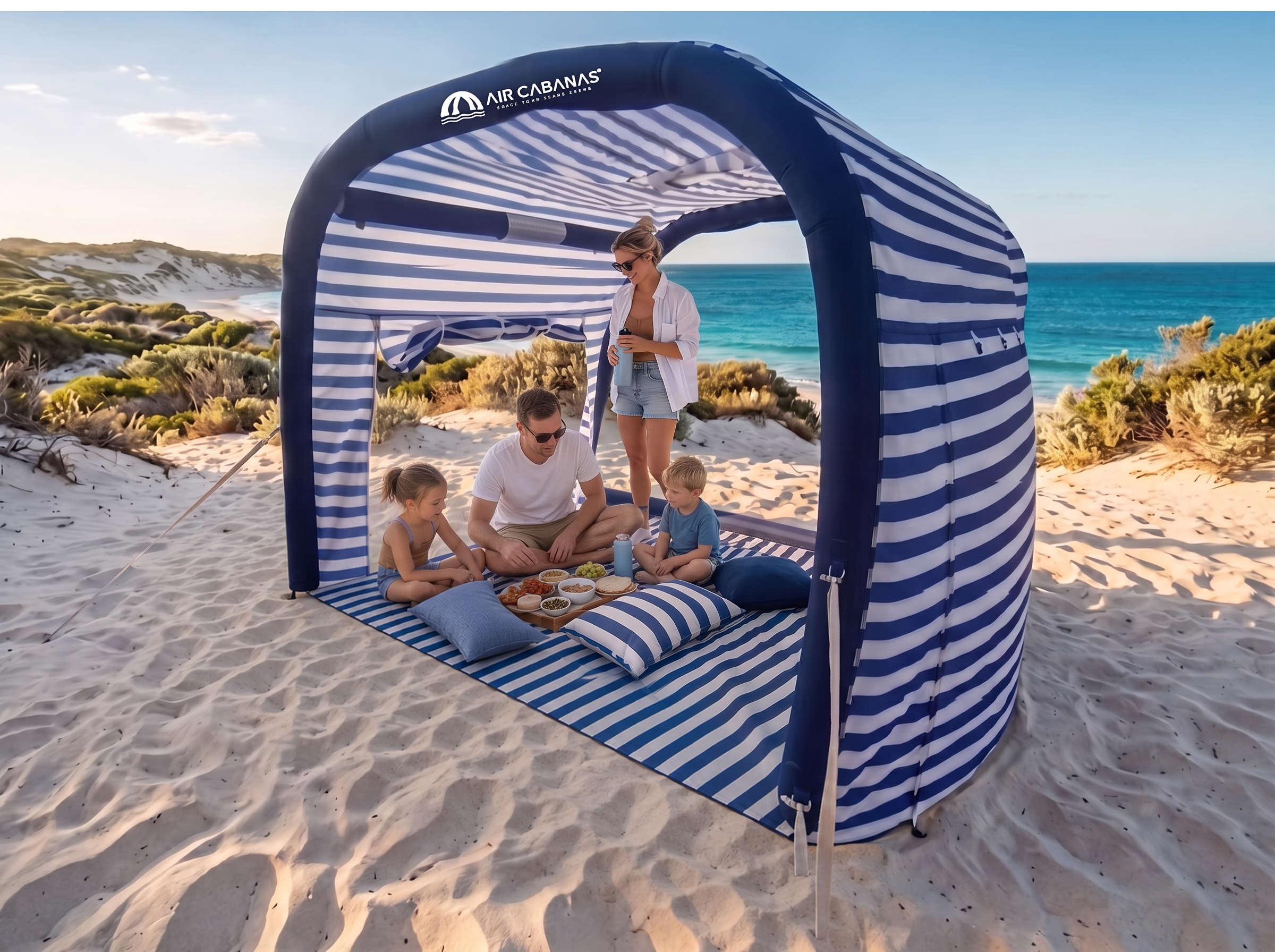
This setup challenge is where inflatable technology has reshaped the conversation for modern families. An inflatable air cabana like the AirCabana eliminates rigid metal or fibreglass poles entirely, using durable high-pressure air beams instead. By simply unrolling the canopy and attaching a rapid hand pump, parents achieve a rock-solid, upright beach shade tent structure in just a couple of minutes without fighting stubborn joints or pinched fingers. Packing down is equally stress-free: simply open the quick-release valve, let the air dump instantly, roll up the fabric, and slip it smoothly back into its carry bag.
Ventilation and Airflow: Surviving Scorching Australian Summer Heat
A shelter can offer complete UPF 50+ sun protection, but if it traps radiant heat inside, nobody in your family will want to sit under it. The enclosed or semi-enclosed silhouette of a standard beach shade tent naturally restricts lateral airflow. Even models equipped with mesh rear windows often suffer on still, humid coastal mornings, turning the interior into a stuffy greenhouse where sleeping babies sweat through their wraps and parents feel stifled within minutes of ducking out of the sun.
Open-sided cabana designs excel in this arena by preserving unobstructed, 360-degree cross-ventilation. Because cool cabana style shelters suspend a protective roof overhead while leaving all four sides completely open to the sea breeze, ambient air circulates continuously across your towels and seating. This uninhibited airflow prevents radiant sand heat from building up beneath the fabric, keeping temperatures noticeably lower and creating a genuinely refreshing microclimate during scorching mid-afternoon heatwaves.
When choosing an open-sided shelter or an open-format beach shade tent, fabric quality plays a massive role in thermal comfort. High-grade canvas and dense polyester blends treated for maximum UV blockage reflect direct solar radiation rather than absorbing it. Pairing wide-open ventilation with thick, protective overhead fabric ensures that cool ocean breezes can sweep through unhindered, allowing your family to rest, hydrate, and reapply sunscreen without feeling trapped in an uncomfortably muggy, enclosed pocket of hot air.
Wind Stability: Securing Your Shelter Against Sudden Coastal Gusts
Any Australian beachgoer knows that a dead-calm morning can transform into a gusty afternoon the moment the southerly buster or local sea breeze kicks in. Wind stability is therefore the most critical safety consideration when comparing shade designs. A conventional beach shade tent presents a large, sail-like surface area to incoming gusts. Without deep sand pegs or heavily weighted corners, standard tents can easily bow, roll, or pull loose from dry sand, threatening nearby beachgoers if left unattended.
Traditional pole-frame cabanas rely on a centre pole driven deep into the sand, paired with four corner stay ropes or fabric legs equipped with sand pockets. While these corner pockets provide vital ballast, the rigid metal or aluminium arms overhead remain vulnerable to violent gusts. Strong wind loads can bend, twist, or snap rigid metal crossbars, turning an otherwise sturdy shelter into a bent mess that must be hauled to the nearest beachside bin. No beach shelter is ever entirely wind-proof, which is why safe anchoring and vigilance are always necessary.
Inflatable shelters offer an ingenious solution to this structural vulnerability. The AirCabana uses pressurised air beams that provide remarkable structural rigidity while retaining the natural ability to flex harmlessly when hit by powerful gusts. Because there are no brittle aluminium rods or snapping hinges, the frame simply absorbs the wind force and immediately springs back into true form. When combined with generous sand pockets and secure guy lines, air-beam designs deliver exceptional stability in typical coastal conditions, though parents should always monitor conditions and pack down immediately whenever extreme or unsafe weather develops.
Walk-In Access and Usable Footprint: Which Suits Australian Families?
For families spending four to six hours at the beach, comfort comes down to practical space and accessibility. Low-slung beach tents force adults to crawl on hands and knees to reach their gear, supervise little ones, or hand out snacks. This constant crouching quickly becomes exhausting, especially for parents carrying infants or tending to multiple children. Furthermore, crawling in and out of a low tent inevitably drags heaps of abrasive dry sand across towels, blankets, and lunch boxes.
Cabana shelters shine brightest when it comes to standing room and walk-in access. Featuring generous overhead clearance and open perimeters, adults can walk straight into the shade upright, easily position standard beach chairs, and set up a central play zone without bumping their heads against fabric. The unobstructed floor space allows toddlers to play freely in the damp sand beneath the canopy while remaining fully protected from overhead ultraviolet rays, all while parents relax comfortably in upright camp chairs around the edge.
This walk-in convenience makes a substantial difference to how your family uses the beach. Older kids can run in for a quick sip of water without tracking sand into an enclosed sleeping space, while parents maintain an unobstructed panoramic view of the water to supervise swimmers at all times. By choosing a spacious air cabana or cool cabana format, your campsite becomes a functional, welcoming seaside living room where everyone can stretch out, eat lunch, and rest without feeling cramped or restricted by low ceilings and nylon walls.
Pack Size, Portability, and the Reality of the Long Dune Trek
The trek from the beach carpark, over towering coastal dunes, and across deep dry sand can test the stamina of even the fittest parents. Bulky, heavy beach gear often gets left in the garage after just one trip if it proves too difficult to haul alongside boogie boards, eskies, and beach bags. Evaluating packed dimensions, total weight, and carry bag ergonomics is just as important as judging a shelter's size once it is pitched on the shore.
Pop-up tents pack down into wide, circular discs that may be lightweight, but they act like unwieldy sails when carried across a windy beach carpark. Traditional pole-frame cabanas pack into long, narrow cylindrical bags; while convenient, the combined weight of solid metal poles, heavy central augers, and metal fittings can easily exceed four to six kilograms, digging painfully into your shoulder as you trek through the soft sand.
Air-supported cabanas strike a remarkable balance between assembled volume and portable packed size. By replacing heavy steel or aluminium frames with lightweight, puncture-resistant inflatable chambers, models like the AirCabana pack down into neat, compact carry bags that fit easily into small car boots or alongside your beach trolley. Because there are no awkward rigid poles poking out, carrying your shelter down a winding coastal track is effortless, making spontaneous mid-week beach sessions just as feasible as planned weekend marathons.
The Verdict: Should You Buy a Beach Cabana or Beach Shade Tent?
When deciding whether a beach shade tent or an open cabana is best for your family, the final choice depends on how your household uses the coastline. If your primary need is an enclosed, private cubby for changing wetsuits or creating a quiet, wind-sheltered nap pod for a solitary infant on mild, cooler days, a traditional dome beach tent may suit your specific routine. However, for most Australian families spending long, sunny days by the water, the limitations of enclosed tents quickly become apparent.
For superior airflow, effortless walk-in access, clear lines of sight to the surf, and a shared communal footprint, an open cabana is almost always the superior choice under the Australian sun. The open design keeps temperatures down through natural sea-breeze ventilation and offers comfortable standing clearance for adults, making family beach days substantially more relaxing and enjoyable for everyone involved.
Within the cabana category, opting for modern air-tube construction over traditional pole-frame cabanas gives families the best of all worlds. With an inflatable AirCabana, you gain the expansive walk-in footprint and airy comfort of a cabana, combined with the rapid inflation, child-safe frame, and gust-absorbing flexibility that rigid metal poles simply cannot deliver. Whichever style you choose, remember that no shelter is a replacement for sun-safe habits: always anchor your shelter deeply with wet sand, supervise little ones closely near the water, and pack down when coastal winds turn unsafe.
Frequently asked questions
Here are straightforward answers to the most common questions Australian families ask when choosing between shade shelters for the coast.
Is a beach cabana or beach tent better for wind?
Cabanas with flexible frames or heavy sand pockets generally handle steady breezes better than lightweight dome tents, which can act like sails. Enclosed tents risk catching wind and rolling if not anchored deeply. However, rigid pole-frame cabanas can suffer bent poles in violent gusts, making flexible air-beam cabanas a resilient choice. Always anchor deeply with damp sand and pack down in dangerous conditions.
Can one person set up a beach shade tent easily?
One person can set up most beach shelters, but ease varies. Pop-up tents open instantly yet can be difficult to fold away alone in wind. Pole-frame cabanas require balancing central poles and corner arms simultaneously. Inflatable air cabanas are exceptionally easy for a solo parent: simply peg the corners, pump the air beams for two minutes, and fill the sand pockets.
Do beach cabanas keep you cooler than beach tents?
Yes, beach cabanas generally keep you much cooler than beach tents. A traditional beach tent encloses the space, trapping radiant heat rising from the sand and blocking cross-breezes. Cabanas have completely open sides, allowing natural sea breezes to circulate freely beneath the UPF 50+ canopy, preventing hot air pockets and maintaining a significantly cooler ambient temperature.
How much wind can a beach cabana take before collapsing?
No beach shelter is wind-proof, and safe operation depends heavily on correct sand anchoring rather than rigid strength. While quality cabanas with filled corner sand pockets handle typical coastal breezes comfortably, rigid metal poles can bend under strong squalls. Inflatable air-beam cabanas flex safely without snapping. For family safety, always pack down your shelter whenever high or gusty winds make conditions feel unstable.
Can you leave a beach shade tent unattended in Australia?
You should never leave any beach shade shelter completely unattended on Australian beaches. Sudden coastal wind shifts or unexpected squalls can dislodge sand pegs or overturn light frames in seconds, creating hazards for nearby swimmers and sunbathers. If your family leaves the beach for lunch or an extended walk, take two minutes to collapse your shelter safely.