
Beach Shade for Couples: The Best Compact Setup
Looking for the best beach shade for couples? Discover why medium air-beam shelters outshine heavy pole setups for swift coastal escapes and dawn swims.
Published 2026-10-21T20:00:34.001+00:00
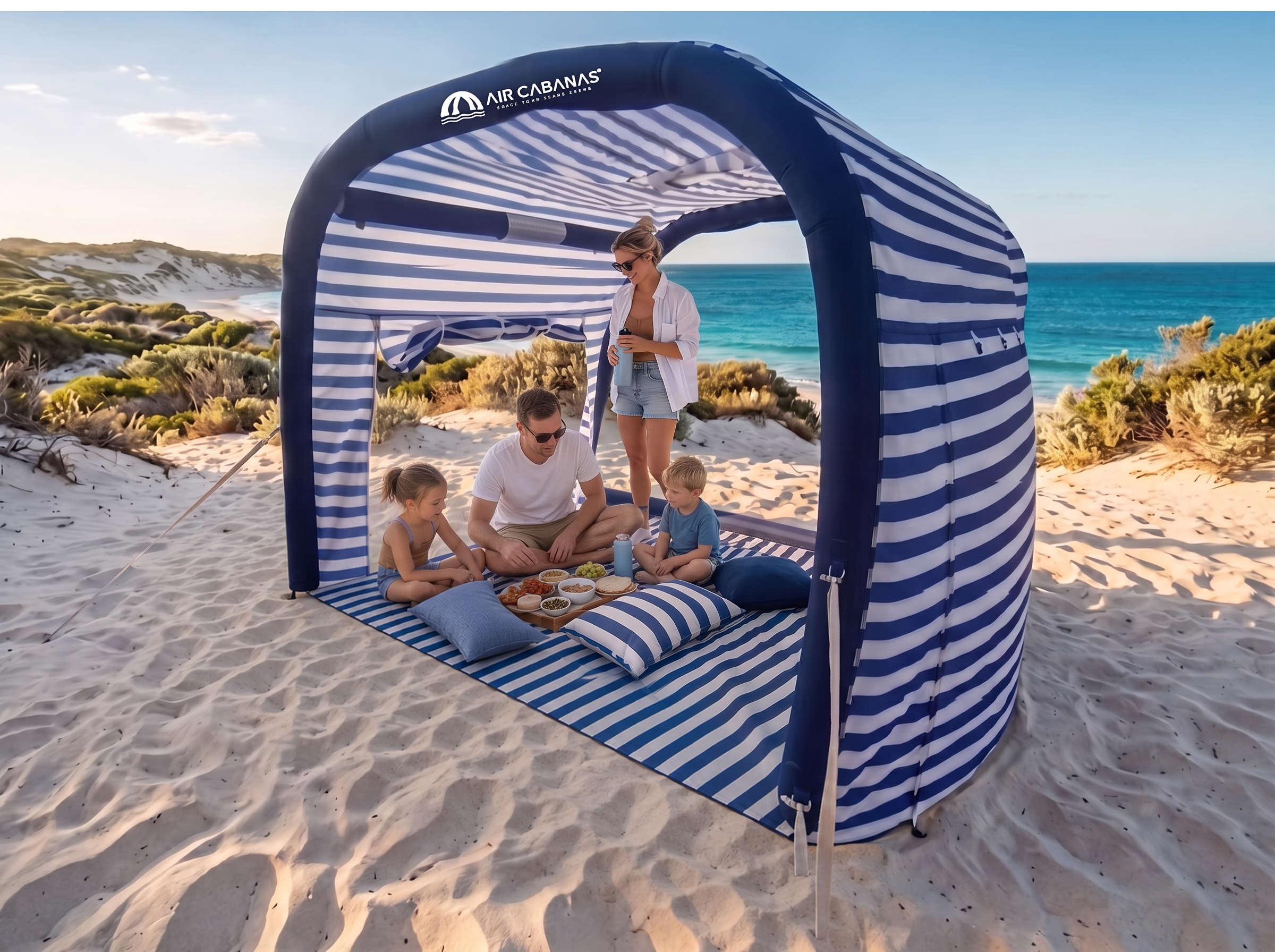
There are few rituals more quintessentially Australian than wandering down to the ocean before the world wakes up. Whether you are catching an early morning offshore peel or savouring a quiet high-tide dip, choosing the right beach shade for couples can make or break your day by the sea. For years, beachgoers have wrestled with heavy, unwieldy metal structures that demand two people just to haul them across the soft sand. Today, sleek medium shelters and inflatable air cabana designs are changing coastal leisure, giving couples the perfect blend of packability, generous sun protection, and effortless setup for spontaneous seaside adventures.
Why beach shade for couples requires a fresh approach
Planning a coastal getaway for two sounds delightfully straightforward until you confront the gear haul across the soft sand. Traditional beach shelters are often over-engineered behemoths designed for large clans, or flimsy throw-away umbrellas that turn inside out at the slightest offshore gust. Finding the ideal beach shade for couples means balancing effortless portability, reliable sun protection, and a footprint that does not swallow the entire shoreline or take twenty minutes of sweaty wrestling to construct.
For two people, beach days are typically fluid and spontaneous. You might wander down for an unhurried morning espresso, drift out past the break for a quiet swim, and settle back on a shared blanket with a book. Clunky shelters with heavy metal corner stakes, tangle-prone guy ropes, and rigid crossbars completely disrupt that calm coastal rhythm. When your gear weighs heavily on your shoulders before you even reach the water line, the simple romance of an ocean outing quickly evaporates into logistical frustration.
Modern beachgoers across Australia are shifting towards intelligent, lightweight engineering that complements relaxed coastal rituals. Instead of dragging cumbersome hardware across dunes, duos are turning to contemporary medium shade footprints that offer ample coverage without the bulk. A thoughtfully designed beach shade for couples provides generous room for two loungers, a cooler, and a pair of dry bags, while packing down into a slim shoulder bag that one person can carry effortlessly with one hand.
Why Medium suits couples and dawn swims perfectly
When weighing up canopy dimensions, why Medium suits couples and dawn swims becomes obvious the moment you step onto an empty beach at first light. Dawn sessions are sacred along the Australian coastline: the sand is cool, the swell is clean, and the atmosphere is serene. If pitching your shelter takes more than a couple of minutes of banging metal stakes into compact sand, you miss the best light and the quietest sets of the morning.
A medium shade footprint gives two adults plenty of breathing room to stretch out side by side without brushing against fabric or baking under creeping peripheral rays. Measuring roughly two metres across, a medium canopy creates a private sanctuary that easily protects two full-length beach towels, a tote bag, and your water bottles from the harsh morning sun. It delivers all the shaded area of a traditional cool cabana style shelter while eliminating the clumsy central pole that forces couples to sit awkwardly separated on opposite sides.
Furthermore, medium shelters hit the sweet spot for rapid transport and unobtrusive beach etiquette. Popular beaches like Noosa Main Beach, Cottesloe, or Bondi can fill up rapidly by mid-morning. Deploying a gigantic family fortress for just two people often feels excessive and encroaches on neighbouring towels. A medium setup claims your patch of paradise respectfully, strikes quickly when a sudden tide change occurs, and slides seamlessly into your vehicle boot beside your boards and swim fins.
Early morning swell checks and quick-pitch shelters
Surfers and early risers value speed above everything else when selecting shade gear. Having a shelter that inflates in under ninety seconds means you can check the bank, secure your base on the berm, and dive into the shorebreak before the sun climbs high enough to scorch the sand.
The evolution beyond pole-frame cabanas on Australian beaches
For years, beachgoers relied exclusively on traditional pole-frame cabanas to survive long summer days. While those four-legged steel and aluminium frames certainly offered better stability than standard tilt umbrellas, they brought a host of familiar headaches. Rigid metal poles are heavy, awkward to slide through tight sleeves, prone to seizing up with gritty saltwater, and notoriously risky if a rogue gust manages to unseat a corner anchor from dry powder sand.
The introduction of inflatable air-beam technology has fundamentally redefined coastal shelter design. By replacing rigid aluminium struts with high-pressure TPU air tubes, modern shelters like the AirCabana deliver remarkable structural integrity without a single piece of bendable metal overhead. For two people sharing a relaxed space, an air cabana removes the hazard of clattering parts and pinched fingers, creating a gentle, curved canopy that naturally flexes with passing onshore breezes rather than resisting them rigidly.
Durability in coastal environments also favours modern textile innovation over mechanical joints. Salt spray, fine quartz sand, and continuous UV exposure quickly degrade hinges, spring buttons, and telescoping legs found on pole-frame cabanas. An inflatable structure has no mechanical joints to rust, freeze, or jam. Packing down is simply a matter of opening a dump valve, expelling the air, and rolling the supple fabric into its carry pack without fighting recalcitrant metal poles.
Choosing the right beach shade for couples: Essential features
Selecting the ultimate beach shade for couples requires looking closely at fabrics, sun safety certifications, and anchoring mechanics. Any shelter intended for Australian conditions must provide verified UPF 50+ protection, which blocks over ninety-eight percent of penetrating ultraviolet radiation. Because ambient heat radiates directly from white sand, fabric breathability and open airflow are just as critical as UV blockage to keep you truly cool during humid summer afternoons.
Anchoring design is another vital pillar of performance. Look for shelters equipped with generous sand pockets integrated directly into the canopy corners. Deep, heavy sand ballast anchors your setup securely into soft dunes without needing long guy lines that become tripping hazards for wandering swimmers. When you fill all corner pockets with damp sand and position your shelter correctly to face the wind, the structure remains planted and stable throughout your stay.
Packability is the final make-or-break criteria for two people on the move. Your beach shade should ideally weigh between three and four kilograms, complete with its pump, pegs, and carry bag. If a shelter feels like a workout to lift out of the car boot, you will inevitably end up leaving it at home on spontaneous coastal runs. A compact, shoulder-slung package ensures that sun safety becomes second nature rather than a dreaded chore.
Airflow and dual-side access
A great couple shelter must offer open panoramic sightlines and cross-ventilation. Enclosed beach tents quickly turn into suffocating heat traps under direct sunlight. Open-sided canopies let the coastal breeze sweep through freely, keeping the interior refreshing while preserving clear views of the rolling surf.
Setting up your couple beach shelter safely and securely
Erecting your beach shade for couples should be an effortless, stress-free routine that takes less time than applying your first coat of sunscreen. Always begin by assessing your chosen spot on the sand. Look at wind direction, observe the incoming tide line to avoid being swamped, and ensure you are positioned clear of major walking thoroughfares and surf life saving flagged swimming corridors.
Lay your shelter flat with the open entrance oriented directly into the prevailing onshore wind. If you are using an inflatable model such as the AirCabana Classic, connect your compact hand pump to the secure valve and inflate the structural air beam until it stands firm. Before relaxing or unzipping your cooler, immediately fill every corner sand pocket to maximum capacity. Scooping wet, compact sand from beneath the surface layer provides significantly better anchor weight than loose, dry powder.
Safety on Australian beaches always demands common sense and vigilant observation. No coastal shelter is completely wind-proof, and sudden southerly busters or squalls can appear without warning along our coastline. Never leave an erected shelter unattended, supervise your setup continuously, and always pack down your shelter immediately if wind conditions deteriorate or erratic gusts threaten to destabilise your anchors. Respecting the elements guarantees many safe, memorable summers on the coast.
Making the most of your shared coastal sanctuary
Once your shelter is pitched and anchored, a compact setup transforms an ordinary beach trip into a luxurious day-long retreat. By creating a dedicated shaded living room on the sand, you and your partner can comfortably linger through the heat of the day without feeling baked or fatigued. Add a sand-free recycled plastic mat, a pair of lightweight low-slung beach chairs, and an insulated tote with cold drinks to complete the setup.
The beauty of a modern beach shade for couples lies in its versatility. It is equally at home during a quiet twilight picnic on a secluded cliffside bay in Western Australia as it is on the vibrant shores of the Gold Coast. Having a comfortable, self-contained personal haven allows you to alternate between ocean swims, beach naps, and seaside reading without packing up the moment the midday sun peaks overhead.
Investing in quality shade equipment elevates your relationship with the Australian outdoors. When your gear is lightweight, dependable, and simple to handle, spontaneous coastal road trips become effortless. Whether you are chasing sunrise offshore winds, taking an impromptu afternoon dip after work, or spending Saturday exploring coastal national parks, having your own slice of personal shade ensures pure relaxation every single time.
Frequently asked questions
What is the best beach shade for couples?
The best beach shade for couples is a lightweight, medium-sized canopy that offers certified UPF 50+ protection, generous sand pocket anchoring, and an open layout without an obstructive centre pole. Inflatable air-tube models like the AirCabana Classic provide the perfect balance between swift setup, compact packing, and spacious shade for two adults.
Is a medium beach cabana big enough for two people?
Yes, a medium cabana measuring roughly two metres square provides ample space for two full-sized beach towels, low loungers, bags, and a cooler. It keeps two adults completely sheltered from overhead sun while leaving sufficient room for air to circulate freely across the sand.
How does an inflatable air cabana handle windy beach days?
An inflatable air cabana flexes naturally under coastal breezes instead of straining against rigid metal joints. When its corner sand pockets are filled with wet, dense sand and positioned facing the wind, it stays stable and reliable. Always pack down your shelter if conditions become hazardous.
Can one person set up a beach shade for couples alone?
Yes, modern medium setups are designed for effortless solo assembly. Inflatable designs require only a quick hook-up to a hand pump and ninety seconds of gentle pumping before anchoring, allowing one person to handle setup completely while the other watches gear or grabs a coffee.
Are pole-frame cabanas harder to carry than inflatable shelters?
Yes, pole-frame cabanas are generally heavier and more cumbersome due to their rigid steel or aluminium framing. Inflatable shelters pack down into soft, slim shoulder bags without stiff poles, making them noticeably easier to carry along coastal trails and soft sand dunes.