
Beach Shade Anchoring in Soft Sand: Complete Aussie Guide
Master beach shade anchoring in soft Australian sand. Learn the secrets of integrated pockets, proper strap angles, and secure setups for windy shores.
Published 2026-10-23T20:01:31.864+00:00
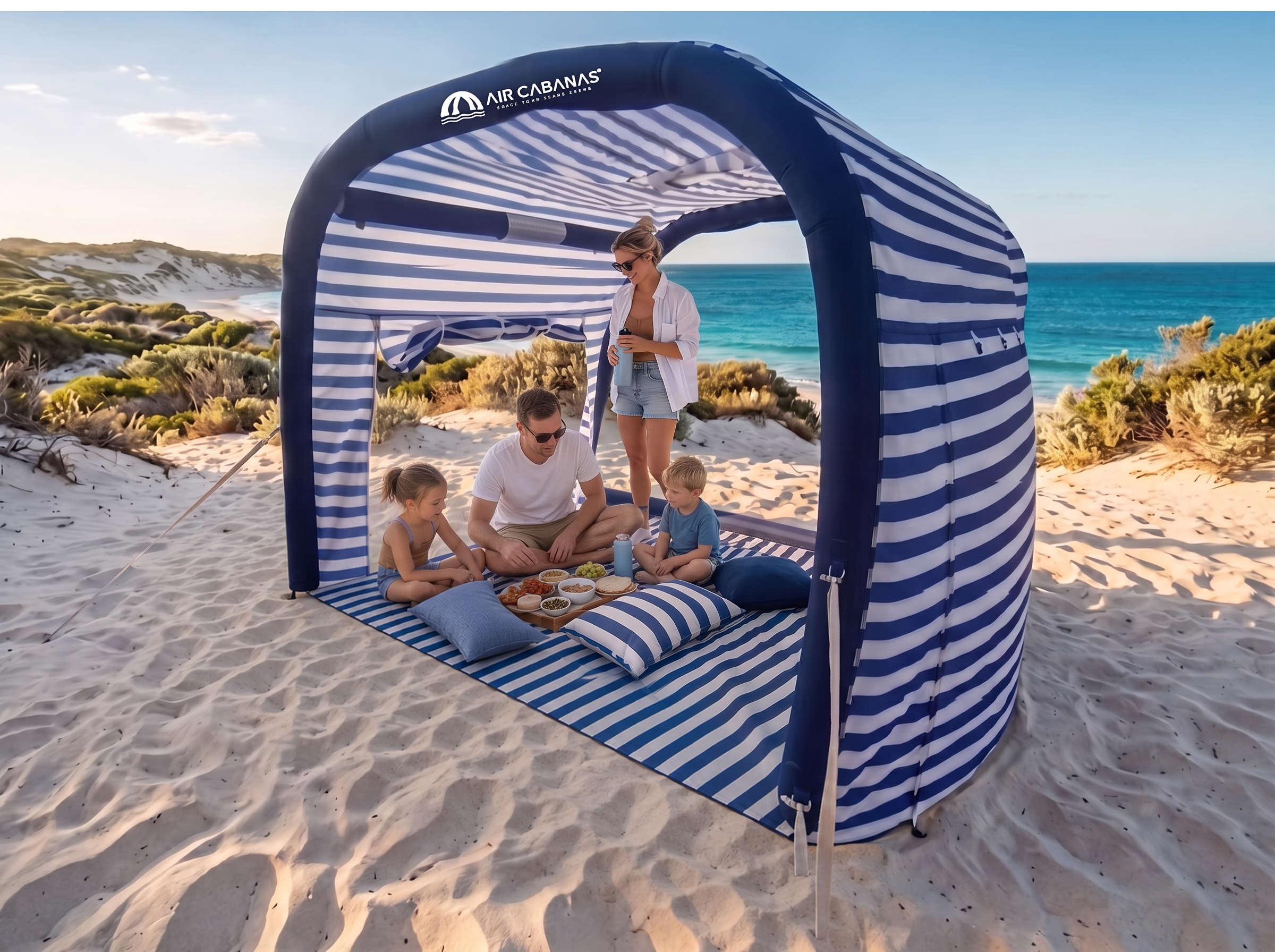
Securing a shelter against an unruly ocean breeze is an essential coastal survival skill. When you hit the coastline on a brilliant summer morning, mastering beach shade anchoring can mean the difference between an effortless day lounging by the water and a frantic sprint across blazing sand to catch an airborne canopy. Between shifting tides, afternoon sea breezes, and soft coastal sands that swallow ordinary ground stakes, securing your shelter demands proper technique. Here is the definitive Australian guide to keeping your shade firmly grounded all day long.
The mechanics of beach shade anchoring in soft Australian sand
Every Australian beachgoer knows the unique frustration of powdery coastal sand. From the fine white quartz stretches of Esperance and Jervis Bay to the deep dune fields of Noosa North Shore, dry upper sand offers virtually zero mechanical grip for traditional fastenings. When you attempt beach shade anchoring in these conditions, standard ground pegs slide straight out the moment an onshore gust rolls off the breakers. Understanding how loose aggregate behaves under tension is the fundamental secret to keeping your shelter planted all afternoon.
Soft sand behaves fluidly under low shear stress. When you press a slender stake into loose surface sand, the grains easily displace sideways, creating almost no friction along the shaft. For reliable beach shade anchoring, your primary mechanism cannot rely on surface friction; it must rely on deadweight and deep shear resistance. In simple terms, this means either burying heavy mass deep below the slip zone or anchoring your shade fabric using large surface-area ballasts that force the breeze to lift hundreds of kilograms of sand before the canopy can shift.
Coastal air currents add dynamic lift that compounds the problem. As coastal breezes hit an open shelter canopy, an aerodynamic low-pressure zone forms above the fabric, mirroring the wing of an aircraft. This upward suction exerts continuous vertical pull on your anchor points, alternating with violent lateral jerks whenever wind gusts oscillate. Without adequate deadweight anchoring, the entire structure quickly works itself loose, turning an afternoon of relaxation into a frantic chase down the tideline.
Different beach regions across Australia present distinct grain profiles that alter how your setup holds. Coarse golden sand found along Sydney’s northern beaches packs together somewhat better than the talcum-fine silica of Queensland’s tropical coastlines, yet both turn entirely loose once baked by midday heat. A masterclass in beach shade anchoring begins with recognising that the top five to ten centimetres of dry sand offer no holding value whatsoever, meaning every secure strategy starts beneath that loose layer.
Integrated sand pockets vs external bags for stability
When evaluating how to weigh down your canopy, the ongoing debate of integrated sand pockets vs external bags remains central for Aussie families. Both methods utilise the sand beneath your feet as ballast, avoiding the hassle of carrying heavy weights across hot dunes. However, the physical placement of this weight dictates how effectively your shade structure dissipates continuous wind loading without tearing stitching or buckling framing.
Integrated sand pockets are sewn directly into the corner edges or leg bases of your canopy. Because the sand mass sits directly within the structural profile of the shelter, there is no slack, tether stretch, or pendulum swing when a sea breeze strikes. On modern air-beam shelters like the AirCabana Classic, wide corner pockets allow you to scoop wet or dry sand directly into the hemline. This concentrated mass sits flat on the sandbed, anchoring the uprights directly to the sand surface and eliminating the whipping motion that often stresses seams on traditional shelters.
External bags, by contrast, are detached ballast sacks tethered to canopy corners via webbing cords or ropes. While external sand bags can be buried deeper or hauled further outward to widen your footprint, they introduce moving parts into your rig. In gusty conditions, tethered bags can roll, shuffle across smooth sand, or suffer from cord wear as sharp sand grains work into synthetic line fibres. Furthermore, slack in external lines allows the canopy to gain kinetic momentum before the tether snaps tight, increasing strain on attachment eyelets.
For most beachgoers seeking a fast, dependable setup, integrated sand pockets deliver superior convenience and balanced load distribution. By keeping the ballast flush with the base of the shelter, the structure stays grounded without trip hazards spanning across your campsite. However, in exceptionally gusty conditions, combining integrated corner pockets with auxiliary external sandbags provides an unshakeable dual-anchor perimeter that keeps your cool cabana resting soundly.
Mastering pegs and strap angles for firm holding power
While sand pockets deliver indispensable downward ballast, proper ground stakes and guy lines establish the lateral perimeter that stops your shelter from sliding sideways. Using standard metal garden pegs on an Australian beach is an exercise in futility; they simply lack the surface area to bite into loose sediment. To achieve rock-solid beach shade anchoring with tension cords, you must match specialised sand pegs with scientifically sound guy line angles.
Specialised beach stakes rely on wide flukes, curved plastic fins, or spiral screw designs that displace sand outward rather than cutting through it like a blade. When driven deep into moist sub-layers, these broad fins compact the surrounding sand, creating a passive wedge that resists lateral pulling. If you only have flat pegs, you can employ the 'deadman anchor' technique: tie your guy line around the middle of a peg or piece of driftwood, bury it horizontally thirty centimetres deep, and tamp the sand down firmly overhead.
The geometry of your guy lines directly influences tension transfer. Tension cords should run downward from your shade corners at a 45-degree angle relative to the ground. If your strap angle is too steep—say 70 degrees—the guy line merely pulls upward on the peg, pulling it out like a loose tooth. Conversely, if the angle is too flat, you waste horizontal line length without creating sufficient downward force on the shelter frame. Positioning your pegs at roughly 45 degrees relative to the canopy leg provides the optimal balance of downward clamp and horizontal resistance.
Equally crucial is the angle of peg penetration. Never drive a sand stake straight down or tilted forward toward the shelter. Always drive the stake into the sand leaning backward at a 45-degree angle away from the shade canopy. This orientation ensures that the guy line pulls perpendicular to the broad surface of the stake, engaging the maximum possible mass of sand in front of the blade before any slippage can occur.
Step-by-step beach shade anchoring in powdery coastal sand
Executing a textbook setup in powdery sand requires a deliberate sequence. Rushing to inflate or erect a canopy before your base is prepared often leads to an unmanageable sail catching the wind before you have secured a single corner. Begin by surveying your site, taking note of the tide line and wind direction. Always orient the lowest or narrowest profile of your beach shelter facing into the oncoming sea breeze to minimise frontal wind drag.
Follow this step-by-step anchoring protocol for a worry-free beach setup:
1. Clear the surface and access moist sand
Start by scraping away the top five to ten centimetres of baking, bone-dry surface sand across your entire footprint. Beneath this loose crust lies cooler, damp sand where moisture creates natural capillary adhesion between grains. This sub-surface layer provides vastly superior stability for both sand pockets and buried anchors, giving your beach shade anchoring a solid foundation before you ever unpack your canopy.
2. Anchor the upwind corner immediately
Unfurl your shade canopy and instantly secure the corner pointing directly into the wind. If using an air-tube shelter like the AirCabana Family, fill the upwind integrated sand pockets right away using a wide beach shovel or your hands before pumping air into the beams. Securing the windward anchor first prevents the shelter from rolling down the beach while you assemble the remaining corners.
3. Inflate or raise the main structure
With your primary windward ballast secured, erect your canopy. For pole-frame cabanas, this means sliding the central pole into the sand and spreading the metal ribs outward. For modern inflatable cabanas, connect your high-volume pump to the single inflation point. As the air tubes stiffen, the shelter will rise smoothly into shape without stiff metal joints fighting the gusting breeze.
4. Pack down remaining pockets and guy lines
Immediately fill the remaining corner sand pockets to their maximum capacity. Do not skimp on sand; pack it tightly until the fabric bulges with weight. Next, walk your guy lines out at precise 45-degree angles, driving sand stakes deep into the damp sub-layer at an opposite 45-degree backward tilt. Cinch down tension straps until the fabric canopy is taut with zero flapping, checking that the structure remains uniformly square.
Air-tube shelters vs pole-frame cabanas in shifting winds
The internal structure of your shelter fundamentally alters how beach shade anchoring forces interact with the ground. Traditional pole-frame cabanas rely on rigid steel or aluminium central shafts and folding perimeter arms. While rigid frames maintain a crisp silhouette, rigidity can be a serious liability in shifting ocean winds. When a fierce gust catches a metal-framed shade, the force cannot dissipate through flex; instead, it travels directly down the poles into the sand anchors, repeatedly rocking the base like a crowbar.
This constant mechanical levering quickly loosens the sand around central poles and corner stakes. Over an hour or two, the base hole widens, turning a snug anchor into a wobbly pivot that invites catastrophic failure. Furthermore, if an extreme gust exceeds the mechanical strength of the frame, rigid steel and aluminium poles will bend, crack, or snap at the plastic hinges, creating sharp metal edges that present a genuine safety hazard on crowded family beaches.
By contrast, air-beam cabanas like those engineered by AirCabana replace rigid metal frameworks with pressurised, durable TPU air tubes. When sudden gusts strike an air-tube cabana, the flexible structural beams naturally deflect and absorb the wind energy rather than transferring brute leverage straight to the anchors. Once the gust subsides, the air beams instantly rebound to their original profile, maintaining uninterrupted shade without stressing the guy lines or sand pockets.
This dynamic flexibility makes beach shade anchoring significantly more forgiving. Because the air-tube structure acts as a shock absorber, your anchor pockets remain settled undisturbed in the sand bed. Aussie families enjoy the peace of mind that comes with knowing there are no rigid metal ribs to twist out of shape, making the overall experience under your cool cabana dramatically safer and more relaxing throughout volatile coastal weather changes.
Safety, maintenance, and knowing when to pack down
No matter how meticulous your beach shade anchoring technique may be, nature always retains upper hand along the Australian coast. Understanding coastal safety means acknowledging that no temporary beach shade is completely wind-proof. Ocean conditions can escalate rapidly, shifting from a mild 10-knot afternoon breeze to violent squalls within minutes. Always remain vigilant and never leave an erected beach shelter unattended while you swim or stroll out of eyesight.
Regular maintenance of your anchoring gear is crucial for ongoing reliability. Salt crystals and fine silica sand are intensely abrasive to synthetic webbing, guy lines, and zip tracks. After every day at the beach, take a minute to empty every grain of sand from your integrated pockets before packing down. Periodically rinse guy lines, pegs, and canopy fabric with fresh tap water at home to dissolve salt build-up and preserve fabric coatings. Inspect guy line stitching regularly for frays or UV degradation.
Most importantly, know when to pull the plug. If wind conditions reach a point where your shade fabric is thrumming violently, anchor pockets are shifting, or the shelter requires constant physical restraint, it is time to pack down. Inflatable designs make this process fast and safe: simply crack the quick-release air valve, let the beams instantly collapse flat against the sand, and empty the sand pockets. Prioritising safety over staying put ensures that your gear remains in top shape for many summers to come.
Frequently asked questions
Here are answers to the most common questions Australians ask when keeping their beach shelters grounded in soft sand:
How do you anchor a beach shade in soft sand?
To anchor a beach shade in soft sand, scrape away dry surface powder to reach damp, compacted sand. Fill wide integrated sand pockets to maximum capacity, or bury wide-fluke sand pegs 30 cm deep leaning at a 45-degree angle away from the canopy. Secure the windward side first, keeping canopy lines tensioned taut at a 45-degree angle.
Why does my beach shelter keep blowing away?
Your beach shelter likely blows away because surface sand provides no friction for standard pegs, or guy lines are pitched at too steep an angle. Without deep deadweight ballast or broad sand pockets, aerodynamic wind lift easily overcomes the frame. Always use heavy sand pockets and damp sub-sand anchors to resist vertical gust suction.
Are sand pockets better than pegs at the beach?
Yes, sand pockets are generally far better than pegs on Australian beaches. Sand pockets utilise heavy aggregate directly as deadweight ballast, which cannot easily be levered out of the sand. Pegs rely on friction that loose sand cannot provide unless they are specialised wide-finned stakes buried deeply into the damp sub-surface layer.
When is it too windy for a beach cabana?
It is too windy for a beach cabana when sudden gusts continuously lift anchor pockets, bow rigid poles severely, or cause fabric to whip with intense strain. If holding the shelter becomes difficult or you feel unsafe, pack down immediately. Never leave any shade canopy standing unattended in volatile, gusty coastal conditions.