Beach Pump Comparison: Lithium vs Manual Shade Inflators
Lithium beach pump or manual pump? Compare setup speed, sand durability, pack size, and field charging to pick the best beach pump for your air cabana.
Published 2026-10-29T20:01:45.576+00:00
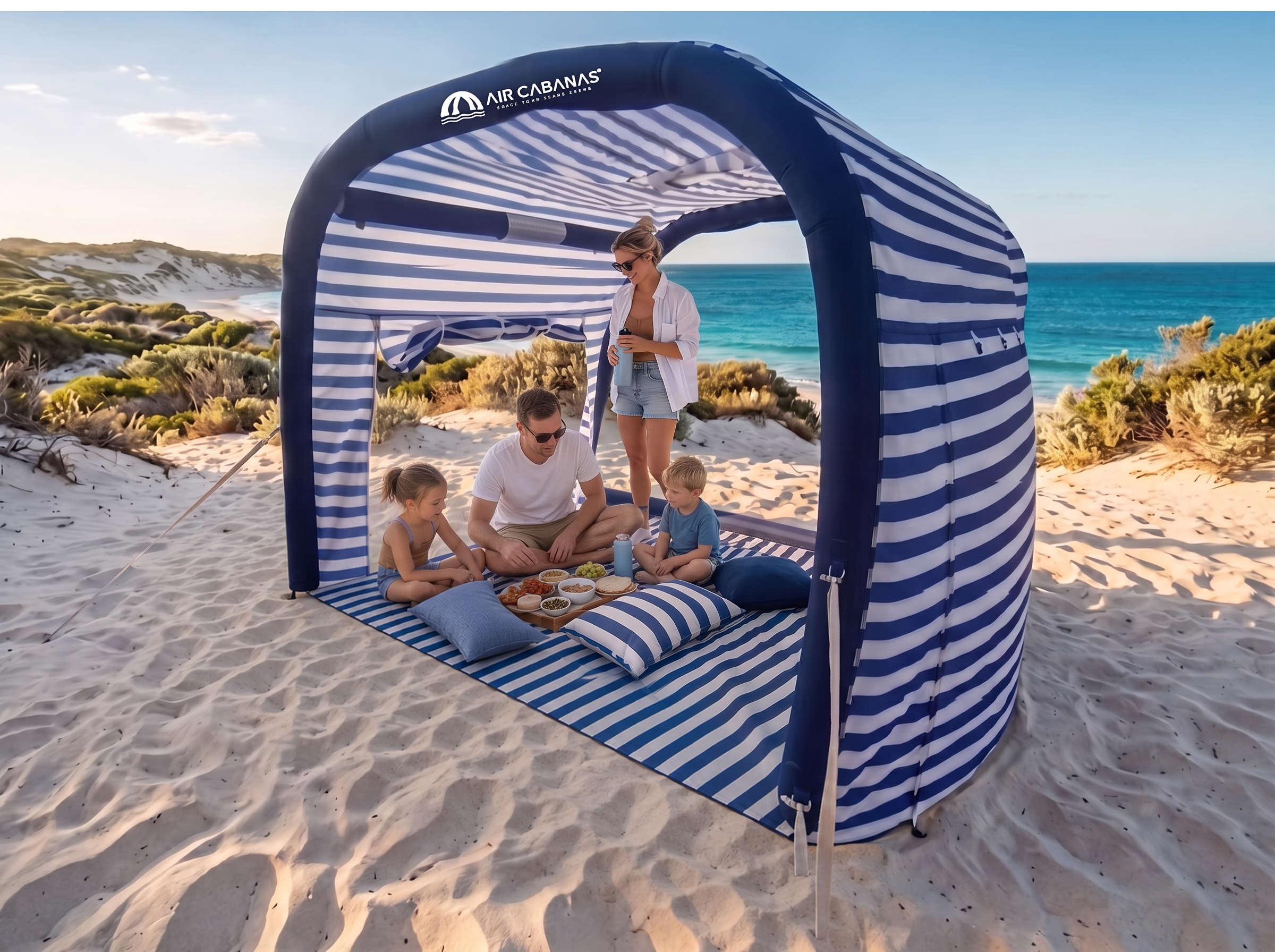
Standing on the water's edge on a clear Australian summer morning, the last thing you want is an exhausting workout before your swim. As coastal sun shelters shift away from heavy, awkward metal frames toward effortless inflatable designs, picking the right beach pump has become a vital gear decision. Inflatable air-beam shelters have revolutionised coastal leisure, but your setup rhythm depends heavily on how you deliver that air. Whether you choose a compact, battery-powered inflator or a rugged mechanical hand piston, matching your tool to your beach routine guarantees effortless shade every single weekend.
Choosing the Right Beach Pump for Modern Inflatable Shelters
When packing the car for a classic coastal escape, space in the boot and the effort required at the shoreline dictate how relaxing your morning truly becomes. Modern coastal shade has evolved well past cumbersome, rigid pole-frame cabanas that rattle in the gusty southerly and require awkward mechanical assembly under a punishing sun. Inflatable air-beam architecture has reimagined coastal shade, trading heavy steel struts for robust, high-pressure air tubes. However, an air-supported setup immediately introduces a practical gear decision: do you rely on an effortless electric inflator or trust the mechanical certainty of hand power?
Every beachgoer knows the distinct sting of lugging bulky gear across burning soft sand at midday, only to spend fifteen minutes pumping, adjusting, and sweating before sitting down. Selecting an efficient beach pump transforms this ritual into a thirty-second breeze. Modern high-output pumps are engineered specifically for high-volume, moderate-pressure chambers, displacing immense volumes of air with minimal physical strain. The choice between rechargeable battery cells and traditional double-action pistons comes down to your personal touring style, gear philosophy, and tolerance for battery management.
AirCabana structures are engineered to make beach days genuinely restful from the second you drop your towels on the sand. Whether you are setting up solo while keeping an eye on toddlers near the shorebreak or establishing a basecamp for an all-day surf excursion, the inflation system you toss into your tote bag determines your arrival tempo. Understanding the subtle performance trade-offs between lithium power and manual displacement ensures you spend your coastal hours swimming and relaxing rather than huffing over valves.
The Shift from Pole Frames to Inflatable Cabanas
Traditional beach shelters rely on telescopic metal uprights, plastic corner knuckles, and tension arms that inevitably attract corrosive grit, jam under pressure, or twist when the sea breeze strengthens. In contrast, premium inflatable shelters utilise puncture-resistant thermoplastic polyurethane bladders wrapped in heavy-duty ripstop casings. This structural leap eliminates rigid snap points, meaning the shelter absorbs coastal gusts by flexing naturally rather than buckling.
Because an inflatable frame relies entirely on air pressure rather than rigid tension, your inflation method becomes your primary setup tool. The air chamber must reach its optimal structural firmness so the shelter stands tall, retains its overhead pitch, and maintains an open, breezy profile throughout a long afternoon. Matching your shelter with the right inflation tool guarantees that your cool cabana setup delivers shade in mere moments.
The Case for a Palm-Sized Lithium Pump on the Coast
Recent leaps in battery energy density and micro-motor efficiency have completely transformed coastal gear bags across Australia. A palm-sized lithium pump packs astonishing air displacement into an aluminium or composite housing no larger than a standard takeaway coffee cup. Engineered with brushless motors spinning miniature impellers at extraordinary speeds, these pocket wonders effortlessly fill high-volume air beams in ninety seconds, completely eliminating manual exertion in blistering midday heat.
For parents juggling umbrellas, swim vests, cooler bags, and restless little ones, hands-free inflation is an absolute revelation. You simply dock the nozzle into the shelter valve, press the power toggle, and turn your attention to setting down beach towels or slathering sunscreen while the shelter erects itself. By removing physical pumping from the equation, a battery-driven beach pump ensures that setting up camp feels like a holiday rather than an exhausting shoreline workout.
Moreover, modern rechargeable units are purposefully tailored for travel. Most weigh well under four hundred grams, slipping unnoticed into the side sleeve of a daypack or the glovebox of your four-wheel drive. They eliminate trailing cables, messy car auxiliary cords, and bulky storage footprints. For those who value a lightweight, hyper-minimalist approach to coastal living, going cordless represents the modern benchmark of beachside leisure.
Airflow Volume Versus Pressure Precision
It is vital to distinguish between tyre inflators and dedicated leisure inflators. Tyre pumps produce immense pressure at minuscule volume, making them totally useless for wide-diameter air tubes. A specialised coastal lithium pump, by contrast, prioritises high volume airflow at moderate pressure levels, filling vast cylindrical bladders in rapid bursts.
Once the main canopy beams expand, high-end micro pumps provide enough static head pressure to ensure the shelter is structurally rigid and proud. This eliminates sagging canopies and guarantees your shelter can support its corner ballast sandbags cleanly, creating a taut, aerodynamic haven that breathes with the coastal breeze.
Why a Backup Manual Pump Still Holds Its Ground
Despite the undeniable convenience of lithium cells, seasoned coastal campers and off-grid explorers frequently advocate keeping a backup manual pump in the boot. Manual piston pumps operate on timeless mechanical simplicity: twin chambers, double-action stroke cycles, and zero microprocessors. They are completely immune to drained battery cells, salt-mist corrosion across printed circuit boards, and the accidental oversight of forgetting to recharge your gear overnight.
When you venture down remote corrugated tracks in Western Australia, explore unpowered national park beaches in coastal New South Wales, or camp beyond the reach of grid power, mechanical reliability is paramount. A rugged double-action hand pump delivers high volume on both the upward pull and downward push, inflating an AirCabana in approximately two to three minutes of rhythmic motion. While it does demand modest physical effort, it guarantees that no dead battery will leave your family exposed to harsh coastal ultraviolet rays.
Furthermore, manual pumps are remarkably resilient against the brutal coastal elements. Fine windblown silica, sudden saltwater spray, and scorching boot temperatures that might stress or degrade sensitive lithium chemistry have no meaningful impact on a sealed plastic piston. For purists who demand absolute certainty regardless of how remote the break is, manual mechanical displacement remains an enduring, dependable companion on the sand.
Double-Action Efficiency Explained
Unlike basic bicycle pumps that only pressurise on the downstroke, a modern double-action hand pump moves continuous air on both strokes. This effectively doubles your output, moving between two and three litres of air per complete cycle without requiring aggressive speed or frantic stamina.
The physical rhythm is steady, smooth, and predictable. For adults of average fitness, bringing an inflatable canopy up to pressure with a manual pump requires negligible cardiovascular strain, making it an entirely manageable backup solution should your electronic accessories ever run flat.
Field Charging and Battery Care in Sandy Australian Conditions
Relying on electronics by the ocean requires a thoughtful understanding of environmental hazards, particularly salt, extreme heat, and fine silica dust. Modern lithium coastal tools usually feature universal USB-C ports, allowing seamless field charging via portable power banks, 12-volt vehicle sockets, or rooftop solar arrays while travelling between surf breaks. This universal connectivity means keeping your beach pump topped up on extended road trips is easier than ever, provided you follow basic battery care principles.
Australian beach conditions are notoriously severe on consumer electronics. A lithium battery left resting on hot, unshaded sand or locked inside a car cabin baked by the midday sun can easily experience thermal throttling or permanent cell degradation. To preserve the lifespan of your micro pump, store it inside an insulated cooler bag or deep within your shaded beach tote until the exact moment of inflation, keeping the internal temperatures within safe operational thresholds.
Salt encrustation and fine sand present additional operational risks to electric micro-motors. When running your electric unit on the shoreline, avoid placing the intake vent directly against loose, powdery sand where the powerful impeller could suck grains straight into the motor housing. Suspending the pump by its lanyard or resting the shelter valve on a clean towel keeps the air channels pristine, ensuring your field charging investment delivers seasons of trouble-free performance.
Power Bank Synergy for Extended Escapes
Carrying a dual-purpose external power bank allows you to maintain charge across your phone, camera, and portable inflator simultaneously. A standard ten-thousand-milliamp-hour bank can recharge a micro lithium inflator three to four times over, translating into weeks of daily canopy setups without touching mains electricity.
This multi-device synergy makes battery setups exceptionally versatile for weekend van trips and coastal camping. Simply plug the unit in while driving along the coast, and your shelter inflator is primed and ready the instant you spot an uncrowded stretch of sand.
Weight, Pack Size, and Family Beach Logistics
Packing for an Australian family beach outing is an exercise in volume management. Between oversized towels, insulated lunch coolers, boogie boards, swim fins, and beach games, boot space evaporates rapidly. Here, the miniature proportions of an electric inflator offer a massive tactical advantage. Taking up a fraction of the footprint required by tall manual barrel pumps, a palm-sized device frees up vital space in your beach wagon or shoulder satchel.
The ergonomic benefit extends to the trek across the dunes. Strolling down a steep timber staircase or trudging through hundred-metre stretches of soft sand at low tide becomes considerably more enjoyable when your shade and inflation kit weigh less than a couple of kilograms combined. The AirCabana packs down into a streamlined carry bag, and tucking a tiny electric inflator inside that same carry slip streamlines your kit into an effortless, single-shoulder carry.
However, gear logistics must also account for family dynamics. If you frequently spend full daylight hours at the beach, having a secondary inflation alternative tucked under the rear seat of your vehicle provides priceless peace of mind. While the electric unit remains your primary tool for ninety-five percent of weekend outings, pairing it with an accessible mechanical alternative ensures your shade basecamp is never compromised by an empty charge gauge.
Streamlining the Dunes Transit
Every kilogram shed from your shoulder kit changes your beach day posture. Traditional shade setups that require heavy metal pegs, tension ropes, and steel poles drag down your stride, turning the walk from the car park into an exhausting chore before you even touch the water.
By pairing lightweight air-beam shelters with miniature battery inflators, you condense your entire family shade profile into a package that even a young child can carry easily. This modular portability encourages spontaneous trips down to the water, letting you chase pristine conditions at a moment's notice.
Coastal Safety, Proper Anchoring, and Wind Protocols
No matter whether your air-supported canopy is inflated with a high-tech battery unit or a sturdy hand pump, structural stability on the beach relies entirely on anchoring discipline. An air beam provides exceptional, forgiving overhead architecture, but without properly filled sand pockets, any coastal shelter risks shifting in shifting coastal gusts. The golden rule of coastal shade is simple: anchor the windward corners immediately, before you even open your beach chairs or unpack your towels.
Air-beam cabanas are uniquely engineered to absorb gust energy. Where rigid pole-frame cabanas can snap, bend, or pull rigid spikes out of loose sand when caught by sudden squalls, an inflatable frame flexes dynamically, spilling wind before popping straight back into its engineered geometry. Nevertheless, air tubes must be brought to their proper operational pressure. An under-inflated beam lacks structural tension, allowing the fabric to flap excessively and reducing the shelter's natural aerodynamic stability.
Sun safety and physical security go hand in hand on Australian shorelines. Always keep your shelter under active supervision, check that corner pockets remain packed with damp, dense sand, and remain mindful of shifting tides. When coastal conditions deteriorate, sea breezes become severe, or storm fronts sweep across the horizon, do not attempt to battle the weather. The safest protocol is always to deflate the shelter promptly, pack the components into their carry tote, and retreat safely from the elements.
Frequently asked questions
Find immediate, practical answers to common queries regarding coastal pumps, battery lifespans, and inflation gear below.
Can a lithium beach pump inflate a cabana multiple times on one charge?
Yes, high-quality palm-sized lithium pumps generally achieve between three and six full shelter inflations per charge, depending on battery capacity and chamber volume. For average weekend beachgoers, a single USB charge easily covers several consecutive days of shade setup before requiring any field charging or mains replenishment.
Can sand damage an electric beach pump?
Yes, fine beach sand can damage electric pumps if drawn into the high-speed air intake. Always operate the unit off the bare sand—rest it on a clean towel or suspend it via its wrist strap. Keeping the nozzle ports clear prevents motor wear and maintains optimal pressure output.
How long does it take to inflate an air cabana manually?
Using a double-action manual piston pump, inflating an air cabana takes approximately two to three minutes of steady, rhythmic pumping. Because air enters on both the push and pull strokes, the process is efficient, reliable, and requires minimal physical exertion compared to older single-action manual pumps.
Should I leave my lithium pump in the car glovebox?
Avoid leaving lithium battery devices in a locked vehicle under direct Australian summer sun. Cabin temperatures can exceed sixty degrees Celsius, which rapidly degrades lithium cells and can trigger safety cut-offs. Store your pump in an insulated beach bag or carry it inside your home when not in use.
What is the best way to anchor an inflatable shelter in wind?
Anchor your inflatable shelter by fully packing all corner sand pockets with heavy, damp sand from just beneath the dry surface layer. Face the rear profile of the canopy into the prevailing sea breeze, ensure the air beams are fully pressurised, and pack down promptly if winds become severe.