Beach Gazebo on Sand: Why Coastal Cabanas Win
Planning your coast trip? Discover why a beach gazebo struggles on sand and sea breezes, and see how lightweight cabanas provide superior coastal shade.
Published 2026-10-29T20:01:08.64+00:00
Setting up reliable shade on Australian shorelines should feel relaxing, yet wrestling with a heavy beach gazebo on shifting sand dunes is a familiar coastal frustration. While a pop-up marquee provides fantastic shelter on a suburban lawn, coastal elements present an entirely different engineering challenge. Loose sand, salty spray, and gusty afternoon sea breezes quickly expose the weaknesses of rigid metal frames and narrow leg bases. Choosing purpose-built coastal shade over an oversized marquee transforms your family beach routine from an exhausting setup struggle into a breeze.
Why the Classic Beach Gazebo Struggles on Australian Sand
Walk across any popular stretch of sand from Bondi to Cottesloe on a sunny Saturday, and you will inevitably witness the familiar struggle of a heavy beach gazebo being wrestled into position. Designed primarily for firm lawns, backyard barbecues, and sporting sidelines, traditional pop-up shelters rely on rigid metal scissor-trusses and narrow footplates. When transplanted onto dry coastal sand, the engineering assumptions behind these hefty structures quickly fall apart. Soft beach sand possesses virtually zero shear strength near the surface, meaning the narrow corner feet simply sink unevenly or tilt the moment tension is applied.
The sheer bulk of a standard marquee presents an immediate obstacle before you even dip a toe in the ocean. Hauling a steel-framed shelter weighing fifteen to twenty-five kilograms across scorching sand dunes is an exhausting workout that leaves most parents drained before the day has truly begun. Once positioned, getting the unit level on sloping tide lines requires constant scooping, propping, and re-adjusting. If one corner leg sinks deeper into a soft pocket of sand, the entire metal lattice twists, putting immense strain on tiny plastic connector joints that were never designed for shifting coastal topography.
Furthermore, anchoring a large marquee footprint on the foreshore requires specialised deep-sand screw stakes that rarely come bundled in the box. Standard wire pegs slide straight out of loose sand under the slightest tension, transforming an unweighted beach gazebo into an unwieldy hazard within minutes. Even when beachgoers attempt to improvise by resting plastic cool boxes or damp beach towels across the base plates, the high center of gravity and expansive fabric roof continue to work against the loose, shifting ground beneath.
The Physics of Loose Sand and Narrow Leg Footings
Traditional pop-up marquees distribute their weight over four tiny plastic or metal pads, creating high point-load pressure that forces the legs deep into dry powder. As people move underneath or adjust beach chairs, the surrounding sand shifts further, destabilising the vertical uprights. Unlike purpose-built coastal shade that uses sand-filled corner ballast pockets, a gazebo lacks integrated downward counterweights, meaning any upward aerodynamic lift immediately overcomes the dead weight of the legs.
How Coastal Sea Breezes Turn a Heavy Beach Gazebo into a Sail
Australia is famous for its afternoon sea breezes, whether it is the reliable Fremantle Doctor cooling coastal Perth or a sudden southerly buster charging up the New South Wales coast. While these winds bring welcome relief from sweltering summer heat, they create severe aerodynamic complications for an upright beach gazebo. The broad, steep-sided canopy profile of a standard marquee functions almost identically to a nautical spinnaker, capturing incoming thermal winds and generating enormous upward and lateral aerodynamic lift.
Because pop-up gazebos feature rigid horizontal perimeter beams and cross-braced ceiling struts, they have zero built-in flex to dissipate wind energy. When a gust hits, the entire force is transferred directly into the joints, locking pins, and footings. If the anchors fail, that enormous surface area lifts skyward, tumbling down crowded shorelines where sharp aluminium or steel poles can cause serious harm to other beachgoers. Even when tethered with perimeter guy ropes, the violent flutter of heavy polyester can snap internal plastic knuckles, bending structural beams beyond repair.
In contrast, modern coastal shade options are engineered to work in harmony with coastal breezes rather than fighting them head-on. A well-designed cool cabana profile features air-release ceiling vents or flexible structural elements that deform momentarily to spill sudden gusts before springing back into shape. Trying to hold down a broad, rigid canopy in a stiff afternoon onshore breeze is a losing battle that often ends with a buckled metal frame stuffed awkwardly into a beachside council wheelie bin.
Beach Cabana vs Pop-Up Gazebo: Weight, Setup, and Packdown
When planning an effortless family day by the water, convenience and transit weight should sit at the top of your checklist. A traditional marquee demands substantial boot space and two capable adults to carry and expand the scissor-action framework. The process of pulling diagonally opposite corners, ducking underneath to snap center hubs into place, and manually extending telescopic legs is notoriously frustrating, especially while juggling bags, boogie boards, and excited toddlers across hot sand.
A modern beach cabana strips away this mechanical friction entirely. Engineered specifically for soft coastal terrain, coastal cabanas collapse down into compact shoulder bags weighing a fraction of their commercial marquee counterparts. Setup routines are streamlined for solo operation, eliminating the finger-pinching scissor hinges and stiff push-buttons that define old-fashioned shelters. Whether securing corner ballast pockets with damp sand or anchoring a central support, a purpose-designed cabana can be erected securely in just a few minutes without requiring a team effort.
Packdown at the end of a long, sun-drenched day presents an even starker contrast. Folding down a sand-clogged metal marquee often requires brute force as fine quartz grains work their way into telescoping sliding channels and locking detents. Modern cabanas, however, shake clean effortlessly, pack into streamlined bags, and leave plenty of room in the car boot for groceries, surfboards, and family luggage on the drive home.
Boot Space and the Family Gear Haul
Family beach days already demand an astonishing volume of kit, from swim vests and eskies to towels and folding loungers. Sacrificing more than a metre of lengthwise cargo room for an awkward rectangular metal gazebo bag severely limits your packing options. A lightweight cabana slips alongside your luggage or across a rear footwell, drastically reducing the physical strain of loading and unloading at crowded coastal car parks.
Why Inflatable Air Beams Outperform Rigid Poles on the Coast
While traditional pole-frame cabanas brought welcome portability to Australian shorelines, rigid aluminium and steel uprights still possess distinct vulnerabilities when coastal squalls pick up. Metal uprights and central mast assemblies cannot flex indefinitely; when subjected to twisting wind shears or accidental impact, poles warp, snap, or jam inside their connection collars. This vulnerability led to the development of next-generation inflatable shade technology, pioneered by AirCabana to deliver uncompromising durability on open coastlines.
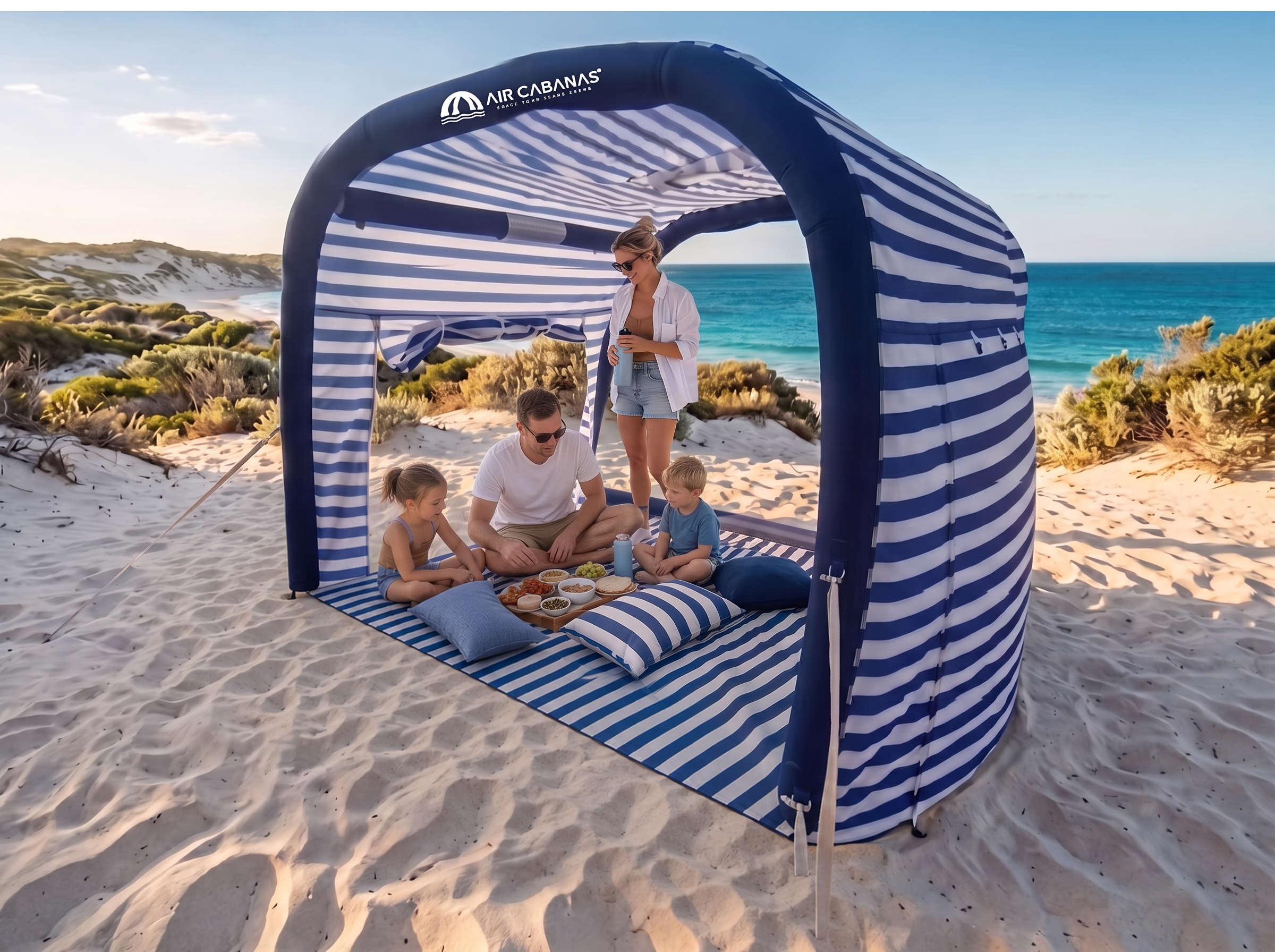
Instead of fragile metal trusses or brittle fibreglass ribs, an AirCabana utilises heavy-duty, high-pressure inflatable air beams that provide robust structural rigidity without any metallic snap points. If a sudden, unexpected gust overwhelms the shelter, the flexible air beams gently deflect, absorbing and spilling the wind load before instantly rebounding to their upright, tensioned form. This eliminates the risk of bent framework and permanently warped poles that routinely ruin beach outings with older-style structures.
Beyond sheer resilience, the absence of rigid metal parts enhances beachside safety for young families. Children can run freely around an AirCabana without parents worrying about bruised foreheads on steel uprights or pinched fingers in sliding locking collars. Packing down an air-supported shelter is as simple as opening a rapid-release valve, watching the structure deflate effortlessly, and folding the soft canvas away into its compact carry bag.
Anchoring Techniques for Soft Sand: Pegs vs Sand Ballast
Understanding soil dynamics is essential when securing any temporary shelter along the Australian coastline. Terrestrial marquees rely on long steel pegs driven into compacted turf, where root systems and dense soil hold the metal securely via frictional resistance. On coastal beaches, however, dry surface sand behaves more like fluid particles. Driving a thin metal stake into dry sand provides virtually no pull-out resistance, meaning a passing breeze can dislodge standard gazebo pegs with effortless ease.
Effective beach shade relies on mass-displacement ballast rather than vertical friction. Purpose-built shelters utilise deep corner pockets designed to be shovelled full of heavy sand. A single sand ballast pocket filled with damp sand can weigh between ten and fifteen kilograms, providing immense downward gravity anchoring right at the perimeter corners where upward aerodynamic lift is greatest. This keeps the shelter planted firmly to the ground without creating dangerous metal projectiles if wind speeds shift unexpectedly.
To achieve optimal stability on the beach, always clear away the hot, dry top layer of sand before setting up your shelter or filling your ballast pockets. Anchoring directly onto the firmer, damp sub-layer provides superior structural support. Regardless of your shelter type, continuous supervision is paramount on Australian beaches; if the wind conditions deteriorate or sea breezes become erratic, always lower your canopy and pack down promptly to ensure the safety of everyone on the beach.
Choosing the Right Family Sun Shelter for Australian Conditions
Selecting the ideal coastal sun shelter comes down to assessing how your family actually uses the beach. While a vast commercial marquee might seem appealing for hosting an entire sports team on an oval, its impracticality on coastal sand makes it a poor choice for relaxing seaside trips. Australian coastal conditions demand UPF50+ certified sun protection, exceptional ventilation to combat humid heat, lightweight portability, and rapid, solo-friendly assembly that withstands shifting sea breezes.
For growing families and groups who want expansive shade without the back-breaking weight of a steel frame, modern air-beam structures hit the sweet spot. An inflatable shelter like the AirCabana delivers a generous shaded footprint, high headroom, and dependable stability, all while packing down into a tidy shoulder bag that anyone can carry across soft dunes. By swapping rigid metal struts for pressurised air tubes and integrated sand ballast, you eliminate setup stress and gain genuine peace of mind.
Investing in a shelter purpose-built for the coast ensures that your gear lasts through many summers of saltwater spray, strong UV radiation, and gusty shorelines. By retiring the cumbersome marquee and embracing coastal-engineered shade, you protect your family from harsh ultraviolet rays while keeping your beach routine relaxed, safe, and truly enjoyable from sunrise to sunset.
Frequently asked questions
Can you use a beach gazebo on soft sand?
You can set up a beach gazebo on sand, but it requires heavy sandbags, specialised screw anchors, and multiple people to secure safely. Standard pegs pull out instantly in loose coastal sand, and narrow metal legs tend to sink unevenly. A dedicated coastal cabana with built-in sand ballast pockets is far safer and much easier to anchor on soft sand.
Is a cabana better than a gazebo for windy beaches?
Yes, a purpose-built cabana is significantly better suited to windy shores than a gazebo. Large marquees act like sails, catching incoming breezes with rigid frames that can buckle under pressure. In contrast, coastal cabanas feature sand ballast and flexible frameworks—such as an inflatable AirCabana—that absorb and spill gusts rather than snapping or tumbling.
How much does a beach gazebo weigh compared to a cabana?
A standard pop-up gazebo generally weighs between 15 and 25 kilograms due to its heavy steel or aluminium scissor-action frame. Purpose-designed beach cabanas typically weigh between 4 and 8 kilograms. This substantial weight difference makes cabanas much easier to haul across hot sand dunes alongside your regular beach towels and coolers.
What happens if you leave a pop-up gazebo unattended on the beach?
Leaving an unattended pop-up shelter on the shore is dangerous. Changing tides, sudden wind gusts, or sea breezes can quickly dislodge loose pegs, turning a metal-framed structure into a tumbling projectile across crowded sand. Always supervise your beach shade, ensure ballast pockets are filled correctly, and pack your shelter down immediately if conditions become unsafe.