Beach Fishing Shade: Master Long Days on Sand
Discover the best beach fishing shade for long days on the sand. Learn how to manage all-day UV exposure, optimise your gear layout, and anchor safely.
Published 2026-10-26T20:01:02.504+00:00
Setting out for a full day chasing gutters along the coast requires serious preparation, and choosing the right beach fishing shade can make the difference between an exhausting ordeal and a memorable day landing fish. Whether you are fishing the rolling breaks of Fraser Island, the sandy spits of South Australia, or the remote headlands of New South Wales, the ocean environment tests both your stamina and your gear. The relentless combination of reflective water, shifting sea breezes, and open shores demands sun protection that handles coastal conditions without fuss. In this guide, we explore how to manage all-day UV exposure, organise an efficient gear layout, and choose reliable shelter that keeps your bait cool, your tackle protected, and your crew comfortable from dawn until dusk.
Why dedicated beach fishing shade matters on Australian coastlines
Heading out before sunrise to chase tailor, salmon, or whiting along open gutters is one of the quintessential Australian coastal traditions. Yet, once the morning mist burns off, anglers are left contending with the harsh reality of an unshaded shoreline. Having reliable beach fishing shade transforms a punishing mission into a comfortable, productive day on the sand, giving you a functional base where you can re-rig tackle, shelter fresh bait, and stay protected between bites.
Unlike a casual two-hour dip at the local patrolled beach, surf fishing keeps you anchored to a single stretch of sand for hours on end, often through changing tides and shifting winds. Without adequate shelter, the physical toll of fatigue and glare builds rapidly. A quality shade setup serves not merely as sun protection, but as your operational headquarters where fresh catch is kept cool, drinks stay shaded, and your energy reserves remain intact.
Many anglers make the mistake of relying solely on broad-brim hats, long sleeves, and zinc, only to find themselves drained by midday. True all-day comfort requires a dedicated structure that blocks penetrating coastal light, resists sea breezes, and provides enough overhead clearance to maneuver rods and gear without tangling lines or tipping over tackle boxes.
Managing all-day UV exposure during extended beach sessions
Extended coastal sessions demand serious respect for the Australian climate. Managing all-day UV exposure requires understanding how beach environments amplify solar radiation. Ultraviolet rays penetrate directly from above while simultaneously reflecting off pale quartz sand and ocean whitewash, exposing your skin and eyes to radiation from virtually every angle.
Even during overcast mornings or cooler winter outings chasing jewfish, UV levels across southern and eastern coastlines routinely climb into extreme brackets by late morning. Sitting unprotected by the gutters accelerates dehydration, impairs your concentration when watching rod tips, and dramatically increases the risk of severe sunburn. A certified UPF50+ canopy acts as a critical physical barrier against this relentless radiation.
To mitigate these risks across a marathon session, shade should be treated as a working station rather than just an afterthought. Anglers need consistent shelter during peak ultraviolet hours between 10 am and 3 pm, when stepping out to bait hooks or land fish should be the exception, while rigging, eating, and resting remain strictly shielded beneath a cool cabana cover.
The hidden hazard of reflected coastal radiation
Direct overhead sun is only half the battle along the coastline. Wet shoreline sand reflects up to twenty percent of UV radiation, while sea foam and breaking surf scatter light unpredictably across your campsite. This secondary bounce bypasses ordinary baseball caps and low umbrellas, making a deep, wide canopy footprint essential for true protection.
Effective coastal shade setups feature generous overhangs and adjustable side walls that can be reoriented as the sun tracks across the sky. By blocking horizontal rays and ground reflection, you keep ambient temperatures significantly lower under the canopy, preserving your endurance for the afternoon run-in tide.
Optimising your gear layout for efficiency and safety on the sand
Organising your tackle, bait, and coolers requires systematic discipline, especially when setting up along remote beaches far from your vehicle. A well-planned gear layout ensures that everything has its place, preventing expensive reels from contacting corrosive salt sand and keeping bait ice-cold. Your beach fishing shade should act as the anchor point of your entire camp.
Position your bait esky and personal drink cooler directly under the deepest part of the canopy to shield them from radiant warmth. Keep your bait board, spare rigs, and leader spools elevated on a lightweight folding camp table or resting atop sealed storage tubs inside the shaded perimeter. This keeps your essential tackle within arm's reach while you monitor rod spikes planted down at the water's edge.
Traffic management is equally critical when dealing with gang hooks, wire traces, and heavy surf sinkers. Keep working tackle buckets near the front corner of the shelter facing the water, leaving the central and rear floor area entirely free for comfortable seating and hydration breaks. This layout prevents accidental hookups on towels and keeps lines safe from being trodden into the sand.
Protecting bait, catch, and sensitive tackle from heat
Fresh pilchards, worms, and squid degrade rapidly under direct solar heat, softening until they fly off the hook mid-cast. Storing your bait stock within a shaded cooler beneath the canopy preserves firmness and scent presentation. Likewise, any table fish destined for the dinner table must go straight into an iced saltwater slurry sheltered from the sun.
Monofilament and fluorocarbon leaders also suffer degradation under prolonged thermal stress and UV radiation. Leaving spools baked on top of a tackle box weakens their breaking strain and knot integrity. Keeping all line spools, electronic bite alarms, and phone devices inside the canopy shade extends their lifespan and avoids gear failure on trophy fish.
Comparing inflatable air-tube shelters with pole-frame cabanas
When selecting the best beach fishing shade, anglers traditionally turned to metal pole-frame cabanas. While these familiar pole designs provide structure, their rigid metal ribs and plastic centre hubs present undeniable headaches on open beaches. Heavy crosswinds can bend hollow metal poles, while abrasive sand grains inevitably work their way into internal lock-pins and telescoping joints, causing them to seize after a few salty trips.
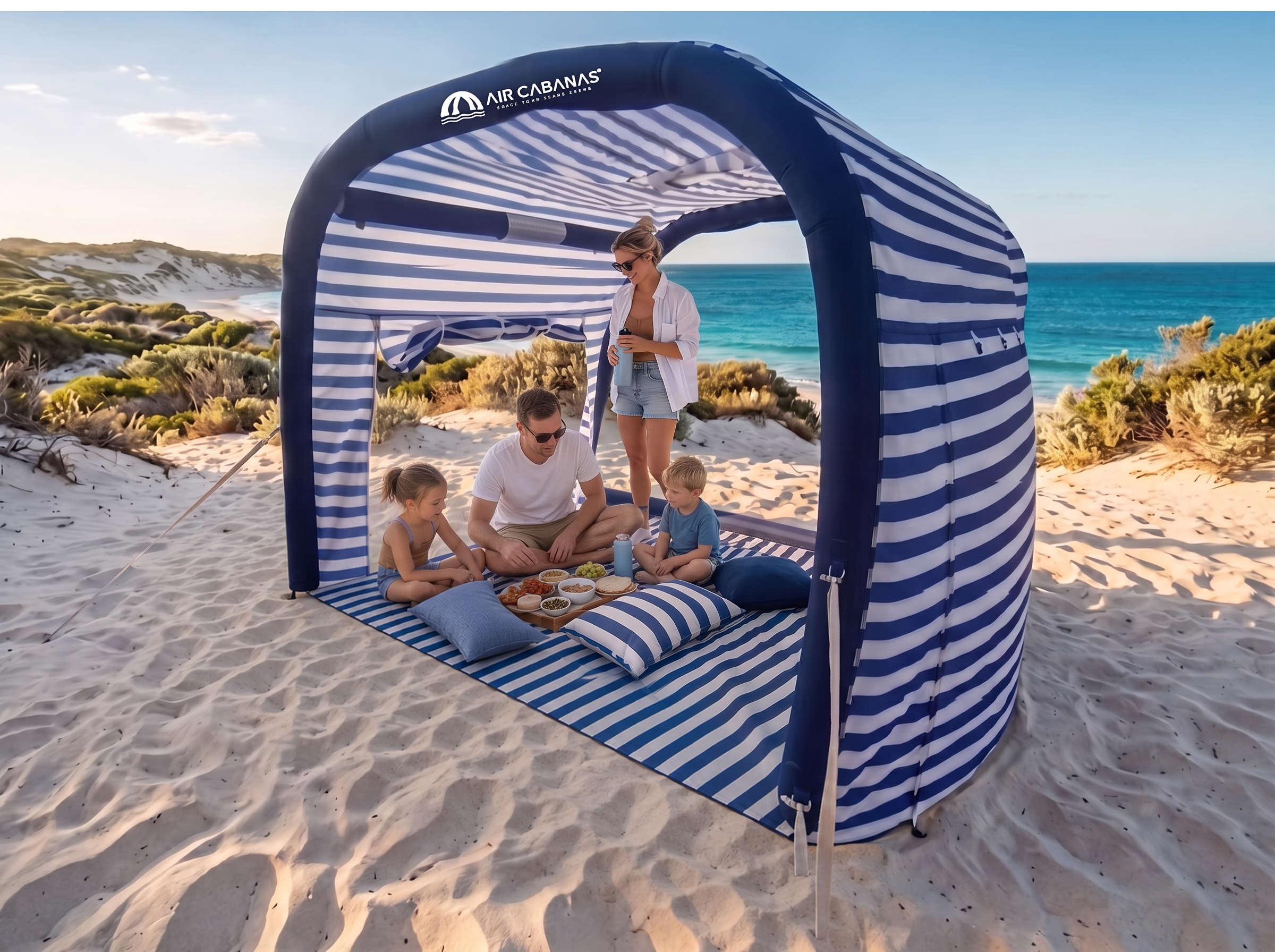
The AirCabana represents a modern evolution in shoreline shelter, replacing vulnerable metal frames with an ultra-durable, high-pressure inflatable beam system. Because there are no rigid internal struts to bend, warp, or snap under sudden wind gusts, the inflatable design absorbs dynamic coastal breezes smoothly. If a strong gust hits, the air-tubes flex naturally and pop right back into shape without structural damage.
For solo anglers hiking through soft dunes with a backpack full of tackle and surf rods, weight and pack-down size are decisive factors. Pole-frame cabanas are inherently bulky and top-heavy, making them cumbersome to trek across long beaches. In contrast, an inflatable canopy rolls down into a compact tote bag, freeing up hands for your rod tubes and utility trolley. AirCabana delivers genuine UPF50+ coverage without the fragile mechanical joints that sand ruins.
Step-by-step guide to anchoring beach fishing shade in loose sand
Achieving rock-solid stability along the surf line requires correct anchoring technique, especially given that ocean beaches present unconsolidated sand and constant onshore breezes. Never rely on lightweight soil pegs or standard metal skewers, which pull free the moment tension is applied. Sand relies on volume and weight for holding power.
Begin by laying out your canopy with the spine aligned into the prevailing sea breeze, ensuring the shelter does not act like a massive parachute. Fill the corner ballast sandbags completely with wet, compacted sand scooped from just above the high-tide line. Wet sand is nearly twice as dense as dry powdery dune sand, offering immense anchoring ballast that keeps your beach fishing shade firmly grounded.
If anchoring on extremely soft sandbars or windy headlands, augment your corner bags with sand-anchor stakes driven at a forty-five-degree angle away from the shelter, or bury deadman anchors deep beneath the surface. Always inspect guy ropes periodically as tides shift, and remain alert to changing weather; when extreme squalls or unsafe conditions develop, responsibly pack down your canopy immediately to safeguard gear and nearby beachgoers.
Reading coastal winds and setting orientation
Coastal wind patterns typically shift predictably through the day, from light offshore land breezes at dawn to stiff onshore sea breezes by early afternoon. Setting up your canopy with its closed or most reinforced side facing the anticipated afternoon onshore breeze prevents wind from catching the interior and generating excessive upward lift.
Ensure that the open front of the shelter provides a clear, unobstructed sightline to your rod holders planted down in the surf gutter. You should be able to sit shaded in your camp chair and monitor slight taps on the rod tips without twisting awkwardly or stepping outside into the punishing heat.
Essential beach fishing shade packing list for dawn-to-dusk trips
An epic dawn-to-dusk surf fishing mission requires thorough preparation. When you are several kilometres down a remote four-wheel-drive track or beach cut, running out of water or shade gear can terminate your session prematurely. Having a systematic gear checklist guarantees you maintain peak comfort and safety from first light until sunset.
Start your loadout with your primary shade system, high-volume hand pump, and heavy-duty sand shovel. Pack a broad-brimmed UPF50+ hat, polarising sunglasses to spot underwater reef and sand gutters, and marine-grade sunscreen. For comfort beneath the canopy, bring breathable mesh camp chairs that keep you elevated off damp ground and allow cool air circulation.
Hydration and nutrition are vital to combat the fatiguing effects of open sand exposure. Allow at least three to four litres of fresh drinking water per person for a full day, backed up with electrolyte sachets. Store fresh meals in sealed containers away from melting ice, ensuring you stay fueled and energetic through multiple tide changes.
Frequently asked questions
Here are answers to the most common questions Australian anglers have when choosing and maintaining shade shelters along our rugged ocean coastlines.
What is the best beach fishing shade for windy days?
The best beach fishing shade for windy conditions is one that absorbs wind energy rather than fighting it with rigid metal struts. Inflatable air-tube models like AirCabana flex under sudden gusts without snapping or bending, while deeply buried wet-sand ballast bags provide maximum stability. Always pack shelters down when winds exceed safe conditions.
How do I secure a shade shelter in soft beach sand?
To secure a shade shelter in soft sand, always fill corner sandbags completely using dense, wet sand rather than dry surface sand. Dig shallow depressions to sit the ballast bags in for extra resistance. For added security in open surf zones, use dedicated spiral sand pegs or buried deadman anchors angled away from the canopy.
Can one person set up beach fishing shade alone?
Yes, solo anglers can easily pitch modern shelters without assistance. Inflatable air-tube designs are particularly straightforward for one person: simply peg out the base corners, attach the high-capacity air pump, and inflate the beams in less than two minutes. Once erected, shovel wet sand into the corner anchor pockets to lock it firmly in place.
How much shade do I need for a full day of surf fishing?
For a full day of surf fishing, an individual or angling pair requires at least two to four square metres of overhead UPF50+ coverage. This footprint provides sufficient room to sit in chairs, store coolers and tackle boxes out of direct sunlight, and leave a clear passage to rush out when a rod strikes.