
Beach Day Packing List: Guide for Australian Families
Plan the ultimate coastal trip with our beach day packing list for Australian families. Discover shade, sun safety, snacks, and smart setup tips.
Published 2026-10-30T20:02:08.568+00:00
Few family rituals match the pure joy of an Australian summer by the ocean, where gentle surf, sunlit shallows, and towering sand dunes set the scene for unforgettable childhood memories. Yet behind every effortless morning on the sand lies careful preparation. Crafting a foolproof beach day packing list is the secret to keeping young adventurers safe, energized, and content under the southern sun. From high-UV protection and deep shade to clever hydration and sand-free snacking, here is your definitive guide to packing smart for a stress-free day along the Australian coastline.
The Ultimate Beach Day Packing List for Australian Families
Planning a coastal getaway with little ones in tow requires tactical foresight, patience, and a well-curated beach day packing list. Between the unforgiving coastal sun, shifting sea breezes, and unpredictable toddler routines, packing haphazardly is an easy way to turn a dreamy morning into an exhausting retreat to the car. In Australia, the coastal environment carries unique demands, requiring parents to juggle essential sun protection, boundless hydration, kid-friendly sustenance, and smart gear that does not weigh down your shoulders across the dunes.
A truly successful beach day packing list is structured into functional categories rather than a chaotic jumble in an oversized canvas tote. By grouping items into sun safety, hydration, easy-access food, utility, and reliable shade, you ensure you never leave the carpark missing an essential item. Parents who streamline their inventory discover that a day on the sand feels rejuvenating rather than taxing, letting you focus on building sandcastles, navigating gentle shore breaks, and watching your kids discover tidal pools.
Before you begin loading up your vehicle, remember that less is often more when the gear you choose works double duty. High-performance sun shelters, multi-compartment insulated coolers, and breathable mesh totes replace cumbersome armfuls of loose toys and clunky metal frames. With the following detailed blueprint, you can pack systematically, unpack effortlessly, and settle into the sand with total peace of mind for the entire day.
Reliable Shade: Why Modern Beach Shelters Make or Break Your Trip
When building your beach day packing list, reliable shade sits right at the top of the hierarchy of needs. Under the fierce southern sky, ambient heat and relentless reflection from bright quartz sand can sap a child's stamina within thirty minutes. Having a stable, generous sanctuary where little bodies can nap, snack, and recharge away from direct rays transforms your stay from a fleeting sprint into an enjoyable, leisurely ritual. Without adequate overhead cover, you will inevitably find yourself packing up before lunch just to escape the scorching heat.
Traditional beach umbrellas rarely cut it along exposed coastal stretches, frequently turning inside out at the first breath of a gusty nor'easter or threatening to become airborne projectiles. For decades, families opted for traditional pole-frame cabanas, yet threading stiff aluminium poles through tight fabric sleeves while keeping an eye on an adventurous toddler is a notorious beachside stressor. Stiff metal components also struggle with flex when onshore breezes strengthen, often placing unwanted strain on corner joints and fabric seams.
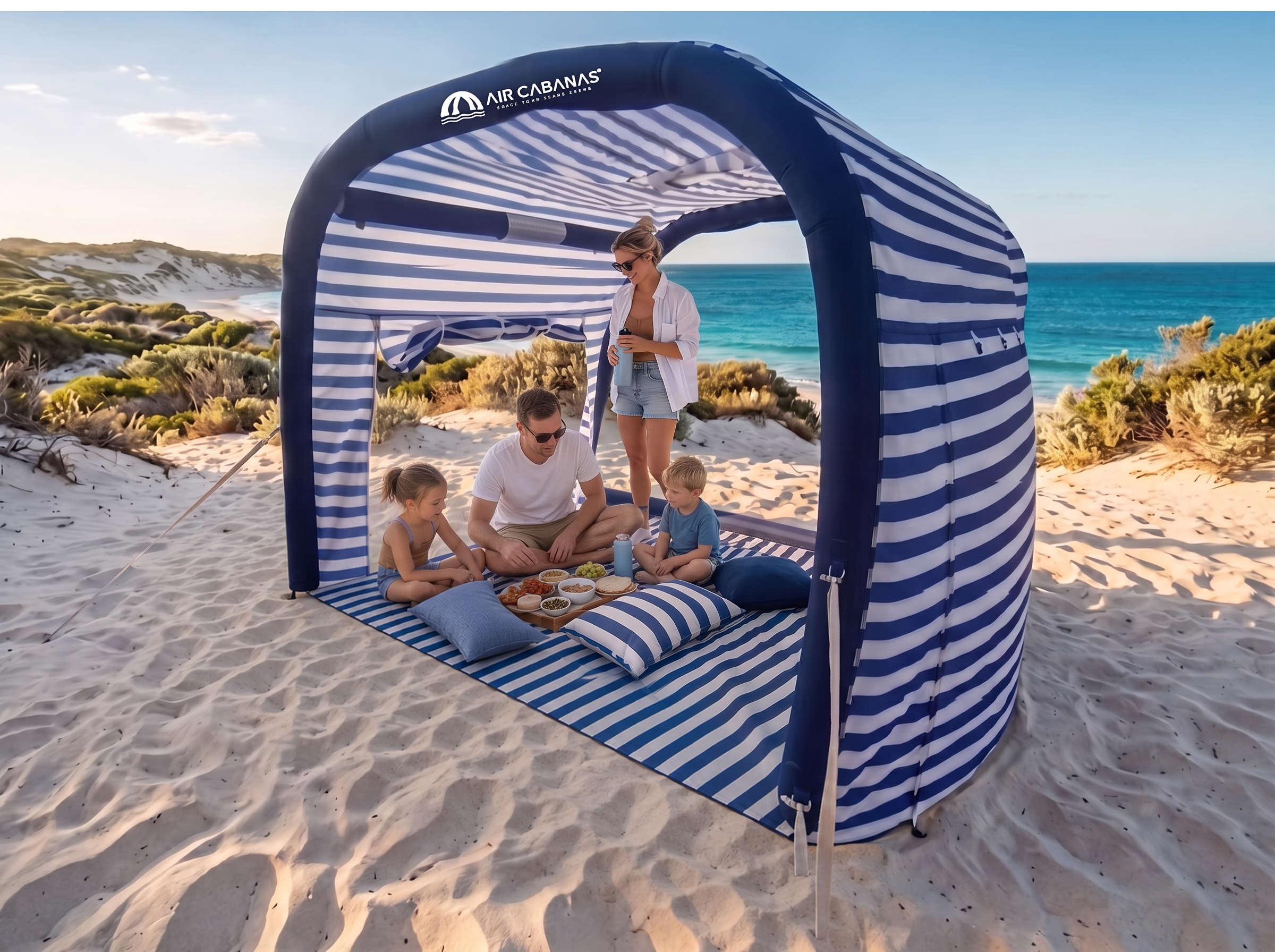
This frustration is why modern parents are switching to inflatable technology like AirCabana. Using integrated inflatable air-tube technology instead of rigid poles, an AirCabana pitches in minutes with a simple hand pump, creating a robust canopy that flexes naturally with coastal airflow without rigid parts that snap or buckle. Whether you choose a classic cool cabana style setup or an expansive air-tube shelter, dedicating room on your beach day packing list for dependable shade guarantees your family can comfortably ride out the warmest hours of the day in secure comfort.
Beating the Australian UV: Sun Safety Beyond Basic Sunscreen
Australia records some of the most intense UV levels on the planet, with the UV index regularly climbing into the extreme category (11 and higher) from mid-morning through late afternoon across summer. When constructing your beach day packing list, mitigating this invisible hazard requires a multilayered defence. Sunscreen alone is never sufficient; dermatologists and coastal lifeguards consistently advocate for wide-brimmed hats, broad-spectrum barrier creams, and UPF50+ rated apparel that physically blocks ultraviolet radiation from fragile, developing skin.
Begin by dressing children in full-coverage, long-sleeve rash vests and sun suits before leaving home. Trying to apply lotion to damp, sand-caked skin on an excited child running towards the surf is notoriously difficult and rarely results in even coverage. Applying a generous base layer of water-resistant SPF50+ sunscreen twenty minutes prior to outdoor exposure allows the protective emulsion to bond with the skin properly. Always stash a dedicated sunscreen applicator or mineral face stick inside your bag for painless touch-ups around little eyes, noses, and ears every two hours.
Protective eyewear is another critical component that is frequently overlooked on a standard beach day packing list. Children's eyes have clearer lenses than adults, allowing more UV radiation to penetrate deep into the retina. Look for EPF (Eye Protection Factor) 9 or 10 sunglasses with snug silicone straps that prevent them from sinking into the whitewash or disappearing into the sand. Pairing quality shades with a deep-brim bucket hat that shields the back of the neck gives your little ones the comprehensive shielding they need to play safely all day.
Water and Electrolytes: Keeping Kids Hydrated Under the Sun
Hydration is the engine that keeps coastal fatigue at bay, yet kids consistently forget to drink water when engrossed in digging canals or paddling in the shallows. The combination of direct heat, salt air, and constant physical exertion rapidly drains little reserves. When finalizing your beach day packing list, allocate significantly more water than you anticipate consuming at home. As a general rule of thumb, budget at least 1.5 to 2 litres of chilled fresh water per child for a half-day coastal stay, keeping reserve supplies secured in insulated flasks.
To encourage regular sips without interrupting play, bring individual, bite-resistant insulated drink bottles featuring flip-top straws. These keep contents icy cold even inside a warm shelter and prevent gritty sand from fouling the mouthpiece. Freezing bottles halfway the night before and topping them up with chilled water in the morning produces an internal ice core that steadily melts into crisp, refreshing water as the day progresses, providing dependable chill from dawn until dusk.
In addition to plain water, incorporating natural electrolytes into your hydration plan keeps energy levels stable and prevents sun-induced headaches. Coconut water, chilled watermelon slices, orange wedges, and diluted electrolyte mixes replenish the vital salts lost through perspiration. Make regular water breaks a structured group activity: every time the children return beneath the shade of your AirCabana for a snack or toy swap, mandate a generous drink before they sprint back to the water's edge.
The Smart Food Strategy: Beach-Friendly Snacks and Lunch Ideas
Nothing cuts a coastal excursion short faster than hungry, cranky kids, making an airtight culinary strategy a cornerstone of any beach day packing list. Sand and picnic lunches are lifelong adversaries; once fine coastal grit enters a sandwich or fruit container, tears inevitably follow. The secret lies in packing individual, bite-sized portions that require minimal handling and can be consumed quickly with sandy fingers without spoiling the entire meal. Avoid anything sticky, gooey, or prone to rapid melting like chocolate spreads or delicate pastries.
Bento-style lunch boxes with individual locking compartments are the gold standard for beachside dining. Fill these compartments with firm finger foods: chilled grapes, sliced cucumber rounds, carrot sticks, cold pasta salads tossed in olive oil, wholemeal scrolls, and cheese cubes. These items withstand warm ambient temperatures, offer high water content, and can be picked up with dry fingertips. Freezing squeeze pouches of yoghurt or fruit puree turns them into refreshing morning slushies that also act as auxiliary ice packs inside your cooler bag.
Invest in an airtight, high-grade soft cooler with heavy-duty thermal insulation to protect your supplies from the ambient heat. Pack your heaviest ice packs at the bottom and top of the cooler, layering the most temperature-sensitive items—such as dairy and sliced deli meats—directly between them. Keep a separate lightweight wet bag or zip-lock pouch exclusively for discarded wrappers and peels, ensuring your family leaves the shoreline completely pristine without chasing windblown plastic across the sand.
A Realistic Beach Timeline: When to Arrive and When to Leave
A well-organised beach day packing list provides the gear, but a realistic timeline ensures you actually enjoy the experience. The classic mistake many families make is arriving precisely at midday when UV levels peak, the sand burns bare feet, parking is impossible to find, and onshore sea breezes blow at their stiffest. Structuring your outing around natural coastal rhythms makes the entire adventure calmer, safer, and far more rewarding for both parents and toddlers.
The golden window for Australian beach trips with young children is early morning, aiming for arrival between 7:30 am and 8:30 am. During these morning hours, carparks are accessible, the sand is pleasantly cool, surface winds are usually calm offshore breezes, and the UV index is still climbing from safe levels. Setting up your base camp, pitching your cool cabana or air-tube shelter, and enjoying the glassy morning surf allows your family to absorb the very best hours of the day in relative tranquility.
By 11:30 am or midday, the environmental dynamics shift dramatically: UV values hit their zenith, heat radiates intensely from the dunes, and coastal breezes gather strength. Rather than battling rising temperatures and irritable children, make this your cue to pack down. Having gear that packs down rapidly—like the quick-deflating air beams of an AirCabana—means you can pack up the car in minutes, avoiding the cranky meltdown window and returning home just in time for an afternoon nap or quiet rest in air-conditioned comfort.
Essential Beach Gear and Utility: Sand Removal and Clean-Up Hacks
Beyond shade, food, and swimwear, a seasoned parent's beach day packing list includes several unheralded utility heroes that streamline clean-up and vehicle loading. The transition from the sandy foreshore to the family car is where tensions typically peak, as wet, abrasive sand clings stubbornly to calves, feet, and car upholstery. Equipping yourself with simple, low-cost removal hacks will save your sanity and preserve your vehicle's interior.
One of the most famous hacks among coastal locals is packing a bottle of talc-free baby powder or cornstarch along with a soft makeup brush. Sprinkling cornstarch onto sandy skin immediately absorbs residual moisture, breaking the surface tension that makes sand stick. A quick, gentle sweep with a dry brush or towel causes the sand to fall away effortlessly like dry dust, leaving little feet and ankles perfectly smooth and clean before sliding into socks and sandals. Keep this kit in an exterior pocket of your bag for instant carpark access.
For transport, ditch solid plastic tubs or sealed duffle bags in favour of oversized, heavy-duty open mesh tote bags for all buckets, spades, and boogie boards. Shaking the mesh bag thoroughly before leaving the sand sifts out kilograms of loose grit right on the beach rather than in your boot. Pack several waterproof dry bags or wet bags for soaked swimmers, keeping wet gear isolated from your dry changes of clothes and electronic devices. A wide-toothed comb, travel-sized detangling spray, and gentle eyelid wipes round out the ultimate utility kit.
Frequently asked questions
Here are answers to the most common questions Australian families ask when preparing their gear for a day on the sand.
What should I pack for a beach day with a toddler?
Pack a high-coverage UPF50+ rashie, wide-brim hat, baby-safe mineral sunscreen, multiple swim nappies, and an abundance of finger-friendly snacks. Include an insulated water bottle, silicone beach toys, and cornstarch for sand removal. Above all, bring reliable, rapid-pitch shade to keep them out of direct sunlight and provide a calm space for rest.
How much water do kids need at the beach?
Active children need at least 1.5 to 2 litres of chilled water for a half-day at the beach. Direct sun, salt water, and constant physical activity rapidly accelerate dehydration. Pack insulated drink bottles that keep water icy cold, and supplement with hydrating fruits like watermelon or diluted electrolyte drinks during regular shade breaks.
What is the best shade for Australian beaches?
The best beach shade provides UPF50+ protection, withstands coastal winds, and sets up quickly with minimal hassle. While traditional pole-frame cabanas are common, modern air-tube shelters like AirCabana offer superior wind flex and zero rigid metal poles to assemble. Always ensure your shelter is anchored securely using all supplied sand pockets and pegs.
How do you remove sand from kids easily?
Apply talc-free baby powder or cornstarch directly onto damp, sandy skin. The powder absorbs moisture instantly, neutralizing the friction that binds sand to skin. Use your hands or a soft dry washcloth to gently wipe the area, and the sand will fall away cleanly without scratching delicate skin before getting in the car.
What should you avoid bringing to the beach with kids?
Avoid sticky, heat-sensitive foods like chocolate or unwrapped baked goods that turn into sandy messes. Leave behind flimsy umbrellas that blow away in coastal gusts, complicated multi-pole tents, expensive non-waterproof electronics, and rigid plastic buckets that easily crack. Prioritize durable, flexible, and easily cleanable gear that handles salt and sand.