
Beach Cart Mastery: Hauling Gear Over Soft Sand in Australia
Master the art of packing your beach cart for Australian shores. Discover essential tips for effortlessly transporting chairs, shade, and your esky across…
Published 2026-10-10T20:00:42.969+00:00
Australians love a day at the beach, but getting all your gear from the car to that perfect spot on the sand can be a real workout. The secret weapon for a stress-free seaside adventure? A reliable **beach cart**. This guide will transform your beach expeditions, making the trek across soft sand effortless. Forget multiple trips and aching arms; with the right beach cart and smart packing strategies, you'll glide over dunes like a seasoned pro. We'll cover everything from choosing the best cart to loading it efficiently with your beach chairs, esky, and essential shade, ensuring your beach day packing list is always on point.
Why a Quality Beach Cart is Your Beach Day MVP
Imagine arriving at a stunning Australian beach, only to face the daunting task of lugging heavy coolers, bulky beach chairs, and shade structures across soft, sinking sand. This is where a quality beach cart becomes an absolute game-changer. It's not just about convenience; it's about transforming a potentially exhausting start into a smooth, enjoyable transition to relaxation. A well-designed beach cart centralises all your gear, significantly reducing the number of trips back and forth to the car, and most importantly, it saves your energy for enjoying the waves and sunshine.
The primary challenge at many Australian beaches is the deep, soft sand that traditional wheels struggle with. Look for carts equipped with large, wide, pneumatic wheels or balloon tyres. These are specifically engineered to glide over loose surfaces rather than digging in, providing superior traction and weight distribution. Investing in a cart with these features ensures that your journey from car park to shoreline is less of a struggle and more of a stroll, protecting your back and preserving your enthusiasm for the day ahead. It truly makes all the difference.
Beyond simply moving items, a robust beach cart is an investment in your overall beach experience. It protects your belongings from the elements, keeps everything organised, and can even double as a temporary storage unit once you've set up camp. Think about the variety of items you bring: towels, sunscreen, snacks, drinks, toys, and of course, your essential shade like a beach umbrella or a more substantial beach tent. A good cart handles it all, allowing you to focus on the fun rather than the logistics, making it an indispensable part of your beach day packing list.
Choosing the Right Beach Cart for Australian Conditions
Selecting the perfect beach cart for Australian conditions requires careful consideration of several key features. As mentioned, the wheels are paramount: large, wide, pneumatic (air-filled) tyres are non-negotiable for soft sand. Avoid narrow, hard plastic wheels, as they will only dig in and frustrate your efforts. Look for durable, corrosion-resistant frames, preferably made from marine-grade aluminium or stainless steel, to withstand saltwater and sand exposure. Australian beaches can be tough on gear, so robust construction is essential for longevity.
Capacity and versatility are also crucial. Consider how much gear you typically bring. Do you need to carry just a few towels and a small esky, or are you transporting a family-sized load including multiple beach chairs, a large cooler, and a substantial shade structure? Some carts offer convertible designs, transforming from a wagon to a flatbed, which can be incredibly useful for awkwardly shaped items like surfboards or fishing rods. Ensure the cart’s weight limit comfortably exceeds your usual load, providing a safety margin and preventing strain.
Finally, don't overlook ease of storage and transport. Many excellent beach carts are designed to fold down compactly, making them easy to fit into the boot of your car or store at home during the off-season. Quick-release wheels are another excellent feature, allowing for even more compact storage and simplifying cleaning. A cart that is easy to assemble and disassemble will save you time and effort before and after your beach adventures, contributing to a smoother overall experience. Prioritise these practical aspects for maximum utility.
Essential Beach Day Packing List: What to Load First
Crafting an efficient beach day packing list and knowing how to load your beach cart strategically can significantly ease your journey. Start with the heaviest, most stable items at the bottom and centre of the cart. Your esky, typically the heaviest single item, should go in first. This lowers the centre of gravity, making the cart more stable and easier to pull or push across uneven terrain and soft sand. Distribute weight evenly to prevent tipping and make steering more manageable.
Next, layer your bulkier, less fragile items. This includes your beach chairs, which can often be stacked or folded to fit snugly around the esky. If you're bringing a beach tent or an air-tube cabana, its folded structure can also form part of this foundational layer. Utilise any internal straps or bungee cords your cart might have to secure these items firmly. Preventing shifting during transit is key, especially when navigating slopes or bumpy paths, ensuring everything arrives intact and ready for setup.
Finally, add your lighter, more frequently accessed items on top. This includes towels, sunscreen, hats, snacks, and any beach toys. Your beach umbrella can often be secured vertically along the side of the cart using external straps or a designated holder, keeping it out of the way but easily accessible. By following this layering method, you create a balanced, secure load that is simple to transport and unpack, streamlining your entire beach setup process and maximising your time in the sun.
Shade Solutions: From Beach Umbrella to AirCabana
Providing adequate shade is paramount for any Australian beach outing, and your beach cart is crucial for transporting these essential items. A traditional beach umbrella is a popular choice due to its portability and ease of setup. When packing, ensure the umbrella pole is securely fastened, either within the cart’s designated holders or strapped firmly alongside other gear. Its relatively light weight means it can often be placed towards the top of your load, or along the side, making it one of the last items to be loaded and first to be deployed for immediate relief from the sun.
For more substantial shade, many Australians opt for a beach tent or a pole-frame cabana. These options offer greater coverage and stability, but their bulkier nature requires more strategic packing. When folded, they should ideally be placed in the middle layer of your beach cart, nestled amongst beach chairs and other medium-sized items. Always ensure the folded tent or cabana is compact and doesn't protrude excessively, which could snag on obstacles or unbalance the cart during transit across the sand.
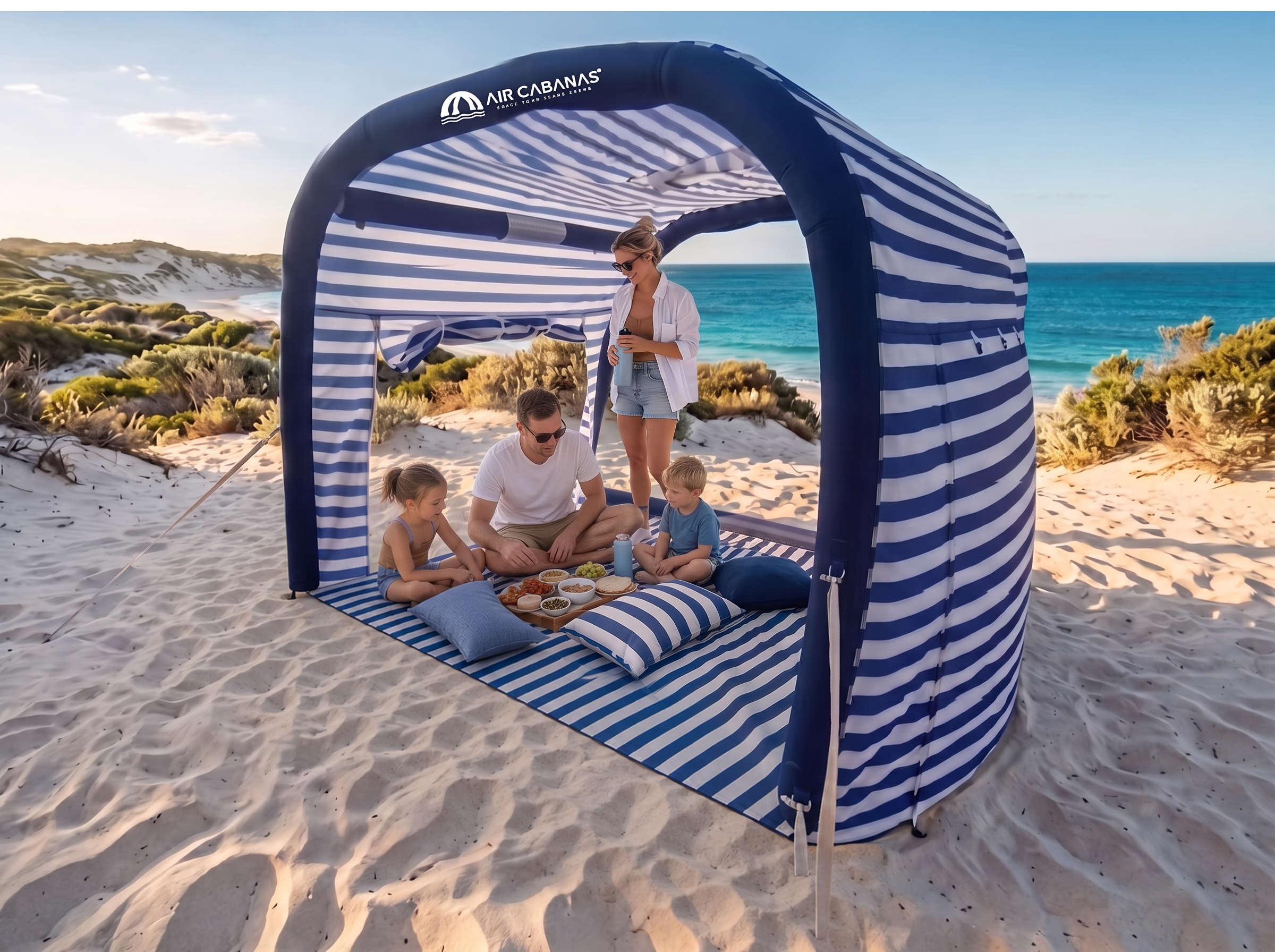
An excellent alternative offering both generous shade and portability is an air-tube cabana, like the AirCabana Classic or AirCabana Family models. These innovative designs inflate rapidly, eliminating the need for cumbersome poles, making them surprisingly compact when packed down. When loaded onto your beach cart, an AirCabana takes up less space than a traditional pole-frame cabana, allowing more room for your esky and other essentials. Its lighter packed weight also contributes to easier hauling, making it a superior choice for those long treks over soft sand, providing robust shade with minimal fuss.
Navigating Soft Sand and Tricky Terrain with Your Beach Cart
Successfully navigating soft sand is the ultimate test for any beach cart, and a few techniques can make all the difference. If your cart has a pulling handle, try pulling it behind you rather than pushing, especially through deep sand. Pulling allows you to lean back and use your body weight more effectively, distributing the effort. Keep the cart moving steadily; stopping and restarting in soft sand requires more energy. Momentum is your friend, so try to maintain a consistent pace once you start moving.
For particularly challenging sections, such as steep dunes or very loose sand, consider a zigzag or serpentine path rather than a straight line. This can reduce the amount of sand resistance against the wheels. If your cart is designed with balloon tyres, ensure they are inflated to the manufacturer's recommended lower pressure for soft sand, as this increases the tyre's footprint and improves flotation. Remember to reinflate for harder surfaces or storage to maintain tyre integrity and extend their lifespan.
Should you encounter exceptionally difficult patches, don't hesitate to briefly lighten the load. Temporarily remove a few items, like your beach chairs or a lighter bag, carry them a short distance, and then return for the cart. This two-stage approach can prevent you from getting stuck or overexerting yourself. Always be mindful of your surroundings, avoiding areas of extremely deep, dry sand if possible, and planning your route to utilise firmer pathways or the packed sand closer to the waterline when tide conditions allow. Patience and technique are key to mastering the soft sand challenge.
Post-Beach Cart Care and Maintenance
After a fantastic day on the Australian beach, proper care and maintenance of your beach cart are essential to ensure its longevity and reliable performance for countless future outings. The combination of saltwater, fine sand, and sun can be harsh on equipment. As soon as you get home, or at least before storing it, give your cart a thorough rinse with fresh water. Pay particular attention to the wheels, axles, and any moving parts, as sand can easily get trapped and cause abrasive wear or corrosion over time.
Once rinsed, allow the beach cart to air dry completely in a shaded area. Direct sunlight can accelerate wear on plastic components and rubber tyres. Once dry, inspect all nuts, bolts, and fasteners. Tighten any that have come loose during transit and lubricate moving parts, such as wheel bearings or folding mechanisms, with a marine-grade lubricant. This prevents rust and ensures smooth operation. For carts with pneumatic tyres, check the tyre pressure and adjust as needed for storage or your next trip.
Store your clean, dry, and lubricated beach cart in a cool, dry place, ideally indoors or under cover, away from direct sunlight and extreme temperatures. If your cart is foldable, collapse it to its most compact form to save space. Regular maintenance, even just a quick rinse and inspection after each use, will significantly extend the life of your beach cart, keeping it ready to effortlessly transport your beach chairs, esky, and AirCabana to your favourite sandy spots for years to come.
Frequently asked questions
What's the best beach cart for soft sand in Australia?
The best beach carts for Australian soft sand feature large, wide, pneumatic (air-filled) tyres. These balloon wheels distribute weight effectively, preventing the cart from sinking. Look for durable, corrosion-resistant frames and a good weight capacity. Many models also fold compactly for easy storage and transport in your vehicle.
How do you stop a beach cart from sinking in sand?
To prevent your beach cart from sinking, ensure it has large, low-pressure balloon tyres. Pull the cart behind you rather than pushing it, maintaining steady momentum. For very soft spots, a zigzag path helps. Distribute weight evenly with heavier items at the bottom to lower the centre of gravity.
What should I pack in my beach cart for a family day?
For a family beach day, pack your esky (cooler) first, then beach chairs and shade (like a beach tent or AirCabana). Add towels, sunscreen, hats, snacks, water, and toys on top. Secure everything with straps. Don't forget a first-aid kit and rubbish bags for a clean exit.
Are beach wagons good for Australian beaches?
Beach wagons can be good for Australian beaches, provided they have the right wheels. Wagons with large, wide, pneumatic tyres are excellent for soft sand. Avoid wagons with small, narrow plastic wheels, as they will struggle. Capacity and a sturdy frame are also important considerations for durability.
How do you pull a beach cart through soft sand?
Pull your beach cart through soft sand by leaning back and using your body weight. Maintain continuous momentum to avoid getting stuck. If your cart has a long handle, extend it for better leverage. Consider slightly deflating pneumatic tyres for increased surface area on very soft patches.