
Beach Cabana Wind Safety: How to Anchor and When to Pack Down
A straightforward guide to sand pockets, site selection, ventilation and making the safe call when wind rises.
Published September 2, 2026
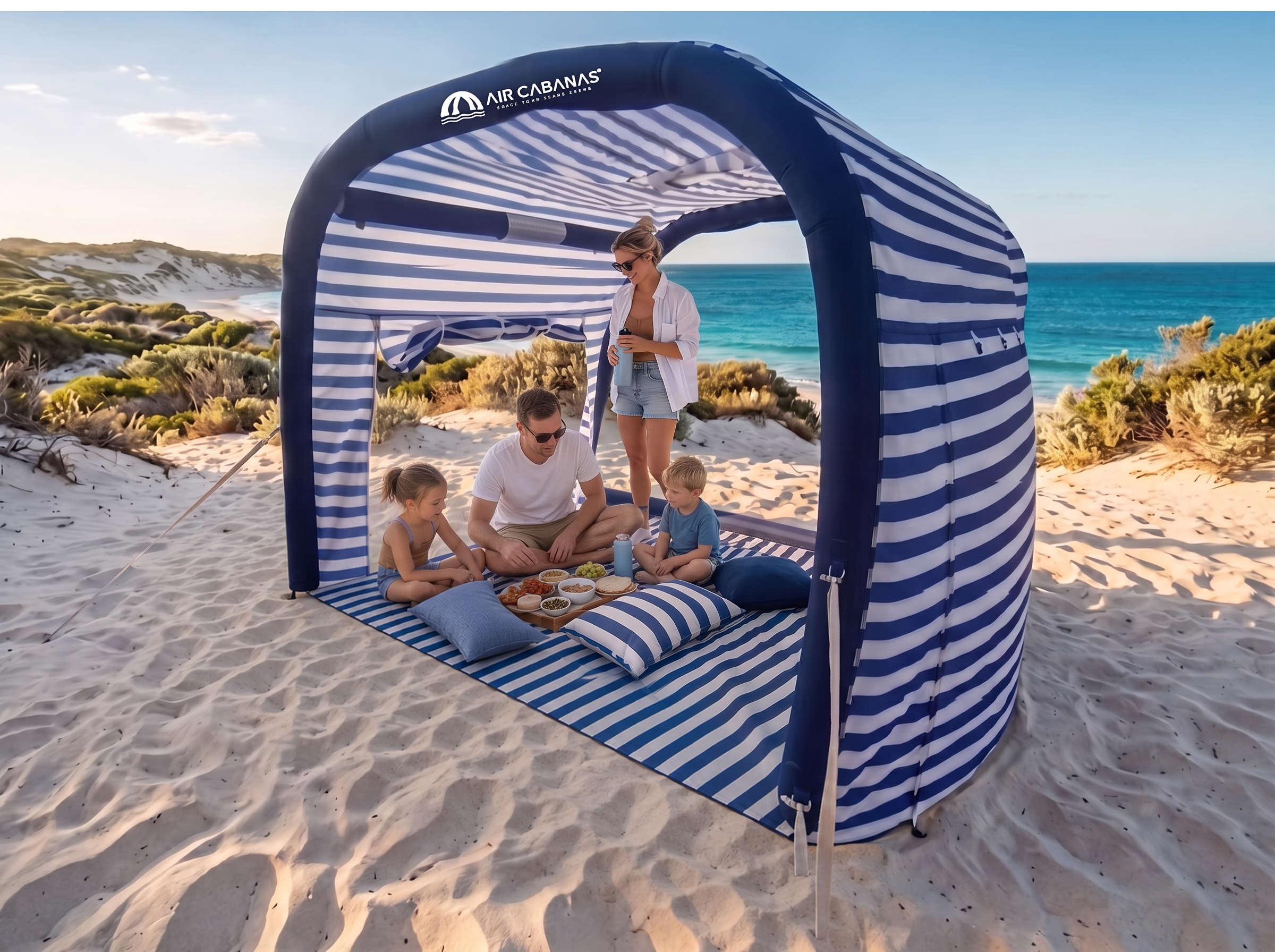
Wind changes quickly on a beach. The safest shade structure is one that is anchored correctly, watched actively and packed down before conditions become uncomfortable. No product can remove the need for judgement, especially near water and other beach users.
Choose the site before you inflate
Look for a flat, clear area well back from the waterline, away from unstable dunes and clear of crowded walkways. Avoid placing shade where a sudden wave, tide change or falling object could create a risk. Check local beach rules and listen to lifeguard instructions.
A low-profile frame is easier to manage than a tall, top-heavy structure, but orientation still matters. Keep the open front pointed into a comfortable direction for access and position the canopy so people are not walking through the anchoring area.
Anchor every integrated pocket
Once the air frame is inflated, fill the integrated sand pockets fully. The Classic has pockets along both sides and the rear tube. Family has pockets along the sides. Use the complete anchoring system for your model rather than partially filling one convenient pocket.
Press the sand in firmly, close each pocket and check that the load is distributed evenly. The aim is a settled base that resists movement without creating a trip hazard. Keep children away from open pockets and do not drag an inflated cabana across the sand.
Why loose add-ons are not the same thing
The integrated pockets stay aligned with the tubes and are part of the cabana’s structure. Optional pegs can add security on grass or firm ground where appropriate, but a peg is not a replacement for sand ballast on a sandy beach.
Use ventilation and keep checking
Open the roof apex vent and roll up the side mesh vents as designed. Keep the front open. These features let air move through the canopy and reduce heat build-up, but they do not make the cabana wind-proof.
After a gust, a group of people moving around or a change in weather, inspect the tubes, canopy and pockets. If the cabana shifts, starts to lift or feels uncomfortable, move everyone away and deflate it. Do not wait for a dramatic failure to make the safe call.
Read the beach, not just the forecast
A forecast is useful, but conditions at the water can feel very different from the nearest weather station. Watch flags, tree movement, nearby umbrellas and the direction of the gusts. If other beach users are packing down, treat that as a meaningful signal rather than waiting for an app to catch up.
Keep the cabana away from crowded paths and never create a situation where an anchoring pocket, open valve or loose accessory becomes a trip hazard. If you need to adjust the position, remove people and belongings first and deflate before moving the structure.
A responsible beach setup leaves no loose packaging or scraps behind. Empty sand from the integrated pockets where practical, brush the fabric clean, and take every component home. Caring for the beach and caring for the product are part of the same routine.
Keep other beach users in mind
Your anchoring plan affects more than your own group. Place the shelter so the open entrance, ballast pockets and any optional accessories do not obstruct a walkway. Give nearby people plenty of space and keep children from running around the rear of the frame.
A considerate setup is easier to monitor too. When the cabana is not surrounded by bags and toys, you can see the pockets, notice movement in the tubes and make a quick decision if the conditions change.
Wind safety is part of choosing the right shade
People often compare beach shades by appearance and packed size, but the anchoring routine deserves equal attention. A shelter should make it obvious where ballast goes, how much to fill and when the structure needs to come down. Integrated pockets keep the weight close to the frame and remove the temptation to leave a few loose bags half-filled.
Take a minute to explain the setup to everyone who may use the cabana. Show children that the pockets are not seats, keep the entrance clear and make sure adults know who is watching the weather. Shared awareness prevents a relaxed day from becoming a rushed pack-down.
Use the cabana for the conditions it was designed for, never leave it unattended in rising wind, and follow council or lifeguard guidance. Early decisions are easier than trying to recover a structure after it begins to move.
The pack-down rule
Pack down before the wind becomes a problem, not after. Clear people and belongings from the area, remove sand from the pockets where practical, deflate using the valves and fold the cabana into its carry bag. Let wet fabric dry fully at home to protect the canopy and seams.
AirCabana is engineered for practical beach days, not extreme weather. Thoughtful setup and an early pack-down decision are part of using any shade product responsibly.