
Beach Cabana Setup Time: Pump vs Pole Compared
Discover realistic beach cabana setup time: timed comparison of pump inflation vs pole assembly on Australian sand. Find the fastest coastal shade shelter.
Published 2026-10-22T20:01:08.82+00:00
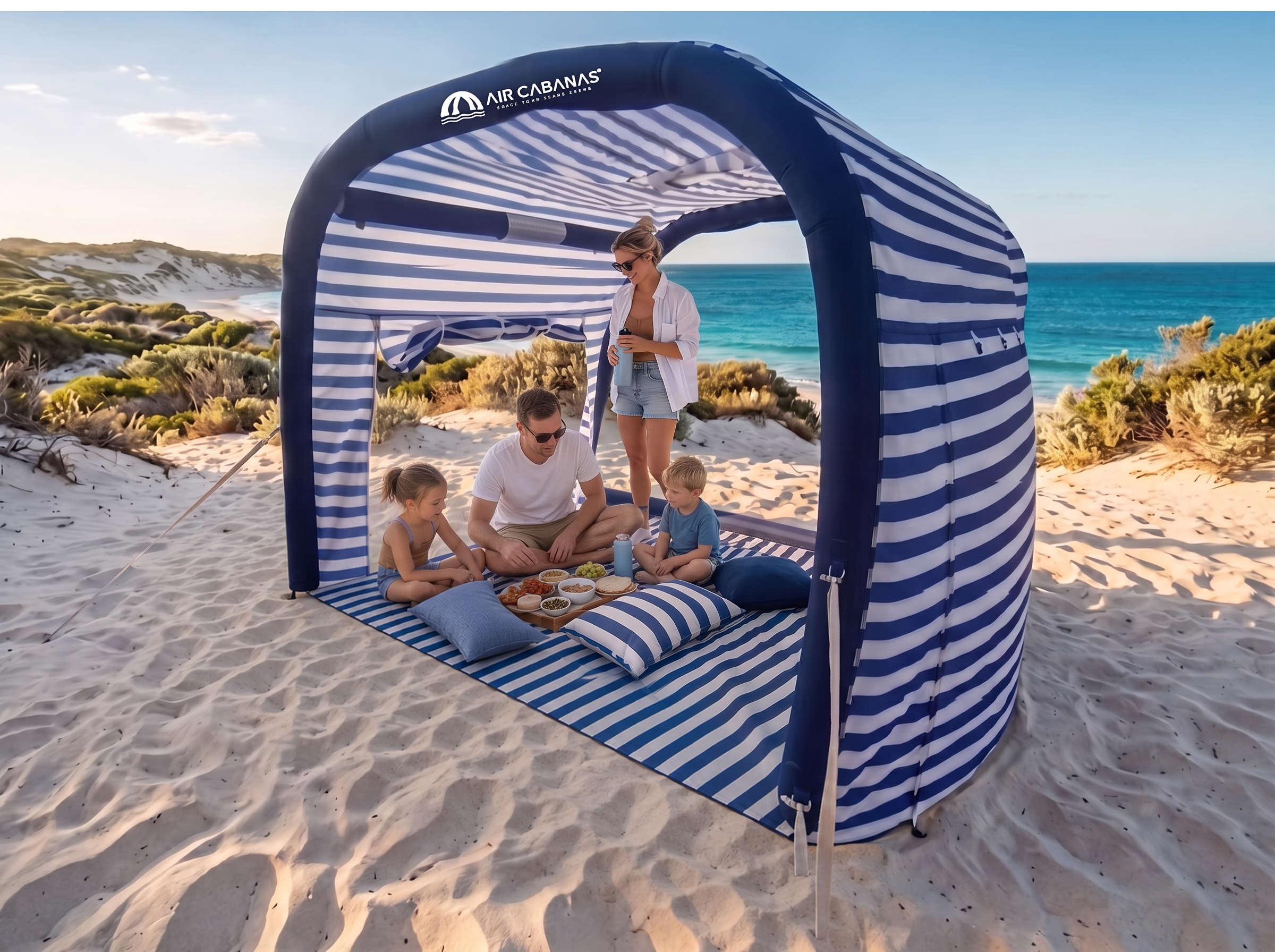
When planning a coastal getaway, your beach cabana setup time can make or break the start of your day. No one wants to spend their first half-hour on the sand deciphering confusing instruction sheets, untangling shock cords, or wrestling metal poles while the sun beats down. In this comprehensive guide, we examine realistic setup speeds across Australian beaches, provide an objective timed comparison of pump inflation vs pole assembly, and share expert tips so you can spend less time pitching and more time enjoying the surf.
Why beach cabana setup time matters on Australian shores
Few experiences test your patience quite like arriving at a bustling Aussie beach on a blazing summer morning, arms laden with towels, eskies, and gear, only to spend half an hour wrestling with your shade shelter. The actual beach cabana setup time dictates whether your coastal morning begins with relaxed seaside calm or high-stress frustration under an unforgiving sun. With intense ultraviolet radiation across our coastline, getting family cover erected swiftly is fundamentally about comfort, wellbeing, and maximising your precious leisure hours by the water.
In Australia, wind patterns shift rapidly from morning offshore breezes to gusty afternoon sea breezes, particularly along exposed stretches of coast like Sydney's Northern Beaches, Torquay, or the Gold Coast. When your shade system demands an elaborate, multi-step assembly sequence, every extra minute spent fiddling with individual parts increases the chance of an unexpected gust catching loose fabric or twisting rigid components. A fast, predictable setup time reduces exposure to changing elements and lets you establish a safe, secure base camp before the elements complicate the process.
Moreover, the reality of beach days with young kids or groups of friends means you are rarely setting up shelter in laboratory conditions. Soft sand yields underfoot, curious toddlers wander toward the surf, and neighbouring beachgoers pitch their gear nearby. In these dynamic environments, understanding how different shelter designs perform against the clock ensures you choose equipment that complements your seaside routine rather than turning your shoreline arrival into an exhausting construction project.
Evaluating realistic beach cabana setup time across common designs
When examining the realistic beach cabana setup time across the popular shade options on Australian beaches, manufacturer claims on the box rarely match the sandy reality. Most product marketing assumes pristine turf, dead calm air, and an experienced team of adults working in tandem. Out on the coast, uneven dunes, dry powdery sand, and sudden coastal gusts dramatically stretch those advertised estimates into lengthy, cumbersome ordeals that catch beachgoers off guard.
Traditional pole-frame cabanas and market-style canopies rely on a framework of interlocking metal or fibreglass rods, corner sand pockets, and central support masts. Unpacking these units requires identifying colour-coded connectors, aligning joints without letting sand jam internal ferrules, and balancing four corners simultaneously while securing heavy ballast. For a single adult managing this alone, the process often turns into a juggling act where one corner takes flight while another is being weighted down.
In contrast, inflatable shade technology has radically simplified coastal sheltering. An inflatable air cabana, like the AirCabana Classic, replaces rigid interconnected hardware with durable, pre-attached high-pressure air beams. Instead of balancing loose arms and separate uprights, you simply peg out the corners, attach a high-volume pump, and watch the structure rise autonomously in mere moments. This fundamental engineering shift cuts assembly friction and brings genuine predictability to your morning arrival.
Timed comparison of pump inflation vs pole assembly in the sand
To understand the true practical differences on the sand, a timed comparison of pump inflation vs pole assembly reveals how design choices translate to real minutes spent working under the sun. In controlled field testing across typical coastal conditions—soft sand with a moderate coastal breeze—the variance between inflatable air beams and mechanical pole frames becomes strikingly evident, particularly when solo assembly is required.
With a standard pole-frame cabana, the timer starts the second the carry bag opens. First comes the central pole insertion, requiring you to drive a support post into the sand until it reaches firmer depths. Next, you must unfold four hinged overhead arms, clip spreader stays into place, and anchor each corner with sand pockets before the canopy acts like a sail. During testing, an experienced solo user averaged between 10 to 14 minutes to complete this sequence, while beginners frequently took 18 minutes or longer due to shifting sand and twisting joints.
By contrast, a timed comparison of pump inflation vs pole assembly highlighting the AirCabana shows a streamlined sequence that finishes in a fraction of that time. Spreading the integrated canopy flat takes roughly 40 seconds. Connecting a dedicated double-action hand pump or rapid electric inflator requires 15 seconds. Full inflation of the structural air beams takes roughly 60 to 90 seconds of steady pumping, bringing the entire physical erection phase to well under three minutes. Once the corners are filled with sand or pegged, the shelter is fully functional in roughly four to five minutes total.
Solo beach cabana setup time: can one person manage it alone?
For solo parents, independent surfers, or anyone hitting the sand without an extra pair of hands, solo beach cabana setup time is the ultimate benchmark of practical gear. A shelter that technically functions well once fully built is of little use if pitching it single-handedly induces pure exhaustion or requires help from accommodating strangers three towels down. Managing gear independently is essential for hassle-free Aussie beach culture.
Pitching a traditional rigid-pole cool cabana single-handedly presents distinct ergonomic challenges. Because rigid arms lack structural rigidity until all four sand pockets are filled and tensioned, a single person must run between opposite corners to prevent the structure from listing. If a sudden offshore gust catches the fabric while you are shovelling sand into the first corner pocket, the unsupported frame can torque, bending aluminium poles or pulling anchor points clean out of dry sand.
This is where the AirCabana truly shines for solo adventurers. Because the air beams are permanently welded into the canopy geometry, the shelter cannot twist itself into a tangled knot during erection. You anchor the base corners first into the sand, ensuring the footprint is anchored against the breeze before adding pressure. From there, operating the pump requires no balancing acts; the air-filled arches gently push upward, self-supporting their own weight until fully pressurised. One person can easily achieve an effortless pitch without breaking a sweat.
Managing dry sand and coastal breeze solo
Dry, powdery sand offers minimal natural resistance, meaning central spikes and small pegs can pull free under tension. When setting up solo, always pre-fill your windward sand pockets halfway before lifting or inflating any shelter. This creates an immediate anchor point that stops your cabana from shifting down the beach while you complete the remaining corners.
Factors that stretch your beach cabana setup time
Even with top-tier equipment, several environmental and human factors can inflate your beach cabana setup time if you are unprepared. The most common culprit is fine, abrasive coastal sand working its way into mechanical moving parts. Traditional pole shelters feature push-button detents, telescoping slides, and thumb screws that frequently seize when salt crystals and dry grit work into the sleeves, turning a quick slide into a jammed headache that demands force.
Wind velocity and direction also heavily dictate setup pacing. Attempting to pitch any canopy broadside to a stiff afternoon sea breeze without first anchoring the windward perimeter creates tremendous aerodynamic drag. When users fight against wind pressure rather than working methodically from the upwind side down, setup times can double. Additionally, hunting for buried guy ropes or untangling knotted cords adds unnecessary minutes of frustration under the blazing midday sun.
Choosing an air-tube shelter like an aircabana eliminates joint friction entirely, as there are no sliding metal sleeves or internal cords to jam or fray. However, setup time can still lag if you fail to check your pump valves before heading down the track. Ensuring the Boston valve is properly seated in one-way inflation mode prevents air loss between pump strokes, keeping your setup sequence razor-sharp and efficient every single weekend.
Step-by-step method for the fastest cabana pitch
Achieving a rapid, reliable setup requires an orderly system tailored to coastal conditions. By adopting a methodical approach, you can consistently achieve the quickest possible beach cabana setup time regardless of whether you are pitching an inflatable shelter or an interlocking frame. Rushing into assembly without assessing your surroundings almost always results in having to pull down and re-orient your shade halfway through the job.
Begin by identifying the dominant wind direction. Lay your carry bag down and orient the shelter so the lowest profile or designated windward edge faces into the breeze. Unroll the fabric flat onto the sand. Before introducing structural tension or pumping air, immediately secure the two upwind corners. If your cabana uses sand pockets, scoop two generous handfuls of damp sand from beneath the dry top layer into those windward pockets to create an immovable ballast line.
Next, initiate frame elevation or inflation. If using your AirCabana, attach the hose firmly to the single-point valve and pump smoothly until the tubes feel firm to the touch, resembling a fully pumped basketball. Once upright, immediately fill the remaining leeward sand pockets to capacity. Finish by angling your ground pegs at a 45-degree angle away from the shelter for maximum purchase in the sand. Within minutes, your shade sanctuary is secure, stable, and ready for a full day of coastal relaxation.
Pack-down speed: the other half of the setup equation
While getting your shelter up quickly in the morning is vital, the pack-down speed at the end of a long, sun-drenched day is arguably just as critical. After hours of swimming, surfing, and heat exposure, nobody wants to spend twenty minutes deciphering complex folding diagrams, wrestling with stiff locking pins, or stuffing stubborn metal poles into an undersized storage sack while hot, tired children wait in the car.
Disassembling traditional pole canopies requires reversing every tedious step: emptying sand pockets, wiping down gritty joints so they do not corrode, depressing stubborn thumb pins that pinch sandy fingers, and carefully folding long fabric sections around rigid metal spines. If sand remains trapped inside the telescoping poles, the frame becomes harder to collapse, turning the pack-down process into a frustrating battle when energy levels are already at their lowest.
Inflatables revolutionise the return journey. Packing down an air cabana is nearly instantaneous. Opening the quick-release deflation valve dumps structural pressure in seconds with a satisfying whoosh. The entire shelter settles flat onto the beach towel or sand. From there, you simply shake the dry sand off the fabric, fold the soft air beams in thirds, roll the unit toward the open valve to expel residual air, and drop it effortlessly into its oversized shoulder bag. What used to be a ten-minute wrestling match becomes a ninety-second wrap-up.
Frequently asked questions
Here are answers to the most common questions Australian beachgoers ask about cabana setup times, ease of use, and coastal conditions.
How long does a beach cabana take to set up?
A standard beach cabana setup time ranges from 3 to 15 minutes depending on the design. Inflatable air cabanas typically take 3 to 5 minutes for solo assembly using a manual pump. Conventional pole-frame cabanas generally require 10 to 15 minutes, as they involve assembling multiple framework pieces, securing central masts, and filling four separate sand pockets before the canopy is stable.
Can one person set up a beach cabana alone?
Yes, one person can set up a beach cabana alone, but ease varies greatly by construction. Air-beam cabanas are exceptionally easy for solo setup because inflating the pre-attached tubes naturally lifts the structure without needing extra hands to balance corners. Rigid pole models can be pitched solo, but sudden coastal winds often make balancing arms and filling pockets simultaneously quite challenging.
Is an inflatable cabana faster than a pole cabana?
An inflatable cabana is substantially faster than a pole cabana. In timed trials, pump inflation takes roughly 60 to 90 seconds, leading to a total pitch time under four minutes. Pole cabanas require piecing together metal joints, spreading stays, and anchoring corners, which takes more than twice as long and demands significantly more physical coordination in windy conditions.
What is the fastest shade for the beach?
The fastest shade for the beach is an inflatable air cabana. By eliminating loose poles, internal elastic cords, and fiddly mechanical joints, users simply secure the windward base and inflate the structural beams. The entire shade structure erects smoothly in just a few minutes, allowing you to establish safe sun protection far faster than traditional pop-ups or pole frames.
How do you anchor a cabana in high wind?
To anchor a cabana safely in coastal breezes, always orient the shelter into the wind, dig down to moist sand for peg placement at a 45-degree angle, and fill all corner pockets to capacity. Never rely on empty pockets or shallow pegs. If coastal winds become dangerously gusty, promptly pack down your shelter to ensure safety.