Beach Cabana Rules Australia: Councils & Etiquette
Wondering about beach cabana rules Australia enforces? Learn council regulations, lifeguard access guidelines, and smart shade etiquette for your beach day.
Published 2026-10-20T20:01:00.7+00:00
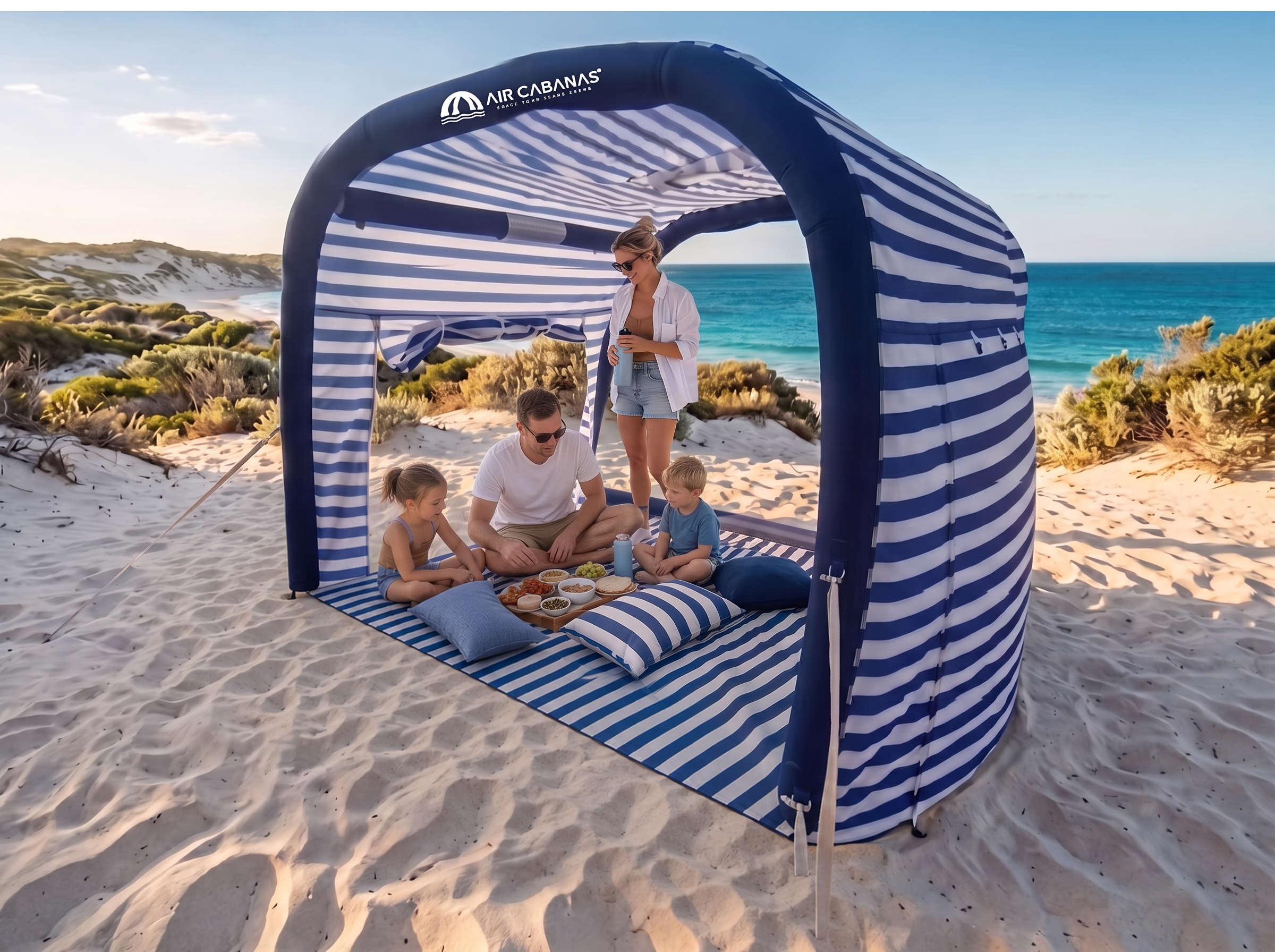
Heading down to the coast with family and friends is a cherished weekend ritual, but knowing the exact beach cabana rules Australia enforces is vital for an easy day on the sand. As our shorelines become increasingly crowded over the summer months, local councils and surf lifesaving teams have clarified where, when, and how portable shade can be set up. Whether you are pitching a compact pop-up canopy, an advanced AirCabana, or a traditional umbrella, respecting public space and local beach regulations keeps our beaches safe and accessible for everyone.
Understanding beach cabana rules Australia wide
Across Australia, coastal strips are public crown land managed by local government authorities, national park services, and state marine departments. While every Australian has a democratic right to enjoy the foreshore, erecting semi-permanent shade structures falls under local council bylaws. Knowing the overarching beach cabana rules Australia enforces helps beachgoers avoid hefty council infringement notices or safety interventions from surf lifesavers on patrol.
The general legal consensus across states like New South Wales, Queensland, Victoria, and Western Australia is that temporary, portable shade structures are permitted for personal recreational use. However, this permission is strictly conditional. The moment a shelter impedes pedestrian traffic, blocks emergency vehicle transit lanes, or poses a hazard during high wind squalls, rangers have full statutory authority to direct owners to dismantle their setup immediately.
Regulations differ remarkably between a sleepy regional beach in South Australia and a bustling metropolitan stretch like Bondi, Manly, or Burleigh Heads. On heavily frequented city sandbanks, space comes at an extreme premium. Understanding how municipal authorities define temporary shade, and learning how to position modern inflatable options like an AirCabana responsibly, ensures you can soak up the coastline without falling foul of regulatory compliance officers or surf patrol teams.
Council rules and local government shade regulations
When exploring local council rules, beachgoers often encounter nuanced bylaw phrasing. Most seaside municipalities categorise cabanas, pop-up gazebos, and umbrellas under temporary recreational equipment rather than fixed camping structures. Fixed gazebos with enclosed sidewalls or heavy structural footings are almost universally prohibited on public sands without an approved private event permit.
In high-density council regions such as Sydney’s Eastern Suburbs, Waverley Council actively monitors shade density on sweltering summer weekends. Their primary concern revolves around maintaining unobstructed sightlines and fair public allocation of space. If an individual erects an oversized four-metre event marquee on crowded sands, council compliance officers will issue an immediate pack-down order. In contrast, standard four-corner personal sun shelters, including air-tube models and compact designs, are widely accepted when anchored securely.
Queensland councils along the Gold Coast and Sunshine Coast place heavy emphasis on structural stability and environmental preservation. Anchoring into delicate coastal dunes or disturbing dune vegetation to tether guy ropes is strictly illegal under local conservation acts. Council officers frequently patrol the interface between the high tide mark and the primary foredunes to issue spot fines to beachgoers who anchor their shelters into spinifex grasses rather than into open, damp sand.
Victorian councils around Port Phillip Bay focus acutely on windblown hazards. Summer bay winds can turn gusty in seconds, turning poorly ballasted beach shades into rolling projectiles. Council regulations frequently state that any shade structure left unattended, or one that breaks free from its moorings, constitutes a public nuisance. Fines for failing to secure recreational equipment can range from minor warnings to penalties exceeding two hundred dollars, depending on the municipal jurisdiction.
Lifeguard access and critical patrol corridors
Above all municipal bylaws, surf lifesaving operations take statutory precedence on any patrolled beach in Australia. Surf Life Saving Australia (SLSA) and professional council lifeguards manage designated bathing reserves to keep swimmers safe. A critical aspect of their operational mandate is preserving lifeguard access across the sand, extending from the lifeguard tower and first-aid facility straight down to the water’s edge.
The red and yellow flags mark the safest swimming zone, and this area must remain completely clear of physical hazards. Pitching a beach cabana directly between the flags or immediately in front of the flagged swimming enclosure is universally prohibited. Lifeguards require an unbroken field of view to spot struggling swimmers, rip currents, and marine life. Setting up a shade shelter directly in their line of sight forces lifeguards to adjust their vantage point, which could cost critical seconds during a coordinated aquatic rescue.
Furthermore, emergency response vehicles need rapid ingress and egress corridors. Beach patrol buggies, ATVs, and emergency four-wheel-drive ambulances require a clear, unobstructed transit track along the hard sand near the water line and at the base of the access ramps. If your cabana is pitched across an access ramp opening or on the wet sand thoroughfare where vehicles navigate, lifeguards will direct you to shift your setup further up the beach bank.
Courteous placement and spatial etiquette on the sand
True beach etiquette goes beyond legal requirements to embrace the quintessentially Australian ethos of shared coastal spaces. Adopting courteous placement when setting up your beach cabana ensures every beachgoer gets a fair go at enjoying the ocean view and refreshing sea breezes. In high summer, when prime towel space shrinks rapidly, spatial awareness becomes the cornerstone of a peaceful beach day.
The golden rule of courteous beach positioning is maintaining adequate buffer zones. You should aim to pitch your shelter at least two to three metres away from neighbouring towels, tents, or family setups. Crowding closely against another group's cabana not only infringes on their personal space but also creates dangerous turbulence and tangling hazards if anchoring lines, pegs, or fabric corners drift in heavy sea breezes.
Consider the natural sightlines of others who arrived on the sand before you. Pitching a tall canopy directly in front of people sitting on low beach chairs or laying on flat towels is considered poor beach etiquette. Whenever possible, stagger your shelter behind existing groups or place it along the upper bank of the dry sand. This simple courtesy preserves sweeping water views for everyone and keeps the immediate shoreline open for children building sandcastles and swimmers coming out of the surf.
How beach cabana rules Australia affect different shelter designs
The specific design of your shade shelter plays an enormous role in whether your setup complies with local beach standards. Traditional pole-frame cabanas and rigid umbrellas rely on stiff aluminium or steel uprights, mechanical hinge brackets, and deep-driven centre poles. While these pole-frame cabanas have been a regular sight on our shores for years, their rigid metal components pose notable hazards if an unexpected coastal thermal gust rips the structure loose from the sand.
When a rigid shelter breaks free, flying metal poles become dangerous to nearby sunbathers, which is precisely why council rangers and lifeguards monitor loose, swaying frames so vigilantly. If lifeguards observe metal support struts bending precariously under heavy gusts, they will quickly order the owners to drop the structure to avoid injuries. This has caused many Australian families to reassess their choice of hardware when heading to exposed coastal breaks.
Innovative engineering has introduced inflatable options like the AirCabana, which replaces rigid metal uprights with pressure-stabilised air beams. From a regulatory and safety perspective, air-tube architecture offers tremendous advantages. Because there are no rigid internal steel poles to dislodge, the physical impact hazard in crowded environments is dramatically minimised. Using integrated sand ballast pockets filled to capacity allows modern air cabanas to sit firmly anchored into the sand without encroaching on fellow beachgoers.
Regardless of whether you choose an engineered AirCabana or a generic cool cabana style canopy, the underlying rules demand vigilance. Australian coastal winds are notoriously unpredictable; the arrival of a sudden afternoon southerly buster can transform a serene coastal outing into chaos within minutes. Regardless of structural style, every shelter must be actively supervised, ballasted properly with damp sand, and immediately packed away whenever escalating conditions make continued use unsafe.
Essential checklist for anchoring and beach safety compliance
Complying with beach regulations requires practical preparation before you step onto the sand. The foundation of any compliant shelter is adequate ballast. Never rely solely on lightweight plastic pegs driven into dry, powdery surface sand. Dig down several centimetres to reach the firmer, damp sand layer beneath, and ensure sand pockets are filled completely to their maximum structural capacity.
Before driving your vehicle to the beach or walking down the timber boardwalk, take a moment to scan the surrounding environment. Look for council signage posted at the main pedestrian access point, as many seaside municipalities display specific bylaws detailing shade structure rules, dog-friendly zones, and watercraft restrictions. Adhering to these local notices avoids unexpected encounters with council rangers.
Make supervision an active priority throughout your beach stay. Never leave an erected shade shelter unattended while your entire group goes for an extended surf, a swim, or a stroll to a distant café. Wind directions on the Australian coast shift rapidly with incoming tides and sea breezes, meaning an anchor that held securely at eleven in the morning might become unstable by two in the afternoon. If everyone is leaving the base camp, pack the shade down flat to eliminate risk.
Frequently asked questions
Find straightforward, practical answers to common questions about setting up shade shelters, umbrellas, and canopies on Australian beaches.
Are beach cabanas legal on all Australian beaches?
Beach cabanas are generally legal for recreational day use on public beaches across Australia, provided they are temporary and portable. However, local council bylaws dictate where and how they can be set up. Shelters must never block lifeguard access paths, dune reserves, or flagged swimming zones, and rangers retain legal authority to mandate removal if public safety is compromised.
Can you put a cabana between the red and yellow flags?
No, you cannot put a cabana between the red and yellow flags. This area is strictly reserved for active swimming and bodyboarding under the direct surveillance of surf lifesavers. Cabanas, umbrellas, and tents must be placed well outside the flag markers to keep rescue paths open and ensure lifeguards have an unobstructed view of the water.
Can council rangers fine you for beach cabanas?
Yes, council rangers have statutory authority under municipal bylaws to issue fines if a shade structure causes a safety hazard, damages coastal dunes, or obstructs public rights-of-way. Fines are typically issued if beachgoers ignore instructions to relocate an unsafe setup, abandon an erected canopy unattended, or tether structures to sensitive dune vegetation.
What is the best way to secure a cabana in Australian sand?
The most reliable method is filling all corner ballast pockets to capacity with damp, compacted sand rather than loose dry top-sand. Always position the shelter angled slightly against the prevailing breeze, ensure central or inflatable supports are correctly pressurised and anchored, and pack the canopy down immediately if strong winds threaten structural stability.
Are pop-up gazebos allowed on Sydney beaches?
Small pop-up gazebos for personal family use are usually permitted on Sydney beaches, but large commercial or event marquees are prohibited without council permits. During peak summer periods, crowded beaches like Bondi and Manly actively enforce space restrictions, so compact shade options or modern air-beam shelters are preferred over bulky metal gazebos.