Baby Beach Tent Guide: Safe & Cool Shade for Aussie Families
Discover the best baby beach tent options for your little one's sun protection in Australia. Keep your baby safe and cool at the beach with our expert guide.
Published 2026-10-09T20:01:05.475+00:00
Heading to the beach with a baby or toddler is a quintessential Australian experience, but ensuring their safety and comfort in the sun is paramount. A reliable **baby beach tent** is an absolute essential for any family beach day, providing a vital haven from the harsh Australian sun. With so many options available, choosing the right one can feel overwhelming. This comprehensive guide will walk you through everything you need to know to select the perfect beach tent, ensuring your little one stays protected, cool, and happy while enjoying our beautiful coastline. From understanding UPF ratings to practical features, we'll help you make an informed decision for safe and enjoyable family outings.
Why a Baby Beach Tent is a Must-Have for Australian Families
Australia's sun is notoriously intense, and protecting delicate baby and toddler skin from harmful UV rays is a top priority for parents. While sunscreen is important for exposed areas, a physical barrier like a beach tent offers superior, consistent protection. Unlike umbrellas, which can shift with the wind and offer limited coverage, a well-designed baby beach tent provides a contained, shaded space where your child can play, nap, or simply relax away from direct sunlight. This peace of mind allows parents to truly enjoy their beach day, knowing their little ones are shielded.
Beyond sun protection, a baby beach tent creates a safe, designated zone for your child amidst the bustling beach environment. It helps to keep sand out of their eyes and mouths, offers a private spot for nappy changes or feeding, and provides a familiar retreat when they need a break from stimulation. For families, having this dedicated space can make the difference between a stressful outing and a relaxing, memorable day by the ocean. It’s an investment in both your child's well-being and your family's enjoyment of the beach.
Considering the Cancer Council Australia's advice to 'Slip, Slop, Slap, Seek, Slide', a beach tent perfectly aligns with the 'Seek' aspect, encouraging shade-seeking behaviour. This is especially crucial for infants under 12 months, for whom direct sun exposure should be avoided entirely. A quality beach tent, often featuring UPF 50+ fabric, acts as a portable, personal shade structure, allowing your family to embrace the outdoor lifestyle without compromising on safety. It's an indispensable item for any Australian beach-loving family.
Key Features to Look for in a Baby Beach Tent
When selecting a **baby beach tent**, several features contribute to its effectiveness, safety, and ease of use. The primary consideration should always be sun protection. Look for tents explicitly stating a UPF (Ultraviolet Protection Factor) rating of 50+. This indicates that the fabric blocks 98% of harmful UVA and UVB rays, offering robust protection. While many tents boast this rating, it’s wise to double-check the product specifications to ensure you're getting the best possible shield for your child. A high UPF rating is non-negotiable for Australian conditions.
Ventilation is another critical factor. Even in the shade, temperatures can soar inside an enclosed space, making your baby uncomfortable or overheated. Tents with multiple mesh windows or panels allow for crucial airflow, preventing heat build-up and ensuring a comfortable environment. These mesh sections often come with roll-down covers, offering flexibility to block wind or provide extra privacy when needed. Good ventilation is key to keeping your little one cool and preventing them from becoming fussy.
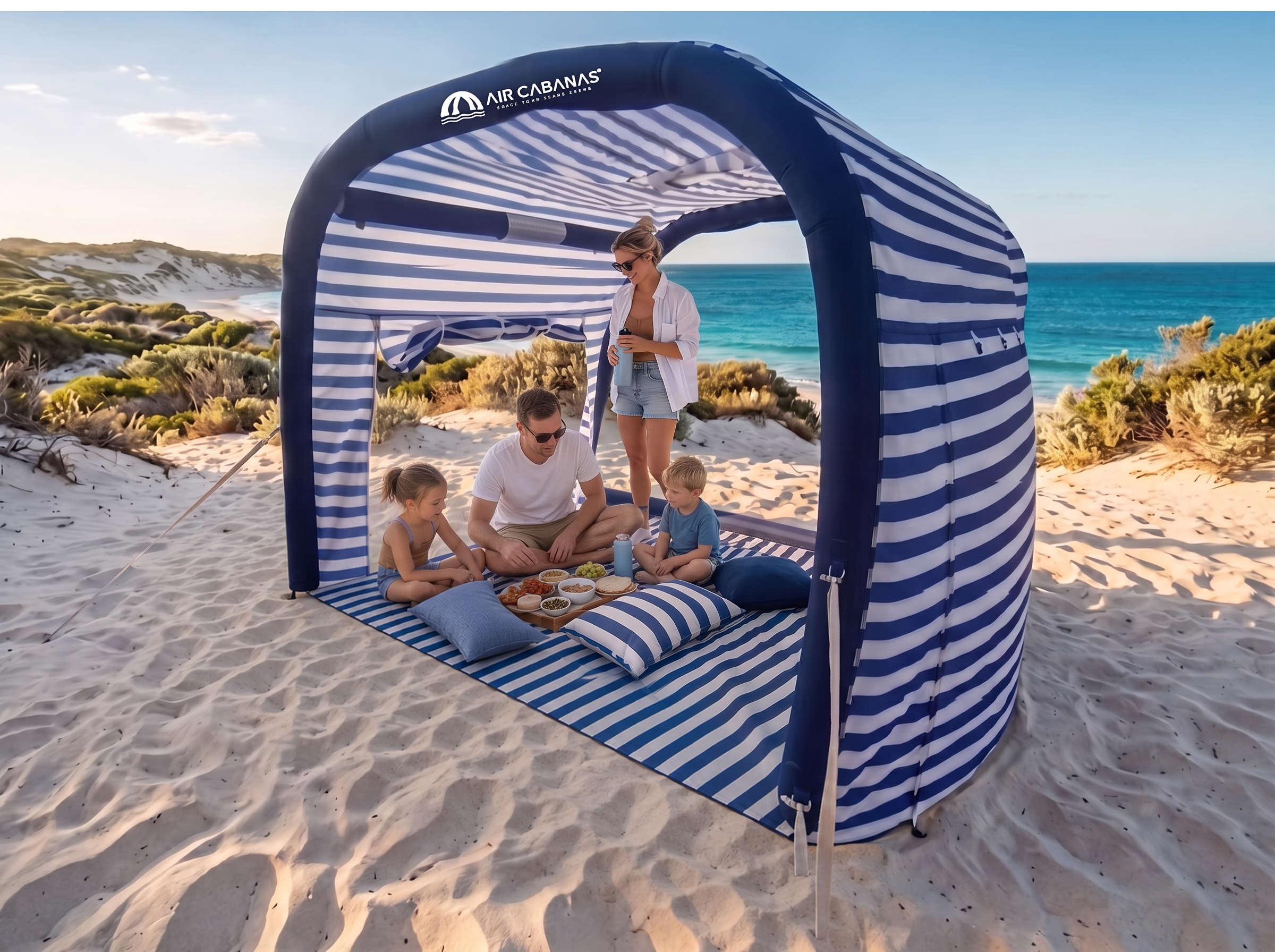
Ease of setup and portability are practical considerations that will greatly impact your beach day experience. Some tents feature pop-up designs for instant deployment, while others require a simple assembly of poles. Evaluate your comfort level with different setup styles. Additionally, check the packed size and weight. A lightweight, compact tent that comes with a carry bag will be much easier to transport along with all the other baby essentials. An AirCabana, for instance, offers a unique air-tube setup that simplifies assembly, making it a great option for families.
Finally, consider stability and additional features. A good baby beach tent should come with sand pockets, pegs, or tie-down points to ensure it remains securely anchored, even on breezy days. Some tents include built-in floors, small pools for water play, or integrated mosquito nets, adding to their versatility. These extra touches can enhance your child's comfort and expand the tent's utility beyond just sun protection, making your family beach tent even more valuable.
Top Picks for Baby Beach Tent: UPF 50+ and Beyond
When searching for the ideal **baby beach tent**, prioritising models with a certified UPF 50+ rating is crucial for comprehensive sun protection. This rating ensures that the fabric effectively blocks out the vast majority of harmful UV radiation, giving parents peace of mind. Many popular brands offer tents specifically designed for infants and toddlers, incorporating this high level of UV protection into their materials. Always confirm the UPF rating before making a purchase, as it's the most important safety feature for your child's delicate skin under the Aussie sun.
Beyond the essential UPF 50+ protection, consider the overall design and functionality that best suits your family's needs. Pop-up tents are incredibly convenient for quick setup and pack-down, making them a favourite for busy parents. These often feature simple fold-flat designs and can be deployed in seconds, which is a huge advantage when you have little ones eager to get to the water. Look for models with a wide opening and a spacious interior, allowing for comfortable movement and easy access to your baby. Ventilation through mesh panels is also key to prevent overheating.
For those seeking a more robust and versatile beach shade solution, an AirCabana offers a premium experience that extends beyond a traditional baby beach tent. While not exclusively a 'baby tent', its spacious design and excellent UPF 50+ fabric provide an expansive, secure, and well-ventilated shaded area that is perfect for the entire family, including infants and toddlers. Its unique air-tube inflation system means no fiddly poles, making setup straightforward and stable, even on windy days, provided it's correctly anchored. This makes it an outstanding family beach tent option, providing ample room for play and naps.
Another excellent consideration for beach shade is a dedicated UV beach tent that integrates features like a built-in floor for cleanliness and comfort. Some models even include a shallow, waterproof base that can be filled with a small amount of water to create a mini splash pool for babies – a fantastic way to keep them cool and entertained. These thoughtful additions enhance the tent's utility and provide a safe, engaging environment for your child, allowing them to enjoy the beach experience fully while remaining protected from the elements.
Setting Up Your Beach Shade Safely and Effectively
Proper setup and anchoring are paramount to ensure your baby beach tent remains stable and safe throughout your beach day. Even on seemingly calm days, unexpected gusts of wind can quickly turn an unanchored tent into a hazard. Most tents come with sand pockets that you can fill with sand, and many also include pegs or stakes for extra security. Always use all available anchoring points, making sure the tent is firmly secured to the ground. For pole-frame cabanas, ensure all poles are correctly assembled and locked into place before securing the canopy.
When choosing your spot on the beach, consider the sun's movement throughout the day. Position your tent so that the opening or mesh panels face away from the direct sun to maximise shade and prevent glare. If possible, set up your tent near the water's edge but far enough back to avoid the tide, giving you easy access to both the ocean and your child. Be mindful of other beachgoers and ensure your setup doesn't obstruct pathways or views, creating a safe and enjoyable environment for everyone.
Regularly check the tent's stability, especially if the wind picks up. If conditions become too windy, it's always safest to pack down your tent to prevent damage or injury. Never leave a baby or toddler unsupervised in a beach tent, regardless of how secure it feels. The tent is a tool for sun protection and comfort, but it does not replace vigilant adult supervision. Always ensure adequate ventilation to prevent overheating, even in the shade, by opening mesh windows or panels.
For larger shade solutions like an AirCabana, the inflation system makes setup robust, but anchoring remains crucial. Utilise all provided sandbags and guy ropes. The sturdy air-tube frame provides excellent stability, but like any beach structure, it requires proper securing to withstand coastal breezes. Always follow the manufacturer's instructions for assembly and anchoring to guarantee maximum safety and performance, allowing your family to relax under reliable beach shade.
Beyond the Tent: Comprehensive Baby Beach Sun Protection
While a **baby beach tent** provides excellent physical shade, it's just one component of a holistic approach to baby beach sun protection. The Cancer Council Australia recommends a multi-faceted strategy to keep little ones safe from UV radiation. Always dress your baby in UPF 50+ swimwear or clothing that covers as much skin as possible, even when they are in the shade. Look for rash vests and full-body suits designed specifically for sun protection, as these offer a consistent and reliable barrier against harmful rays.
A wide-brimmed hat that shades the face, neck, and ears is another essential item. Ensure the hat fits snugly and has a chin strap to prevent it from flying off in the breeze. Sunglasses that meet Australian Standards (AS/NZS 1067:2016) and block 99-100% of UV radiation are also important for protecting delicate eyes from glare and UV damage. Getting babies accustomed to wearing these items from a young age can make future beach outings much easier and safer.
Sunscreen should be used on any exposed skin that cannot be covered by clothing or shade. For babies under six months, it's generally advised to avoid direct sun exposure entirely, but if unavoidable, a small amount of baby-specific, broad-spectrum sunscreen with an SPF of 30 or higher can be applied to small areas of skin. For babies over six months, apply generously and reapply every two hours, or more frequently if swimming or sweating. Always choose sunscreens designed for sensitive skin to minimise irritation.
Hydration is often overlooked but critical for babies and toddlers at the beach. Offer breast milk or formula frequently to infants, and water to older babies and toddlers, especially on warm days. Keep bottles or sippy cups in a cooler bag to ensure drinks remain cool and refreshing. Regular breaks in the shade, away from the hottest part of the day (usually between 10 am and 4 pm), are also vital to prevent overheating and ensure a comfortable and safe beach experience for your little one.
Frequently asked questions
What is the best type of beach shade for a baby?
The best type of beach shade for a baby is a UPF 50+ rated baby beach tent. These tents provide enclosed, consistent protection from UV rays and offer a safe, sand-free space for your child. Look for good ventilation and secure anchoring features. For larger families, a spacious family beach tent like an AirCabana can accommodate everyone comfortably.
Do beach tents actually protect from UV?
Yes, beach tents with a UPF (Ultraviolet Protection Factor) rating of 50+ offer excellent protection from UV rays. This rating means the fabric blocks 98% of both UVA and UVB radiation, significantly reducing your baby's exposure to harmful sunlight. Always check for this specific UPF 50+ rating when purchasing a tent.
Can a baby stay in a beach tent all day?
While a baby beach tent provides crucial shade, it's not recommended for a baby to stay in it all day. Regular breaks in cooler, indoor environments are essential, especially during the hottest parts of the day (10 am-4 pm). Always ensure adequate ventilation, provide hydration, and never leave a baby unsupervised in a tent.
What beach tent is easiest to put up?
Pop-up beach tents are generally considered the easiest to put up, deploying in seconds with minimal effort. For a more substantial option, AirCabana offers an innovative air-tube inflation system that makes setup remarkably quick and straightforward compared to traditional pole-frame cabanas, providing a stable and spacious beach shade solution.