Baby Beach Sun Protection: Guide for Australian Parents
Master baby beach sun protection in Australia. Learn how deep shade, temperature management, and short sessions keep infants under 12 months safe.
Published 2026-10-28T20:01:46.909+00:00
Welcoming summer with a newborn or infant is a magical chapter for coastal families, but tackling the harsh Australian sun requires absolute diligence. When it comes to baby beach sun protection, the stakes are significantly higher than for older children. An infant's sensitive skin, immature sweat glands, and vulnerability to ultraviolet radiation mean conventional beach habits must be completely rethought. By understanding the core principles of deep shade, mindful temperature and short sessions, you can confidently introduce your little one to the ocean without compromising their delicate health and safety.
Why baby beach sun protection requires a specialised approach
Taking an infant to an Australian beach is one of those quintessential milestones parents eagerly anticipate, yet it often comes with a layer of genuine anxiety. An infant under twelve months old has skin that is fundamentally distinct from older toddlers and adults. Their outer epidermal layer is roughly thirty percent thinner, their melanin production pathways are largely undeveloped, and their natural cellular defence mechanisms against ultraviolet radiation are practically non-existent. Consequently, relying on a routine splash of lotion and an umbrella simply does not cut it along our sun-drenched coastline, making rigorous baby beach sun protection an absolute necessity from the moment your toes touch the sand.
In Australia, our proximity to the summer sun during the southern hemisphere orbit, combined with clean coastal air and an atmosphere naturally lower in protective ozone, generates an ultraviolet index that routinely climbs past eleven into extreme categories before midday. For a baby under six months, major clinical guidelines caution against using chemical sunscreens liberally because an infant's skin readily absorbs topical compounds, while their immature kidneys and liver struggle to metabolise them. Sun-protective strategies must therefore prioritise physical prevention above all else, keeping direct rays off soft skin entirely through careful environmental design rather than topical fixes.
Compounding the solar threat is how heat interacts with young physiology. Small babies cannot regulate their core internal temperature through perspiration anywhere near as efficiently as grown-ups can. Sweat glands in an infant are biologically immature, which means they hold onto ambient heat rapidly and can tip into dehydration or heat exhaustion without obvious sweating. Developing a thoughtful beach game plan is not about depriving your family of the ocean breeze; it is about respecting how coastal conditions impact fragile systems and ensuring your set-up acts as an impenetrable shield against harsh environmental stressors.
Creating deep shade: The primary barrier for infant coastal safety
When setting up camp near the water with an infant, standard sun shelters rarely offer sufficient coverage because ambient sunlight scatters aggressively off sea spray and pale quartz sand. To keep a baby protected, parents need to create true deep shade—an uninterrupted zone of broad, dense coverage that blocks direct overhead radiation while significantly cutting back side-angle reflections. A lightweight pop-up tent or thin nylon parasol often produces only weak shade, allowing significant levels of diffused UV to penetrate the fabric and bounce across your baby's delicate face and limbs throughout the morning.
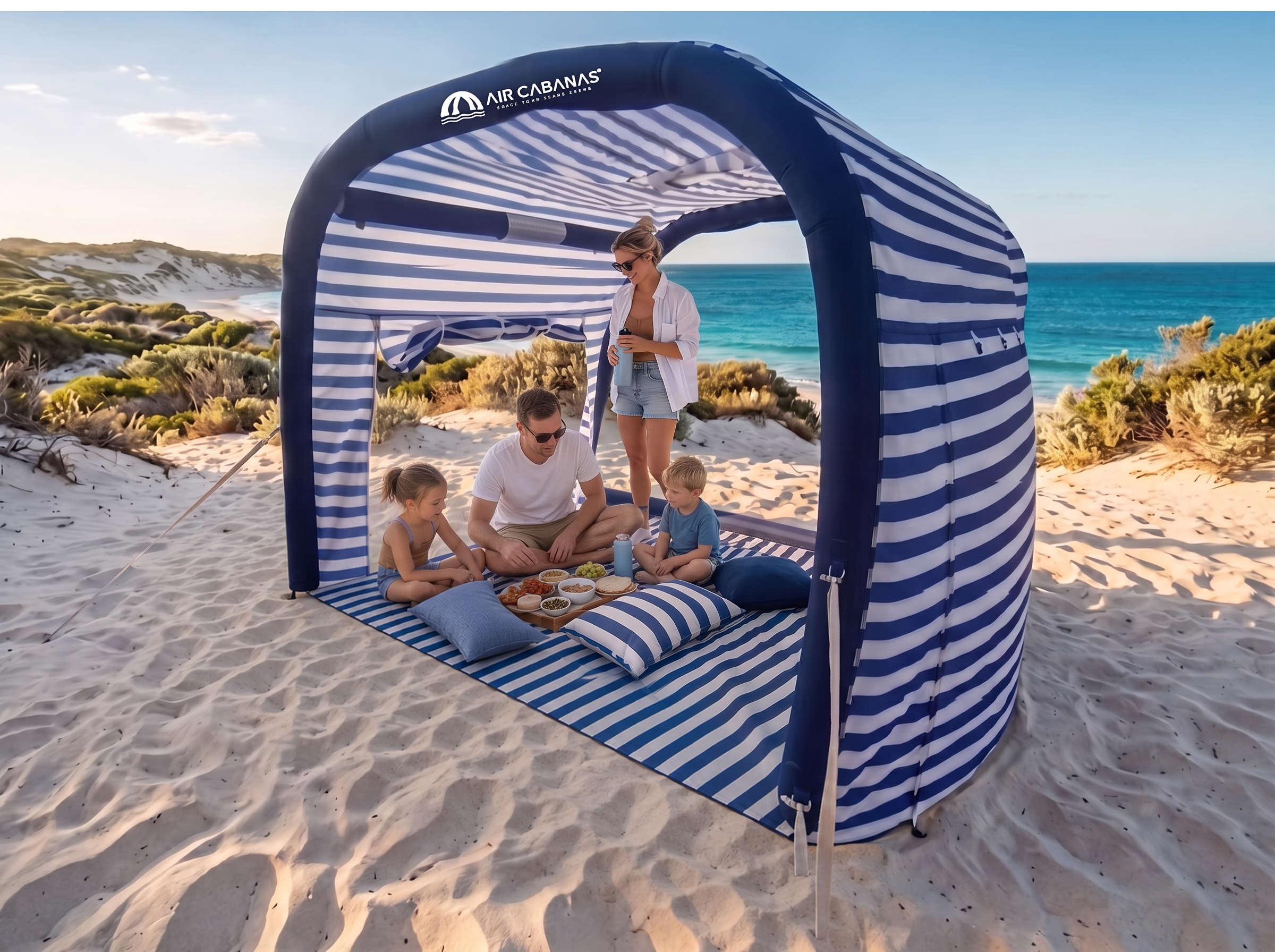
A high-quality UPF50+ shelter forms the non-negotiable anchor of this protective bubble. This is where an air-tube shelter like an AirCabana excels, offering a sprawling footprint that lets you position your infant well back from the perimeter edge where creeping direct rays encroach as the sun shifts across the sky. Unlike a standard cool cabana or basic sun umbrella that casts a narrow, moving shadow requiring constant repositioning, a broad shelter provides a steady micro-climate. Achieving consistent deep shade ensures your little one rests in cool comfort, shielded from the ambient glare that makes little eyes squint and sensitive skin flush.
Ground management within your shaded sanctuary is equally vital for infant care. Clean white sand can bounce up to fifteen percent of ambient UV radiation directly beneath your shade canopy, meaning overhead coverage addresses only half the equation. Seasoned parents lay down dense, tightly woven beach mats or thick cotton blankets over the sand within the shelter to neutralise reflected ground glare. Creating a cushioned, cool base well inside the deep shade perimeter ensures that whether your baby is feeding, dozing, or enjoying tummy time, their exposure to stray reflected rays remains minimal.
Managing temperature and short sessions along the coastline
Beyond solar radiation, coastal heat creates unique physical challenges that require deliberate scheduling. Keeping careful tabs on ambient temperature and short sessions is the golden rule for visiting the coast with any infant under twelve months. Many new parents assume that an ocean breeze provides automatic cooling, but warm sea air combined with radiant sand heat can dramatically push up skin temperature. Planning your arrival for early morning—ideally before 9:00 am—lets you enjoy calm water, lower ambient heat, and an ultraviolet index that is only just beginning its daily climb, making temperature regulation vastly simpler for little bodies.
Limiting outings to short sessions of around forty-five to seventy-five minutes protects your infant from sensory overload and cumulative heat exposure. Even inside a cool shelter, small babies tire quickly from the sound of breaking surf, the brightness of the horizon, and the physical effort of regulating body temperature. Watching for subtle cues like flushed cheeks, lethargy, rapid shallow breathing, or sudden fussiness allows you to intervene before mild discomfort spirals into heat stress. When these signs appear, it is time to wrap up, pack your kit, and head back to a climate-controlled environment.
Ventilation plays a vital part in maintaining a steady temperature beneath your shelter. Traditional boxed-in beach tents quickly become heat traps, holding stagnant air that bakes the interior even when completely out of direct sunlight. An open-sided cabana design allows sea breezes to flow continuously across the resting area, preventing trapped hot air from lingering around your baby. If the day feels particularly balmy, a battery-powered misting fan or a damp muslin cloth draped gently over exposed ankles can provide subtle evaporative cooling, keeping your infant calm and comfortable while you relax nearby.
Physical baby beach sun protection: Clothing, fabrics and gear
When dressing an infant for the coastline, clothing serves as the foundational barrier in your baby beach sun protection toolkit. Dermatologists consistently recommend dressing infants in lightweight, tightly woven garments that cover as much skin as practically possible without trapping excess warmth. Look for swim rompers and rash guards carrying a certified UPF50+ rating, which guarantees the fabric blocks at least ninety-eight percent of penetrating ultraviolet light. Fast-drying, breathable synthetics or loose-weave organic cotton layers ensure that moisture from perspiration or tiny splashes evaporates cleanly without chafing delicate skin folds.
A proper broad-brimmed sun hat is just as critical as your shade canopy. Choose a soft bucket hat or legionnaire-style cap featuring a broad brim that shades the face, ears, and back of the neck simultaneously. Hats with elasticised, soft toggles or gentle chin straps prevent gusty coastal breezes from whisking them down the shoreline. Getting an infant used to wearing a hat requires patience and persistence; pairing the hat with familiar feeding routines under the cabana often helps babies tolerate the garment without constantly pulling it off during play.
Do not forget infant eye care when planning your seaside gear. While it can be tricky to keep sunglasses on a four-month-old, infants possess crystal-clear ocular lenses that allow higher amounts of solar radiation to reach the back of the eye than adult eyes permit. Polarised infant sunglasses fitted with a soft neoprene wrap-around strap offer remarkable relief against blinding coastal glare. If your little one steadfastly refuses to wear shades, keeping them tucked securely within the shade of your cabana and under the wide brim of their hat provides the necessary eye protection without added fuss.
Modern shade engineering: Inflatable air tubes vs pole-frame cabanas
The practical realities of handling an infant, a nappy bag, towels, and beach gear make shelter logistics a pivotal factor in your day. For years, traditional pole-frame cabanas were the standard option, relying on central aluminium shafts and extendable corner arms. However, pitching pole-frame cabanas while supervising an active infant can prove frustrating and stressful on gusty shorelines. Juggling sharp metal uprights, loose pins, and rigid horizontal crossbars with one hand while keeping a watchful eye on a crawling baby introduces unnecessary safety hazards into an otherwise relaxing morning.
This design bottleneck is why modern families are switching to advanced inflatable air-tube shelters like the AirCabana. Replacing rigid aluminium struts with high-pressure structural air beams removes metal pinch points and heavy frames entirely. Parents can anchor the corners securely into the sand using generous sand pockets and ground pegs, connect the high-flow pump, and erect the entire structure in roughly two minutes flat without wrestling a heavy central pole. If a sudden coastal squall buffets the canopy, the flexible air beams bend harmlessly with the pressure and rebound naturally, eliminating the bent metal limbs and snapped joints that plague pole-frame cabanas.
Packing up at the end of a session with an overtired baby requires speed and zero complication. With an inflatable shelter, releasing the rapid-deflate valve drops the structure smoothly in seconds, allowing you to fold it directly into its carry bag without disassembling loose hardware. Never leave any shelter unattended or pitched in dangerous offshore winds; correct corner anchoring, regular sand-pocket checks, and continuous adult supervision are imperative. When adverse weather strikes, the simplicity of packing down an air-tube shelter ensures you can get your infant safely off the sand and into the car without delay.
Practical beach routines for stress-free infant outings
Smooth beach mornings with babies under twelve months hinge on methodical preparation long before you hit the sand. Packing your kit the night before eliminates the chaotic rush that often leads to leaving essentials like hats, swim nappies, or spare muslin wraps on the kitchen bench. Pack a dedicated wet bag filled with multiple spare outfits, fragrance-free baby wipes for clearing abrasive sand from chubby creases, and double the fluids you anticipate needing. Pre-chilling drinking water or formula in insulated thermoses protects feeds from heating up in the beach bag.
Setting up your coastal base requires a swift, practised workflow. As soon as you arrive, identify a flat expanse of sand positioned well above the high-tide line, clear of main pedestrian pathways and boat launch channels. Position your shelter with its back or low-profile edge facing directly into the prevailing breeze to minimise lift. Fill all perimeter sand pockets generously to full capacity before bedding down your internal mats. Establishing this secure perimeter first means you can immediately place your baby into deep, reliable shade before you start unpacking towels, toys, or picnic supplies.
Maintaining hydration is your top priority once settled inside the cabana. For breastfed babies under six months, frequent feeds on demand provide all the hydration and electrolytes required, as breast milk naturally adjusts its water content during warmer weather. Formula-fed babies may also demand feeds more frequently in coastal environments. Older infants past the six-month mark can be offered cooled, boiled water in small sips alongside their regular milk feeds. Keep an eye out for regular wet nappies throughout the day; a drop in wet nappies or dark-coloured urine is a sure indicator that your baby needs more fluid and less heat.
Frequently asked questions
Navigating beach days with your youngest family members brings up plenty of valid queries. Here are direct answers to common questions Australian parents ask about sun safety and shelter gear.
Can I put sunscreen on a baby under 6 months in Australia?
Major Australian health authorities advise against applying sunscreen to infants under six months of age. A baby's thin, delicate skin absorbs chemical and physical formulations more readily, which can trigger severe contact dermatitis or systemic irritation. Instead, rely strictly on broad UPF50+ clothing, wide-brimmed hats, and continuous deep shade inside a secure cabana. If tiny areas like the back of hands cannot be covered, consult your paediatrician about using minimal mineral-based zinc cream.
What is the best beach shade for a baby?
The best beach shade is a UPF50+ open-sided cabana that delivers broad coverage while promoting steady coastal airflow. Inflatable air-tube shelters like an AirCabana provide significant advantages over traditional pole-frame cabanas, as they eliminate rigid metal poles, pinch hazards, and sharp parts near your baby. The broad shade footprint keeps changing sun angles off sensitive skin while the open walls prevent stagnant, dangerous heat from building up inside the shelter.
How long should a baby under 12 months stay at the beach?
Keep coastal visits for infants under twelve months limited to short sessions between forty-five and seventy-five minutes. Even within reliable shade, the combined effects of ambient heat, glare, humidity, and sensory stimulation place considerable strain on an infant's developing nervous and thermoregulatory systems. Arriving early in the morning before 9:00 am ensures you can enjoy a calm, sun-safe experience before UV levels and ambient air temperatures rise sharply.
How do I keep my baby cool at the beach?
Keep your baby cool by positioning your shelter to capture cross-breezes, avoiding enclosed tents that trap humid air. Dress your infant in loose, breathable UPF50+ cotton or rash fabrics, and place thick mats over hot sand to block radiant ground heat. You can also run a small portable battery fan with foam blades and gently dab exposed arms and legs with a damp, cool muslin cloth to encourage comfortable evaporative cooling.
Can a baby get sunburn in the shade at the beach?
Yes, infants can suffer sunburn even while resting under a shelter due to indirect ultraviolet radiation. Coastal sand reflects up to fifteen percent of ambient UV rays, while sea spray and open water scatter solar energy in all directions. To prevent indirect burns, combine your overhead UPF50+ shelter with physical clothing layers, broad hats, ground mats to cover sand, and set up your baby well back inside the canopy footprint.