AirCabana vs CoolCabana: Air-Tube and Pole-Frame Beach Cabanas Compared
An honest, feature-by-feature comparison of air-tube beach cabanas and traditional pole-frame cabanas such as CoolCabana — setup, anchoring, ventilation, packing and who each design suits.
Published September 18, 2026
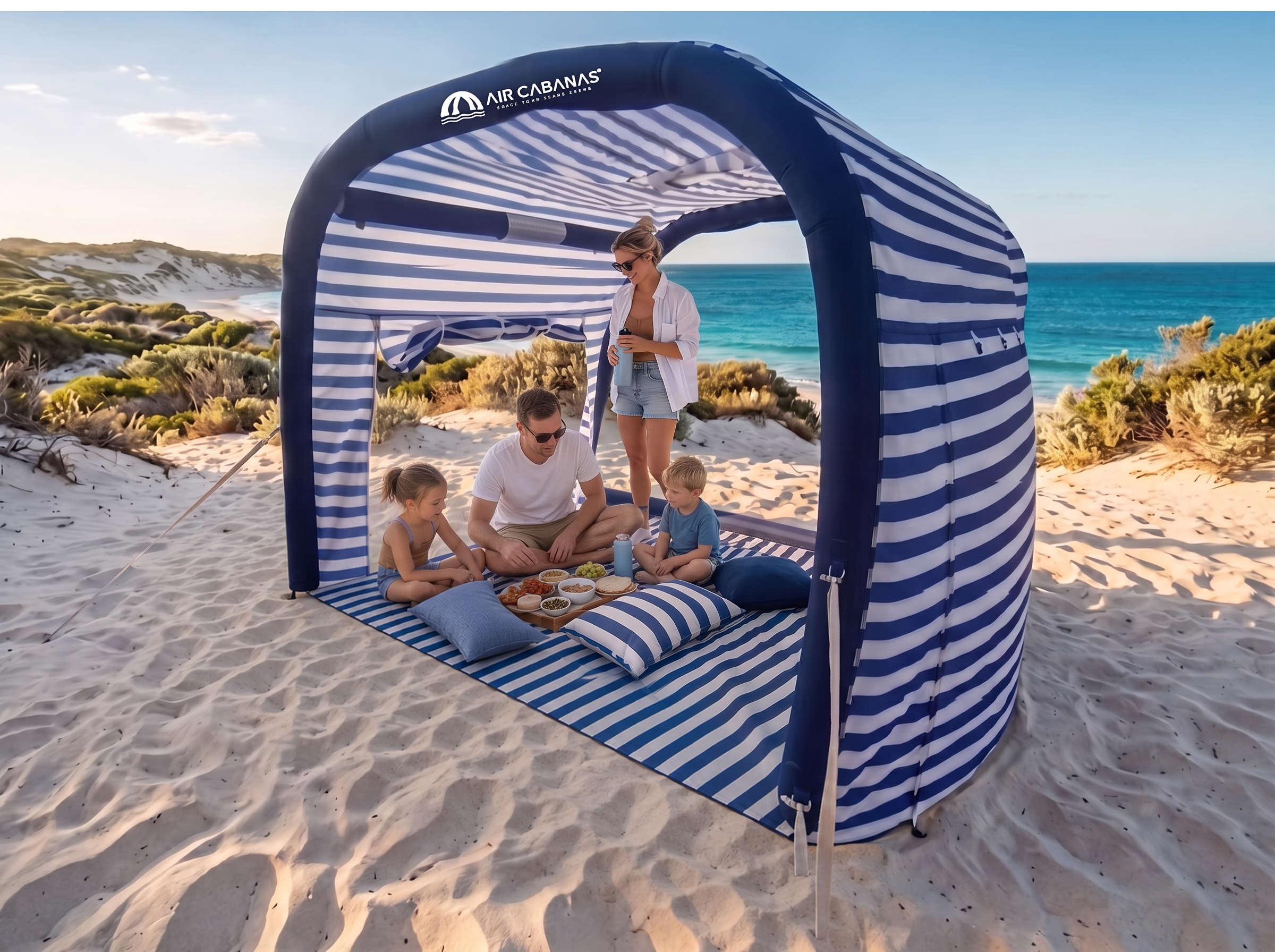
If you have shopped for beach shade in Australia you have almost certainly seen a pole-frame cabana like CoolCabana on the sand. It is a well-known, well-liked format. AirCabana takes a different structural approach: the frame is inflated rather than assembled. This guide compares the two designs fairly, so you can decide which suits your beach days rather than which sounds better in a headline.
The core difference: assembled frame versus inflated frame
A pole-frame cabana builds its shape from separate rigid sections that you join, thread and tension. It is a proven format and, once up, it holds a predictable form. The trade-off is that the structure only exists after the poles are assembled correctly, and the parts travel as loose hardware.
AirCabana replaces those poles with sealed air beams. You inflate a single continuous arch with a palm-sized USB rechargeable pump, and the shelter takes its shape as the beams pressurise. There is no metal frame to thread, no poles to lose and no rigid joints in the perimeter.
What that means on the sand
Assembly becomes one repeatable action instead of a sequence. You unroll the cabana, inflate, then anchor. Most people find a single-action setup easier to do alone, especially while keeping an eye on children.
What it does not change
Both formats still need proper anchoring, and neither is a wind-proof structure. Any beach shelter should be packed down when conditions turn. Air beams change how the shape is created, not the weather.
Setup and pack-down
AirCabana is designed around a sixty-second inflation with the included USB rechargeable pump, so the bulk of setup time goes into positioning and ballast rather than construction. Pack-down reverses the same short sequence: empty the sand pockets, release the air, roll and bag.
Pole-frame cabanas reward practice. Once you know the order, setup is quick. The honest comparison is not speed alone but how forgiving each design is the first few times, in wind, with sandy hands.
Anchoring: loose sandbags versus integrated sand pockets
Most beach shelters rely on ballast, because pegs alone are unreliable in dry sand. Many pole-frame cabanas use separate bags you fill and attach with straps. They work, but they are extra items to carry, and straps can dangle around a busy shade area.
AirCabana uses colour-matched sand pockets stitched directly into the side tubes, plus the rear tube on the Classic. You scoop sand straight into the shelter's own pockets. There are no loose bags to misplace and no external straps crossing the entrance.
A simple anchoring routine
Fill every pocket before you settle in, not after. Top them up if the sand dries out, and always empty them before you fold, so the cabana packs clean and light.
Ventilation and how hot it feels inside
Enclosed beach tents can trap warm air. AirCabana is built around airflow: a fully open front with no lower tube or sill, two symmetrical roof-mounted ventilation flaps near the apex to release rising heat, and roll-up side panels you can open or close as the wind shifts.
That open front is also a usability decision. You can walk in upright, carry a tray of food through and see the water without ducking. If you prefer a shelter that closes fully for changing or napping, a zip-up beach tent may suit you better than either cabana format.
Carrying, packing and what is in the bag
Pole hardware is dense and rigid, which makes a packed pole-frame cabana feel solid in the bag. AirCabana's kit is fabric, air beams, a carry bag and a small rechargeable pump, with no separate loose sandbags because the ballast is built in.
Fewer separate parts is the practical advantage: nothing to forget in the boot, and nothing that turns the trip into a scavenger hunt at the car park.
Children and soft surfaces
Air beams remove rigid metal poles and hard joints from the perimeter of the shade area, which many parents prefer around toddlers who use the structure as a handrail. That is a design choice about surfaces, not a safety guarantee — children still need supervision at the beach.
The open front helps here too. You can see out, kids can walk in and out, and the cabana works naturally as the family meeting point.
Which one should you buy?
Choose a pole-frame cabana if you already own one, like the assembly routine and are happy managing separate sandbags. It is a familiar, proven format with a large following in Australia.
Choose AirCabana if you want one-action inflation, integrated sand pockets instead of loose bags, a metal-free perimeter, a fully open walk-in front and roof ventilation. AirCabana Classic is the versatile navy-stripe all-rounder and Family is the bright summer cyan option.
Either way, pick the shelter you will actually carry to the sand. The best beach cabana is the one that leaves the cupboard every weekend.