AirCabana Comparison: Classic vs Breeze vs Family
Read our complete aircabana comparison to choose between Classic, Breeze, and Family models with specs, pricing, and advice for Australian beach conditions.
Published 2026-10-30T20:00:46.345+00:00
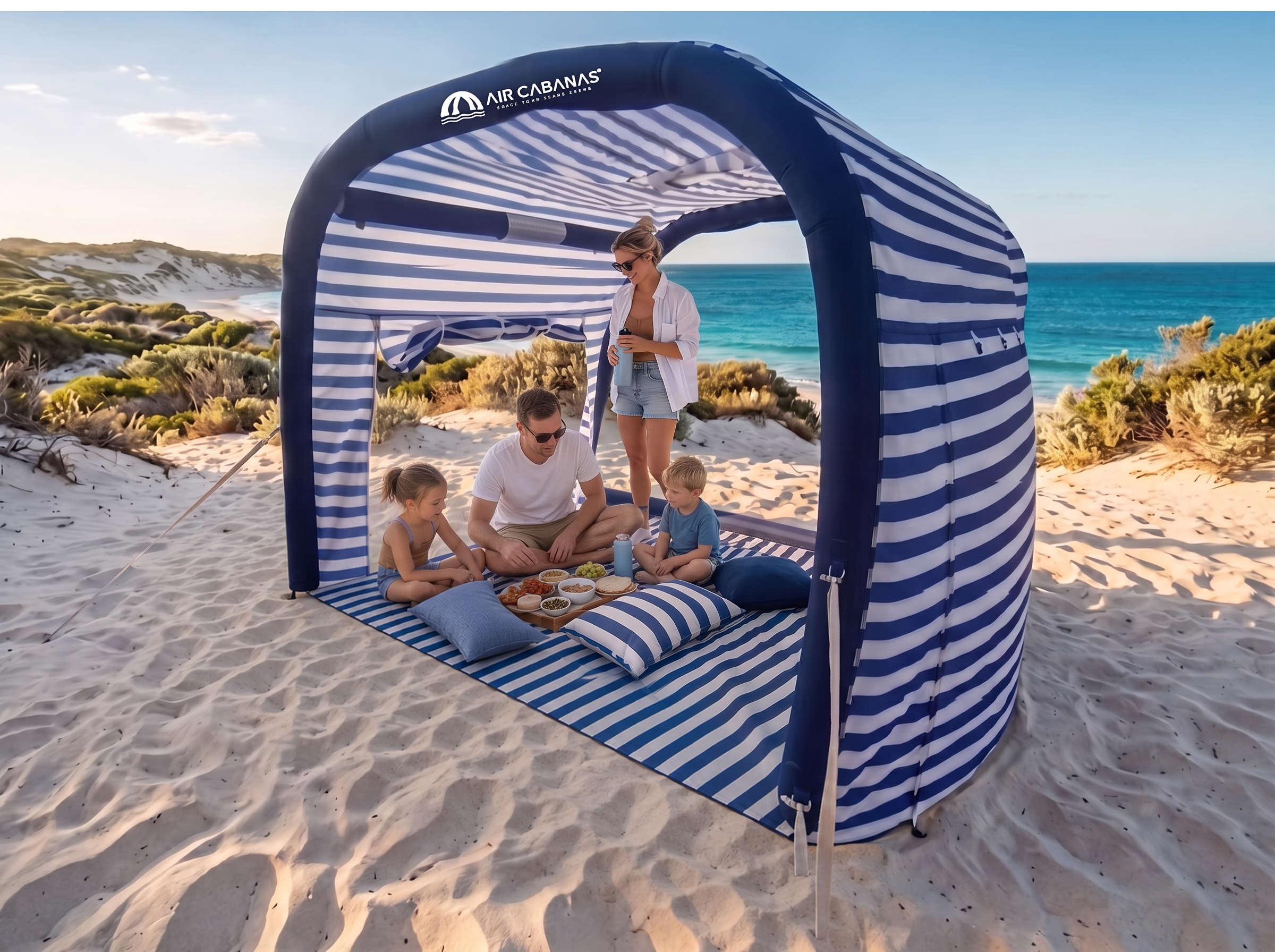
Planning your summer setup requires a thorough aircabana comparison to understand how different canopy sizes, ventilation profiles, and packed weights perform under the harsh Australian sun. From quick morning swims along sheltered ocean baths to sprawling family days anchored on open coastal sandbars, your beach shelter dictates how long you can comfortably linger by the water. Evaluating the differences between the Classic, the ventilated Breeze, and the expansive Family ensures you invest in the exact shelter matching your crew size, packing routine, and coastal lifestyle.
AirCabana Comparison: Understanding the Lineup
Selecting the right shade setup for Australian coastal conditions comes down to understanding your regular crew size, your vehicle boot space, and how much gear you are willing to trek across hot sand. An honest aircabana comparison begins with looking past aesthetic colourways and evaluating the core engineering that sets inflatable air-beam structures apart from traditional beach setups. Rather than wrestling with rigid metal components that bend under tension, every model in the range uses durable, high-pressure air tubes paired with high-grade UPF 50+ canopy fabric to create an open-sided coastal shelter.
The lineup spans three distinct specifications tailored to how Australians spend their summer weekends. The Classic delivers a dependable, time-tested footprint designed for couples, solo ocean swimmers, and small households needing a swift setup. The Breeze optimises airflow and weight for scorchers where cross-ventilation and a lighter tote bag matter most. Meanwhile, the Family expands both width and clearance heights to accommodate camp chairs, eskies, and toddlers wandering in and out of the midday sun. Each shelter operates on the exact same air-pole principle, meaning you eliminate telescopic joints entirely.
When evaluating this aircabana comparison, keep your local beach topography and typical afternoon weather in mind. Coastal breaks from Perth to northern New South Wales often face sudden coastal breezes that challenge clumsy gear. Traditional pole-frame cabanas rely on rigid aluminium stays and central uprights that can twist or snap when loaded unevenly. By swapping metallic spars for marine-grade TPU air beams, all three models absorb gust energy naturally without transferring mechanical strain onto fragile hinges, giving beachgoers reliable shade without structural clatter.
AirCabana Classic: The Balanced All-Rounder
The AirCabana Classic remains the benchmark for weekend beachgoers who want a fuss-free balance of shade footprint and manageable pack size. Designed to shelter two to three adults comfortably with beach towels spread flat, it creates a generous pocket of relief without claiming half the foreshore. If your regular Saturday routine involves strolling down to Manly, Cottesloe, or Burleigh with a single tote bag and a surfboard under your arm, the Classic is engineered specifically to keep your load manageable while delivering uncompromising overhead protection.
Setup speed is where the Classic genuinely shines for everyday coastal lifestyles. After rolling out the canopy across dry sand, connecting the high-capacity hand pump takes seconds. With just a dozen smooth strokes, the integrated air beams rise and lock into an arched dome that stands self-supporting before you even begin weighting the corners. Four wide-mouth corner pockets allow you to scoop up dry or damp sand quickly, anchoring the footprint securely against variable sea breezes without requiring you to hammer tent pegs into shifting shorelines.
Durability on the Classic is tuned for harsh Australian salt spray and intense sun. The canopy features tightly woven polyester with a certified UPF 50+ protective coating, reflecting blistering UV radiation rather than absorbing heat downward into your seating area. Because there are no internal cross-braces or central metal poles stealing floor space, you can lie diagonally or sit upright on low-profile beach chairs without bumping into hardware, making it the most versatile baseline shelter for typical beach mornings.
AirCabana Breeze: Ventilation for Sweltering Summer Days
When summer temperatures climb toward forty degrees across the east coast, trapped ambient heat beneath a dense canvas canopy can feel stifling. The Breeze model was conceived specifically to address those dead-calm, humid January scorchers where airflow is non-existent. By incorporating secondary mesh ventilation panels along the upper roof seam and fine-tuning canopy vents, the Breeze promotes active convective cooling, allowing rising hot air to escape while drawing cooler marine air through the open sides.
Weight-conscious beachgoers also gravitate toward the Breeze because it trims carrying mass through strategic textile engineering. By utilising lightweight ripstop weaves that retain rigorous UPF 50+ ratings, the Breeze packs down noticeably smaller into its over-the-shoulder transit bag. If you regularly traverse long walking tracks, steep dune staircases, or secluded national park beaches such as those in Noosa or Jervis Bay, shedding those extra kilograms makes a profound difference over a kilometre-long walk from the carpark.
Despite its lighter footprint and ventilated profile, the Breeze shares the same heavy-duty inflatable structural foundation as its siblings. The air tubes remain puncture-resistant and rigid under correct operating pressures, maintaining shape even when coastal headwinds push across the sandbar. It serves as the ultimate high-temperature retreat for fitness enthusiasts, board riders, and coastal wanderers who demand maximum breathability, quick pack-downs, and effortless portability in sweltering conditions.
AirCabana Family: Maximum Footprint and Clearance
For parents juggling prams, swim vests, oversized eskies, and energetic kids, square meterage under shade is the single most important factor. The AirCabana Family expands the coverage area significantly, delivering enough real estate to shelter four to six people along with full-height camp chairs and outdoor gear. Stepping inside, the first thing you notice is the generous apex height, allowing taller adults to step through without stooping awkwardly or brushing their heads against sun-heated fabric.
Managing a busy family on a crowded foreshore requires gear that does not invite hazards. Traditional pole-frame cabanas can be stressful around toddlers who may trip over support guys, knock into metal uprights, or pinch small fingers in telescoping lock-pins. The Family eliminates rigid pinch points completely. If a stray beach ball or an overexcited child crashes into one of the inflated uprights, the beam simply yields softly and flexes straight back into shape, keeping your afternoon relaxed and safe.
Securing a larger canopy against shifting coastal winds naturally demands greater ballasting, and the Family accounts for this with high-volume sand reservoirs on all four corners. Reinforced double-stitched webbing channels wind loads straight into the weighted pockets, keeping the structure planted firmly in the sand. While the Family inevitably has a slightly larger pack volume and carrying weight than the Classic or Breeze, the payoff in sprawling, cool cabana comfort for an all-day coastal picnic makes it indispensable for larger tribes.
Key Specs and Direct Model Comparison
A rigorous aircabana comparison requires looking directly at operational dimensions, pack weights, sand capacities, and retail pricing. Every beachgoer prioritises different aspects of gear performance, whether you drive a compact hatchback with limited boot room or load up an all-terrain four-wheel drive for week-long coastal camping expeditions. Laying the specifications side by side clarifies exactly which shelter matches your vehicle, your physical carrying threshold, and your summer budget.
The Classic retails at an accessible middle tier, offering approximately 4.0 square metres of shaded deck space with an all-inclusive pack weight of roughly 3.8 kilograms. In contrast, the Breeze sits at a slight premium due to technical vented textiles and reduced pack volume, weighing in at just 3.4 kilograms while matching the Classic in raw floor area. The Family commands the upper price bracket, delivering over 5.8 square metres of shelter at a pack weight of approximately 4.7 kilograms, trading ultralight handling for palatial group coverage.
Regardless of which model you choose, every package includes the same comprehensive kit: an ergonomic dual-action hand pump with an integrated pressure limiter, an oversized zip-mouth carry tote with wide shoulder straps, and supplementary guy lines for extra security. Maintenance remains identical across the board, requiring only a simple fresh-water rinse after coastal outings to remove salt crust and abrasive grit before drying and storing away from direct sunlight.
Setting Up and Anchoring in Coastal Winds
Regardless of which variant you select from this aircabana comparison, safety and stability on Australian shores depend entirely on proper anchoring procedure. Inflatable air-beam shelters behave remarkably well in onshore gusts because they lack rigid spars that can snap or act as dangerous projectiles. However, no beach shade should ever be treated as wind-proof or indestructible. Unpredictable thermal squalls and southerly busters carry immense aerodynamic forces that require respectful management and common sense.
Begin your pitch by orienting the shelter so the lowest profile or closed corner faces toward the prevailing sea breeze. Unfurl the base flat against the sand, and immediately fill the upwind corner sand pockets before inflating the beams. Filling these pockets first prevents a sudden gust from catching loose fabric and tumbling the structure down the beach while you reach for the pump. Use a plastic sand scoop or your hands to pack the reservoirs completely full of heavy, damp sand dug from just below the dry surface layer.
Once ballasted, attach the pump nozzle, lock the valve, and inflate the beams until they feel firm and drum-tight to the touch. In lively coastal winds, deploy the included perimeter guy lines and peg them outward using wide-flange sand stakes or buried sandbags. Never leave your shelter unattended, keep continuous watch over changing surf and wind conditions, and always take down and pack away your canopy promptly if squalls cause excessive deformation or conditions turn hazardous.
Frequently asked questions
Find clear, direct answers to common questions Australians ask when comparing beach shelters and deciding on the best model for their summer routine.
What is the main difference between the models?
The primary differences centre on floor footprint, ventilation panels, and packed weight. The Classic offers balanced everyday coverage for couples and small groups. The Breeze adds breathable roof mesh panels and uses lighter technical fabrics for sweltering, low-wind days. The Family delivers a substantially expanded shaded area and taller apex clearance designed specifically to house multiple adults, kids, and beach chairs comfortably.
Can one person set up an inflatable cabana alone?
Yes, every model in the range is designed for effortless single-person setup. Simply unfold the canopy flat, anchor the upwind sand pockets so the fabric does not catch the breeze, connect the included hand pump, and inflate the beams. The entire process takes under two minutes from bag to full shade without needing anyone to hold upright poles steady.
How do air cabanas handle Australian beach wind?
Inflatable air cabanas perform exceptionally well because their marine-grade TPU beams flex under wind pressure rather than snapping like rigid aluminium or fibreglass poles. However, they are not wind-proof. Stability relies on packing all four corner sand reservoirs with damp sand. In gusty conditions, use auxiliary sand stakes, maintain active supervision, and always pack the shelter down if weather deteriorates.
Are air cabanas hotter than traditional beach umbrellas?
No, they are noticeably cooler because open-sided architecture allows coastal sea breezes to circulate freely across your seating area. Furthermore, the UPF 50+ canopy fabric blocks over 98 percent of harmful ultraviolet radiation. Models like the Breeze feature integrated upper roof vents that actively release trapped convective heat, preventing hot pockets from forming beneath the canopy roofline.
How do I clean and pack away my beach shade?
Open the rapid-deflation valve to exhaust the air tubes, tip out all sand from the corner reservoirs, and roll the canopy smoothly toward the valve opening. After coastal trips, shake out remaining grit, rinse the fabric with clean fresh water to remove salt deposits, and allow it to air-dry completely in the shade before storing it inside its bag.